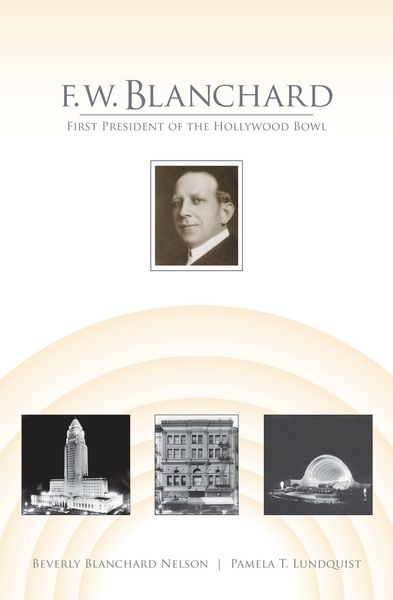
F.W. Blanchard First President of the Hollywood Bowl
-
- Taschenbuch
- eBook ausgewählt
-
Form:Einzelkauf Download
-
Sprache:Englisch
Fr. 11.90
inkl. gesetzl. MwSt.Beschreibung
Produktdetails
Format
ePUB
Kopierschutz
Ja
Family Sharing
Nein
Text-to-Speech
Ja
Erscheinungsdatum
14.02.2007
Verlag
Trafford PublishingSeitenzahl
124 (Printausgabe)
Dateigröße
5054 KB
Sprache
Englisch
EAN
9781425198329
With its Mediterranean climate, pristine coastline, rolling hills, and majestic mountains, Los Angeles served as a fertile setting for Fred's artistic sensibilities and dynamic leadership skills. And he looked at the cultural landscape of Los Angeles much the way an artist looks at a blank canvas. He saw limitless opportunities for beautifying and culturally enriching the city.
In 1907, Fred predicted that Los Angeles would one day become the largest city on the Pacific Coast. "What Italy is to the arts and music," he said, "so will Los Angeles become in time. Why not? With a climate which is so conducive to song and so ripens the artistic temperament, I believe Los Angeles will become one of the leading art centers in the country."
Fred worked tirelessly to advance his vision for the city. He developed and promoted a wide range of musical, cultural, and civic activities. He established Blanchard Hall, which contained the first art gallery west of Chicago. He served as a founder and first president of the Hollywood Bowl. He served also as chairman of the Good Roads Commission, and he's known as the "father" of the cluster lighting system. His influence can still be felt from Lankershim to Hill Street, from Cahuenga Pass to Hollywood, and from Broadway to the Bowl.
Fred was a dreamer, but he was also a leader who could turn dreams into projects that served all the city and all of its citizens. His name and his dreams and his works live on-indelibly imprinted on Los Angeles history, never to be forgotten.
Noch keine Bewertungen vorhanden
Verfassen Sie die erste Bewertung zu diesem Artikel
Helfen Sie anderen Kundinnen und Kunden durch Ihre Meinung.