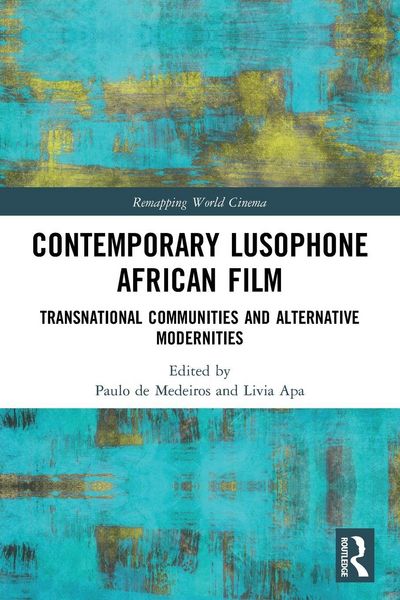

Contemporary Lusophone African Film Transnational Communities and Alternative Modernities
-
- Hardcover
- Taschenbuch ausgewählt
- eBook
-
Sprache:Englisch
Fr. 72.90
inkl. gesetzl. MwSt.,
Beschreibung
Produktdetails
Einband
Taschenbuch
Erscheinungsdatum
27.05.2024
Abbildungen
34 SW-Abb., 34 SW-Fotos
Herausgeber
Paulo de Medeiros + weitereVerlag
Taylor & FrancisSeitenzahl
226
Maße (L/B/H)
23.4/15.6/1.2 cm
Gewicht
351 g
Sprache
Englisch
ISBN
978-0-367-52316-9
Offering a range of critical perspectives on a vibrant body of films, this collection of essays engages with questions specific to the various cinemas and films addressed while putting forward an argument for their inclusion in current debates on world cinema.
The collection brings together 11 chapters by recognized scholars, who analyze a variety of films and videos from Angola, Cape Verde, Guiné-Bissau, and Mozambique. It also includes an interview with Pedro Pimenta, one of the most distinguished African film festival organizers. Drawing on various theoretical perspectives, the volume strives to reverse the relative invisibility that has afflicted these cinemas, arguing that most, if not all, Lusophone films are transnational in all aspects of production, acting, and reception. The initial three chapters sketch broad, comparative overviews and suggest theoretical approaches, while the ensuing chapters focus on specific case studies and discuss a number of key issues such as the convergence of film with politics, the question of gender and violence, as well as the revisiting of the period immediately following independence. Attention is given to fiction, documentary films and recent, short, alternative video productions that are overlooked by more traditional channels. The book stresses the need to pay attention to the significance of African film, and Lusophone African film in particular, within the developing field of world cinema.
Bringing together general overviews, historical considerations, detailed case studies, and focused theoretical reflections, this book is a significant volume for students and researchers in film studies, especially African, Lusophone cultural studies, and world cinema.
Noch keine Bewertungen vorhanden
Verfassen Sie die erste Bewertung zu diesem Artikel
Helfen Sie anderen Kundinnen und Kunden durch Ihre Meinung.