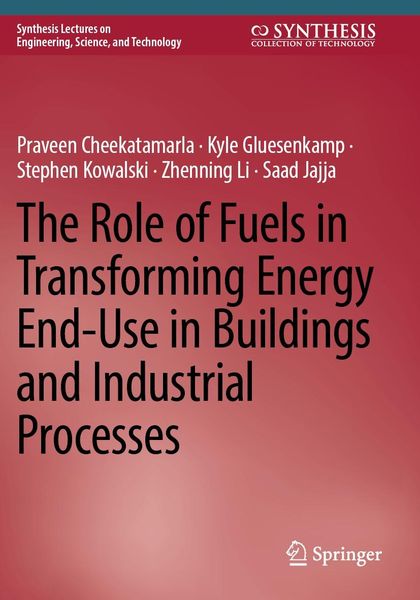
The Role of Fuels in Transforming Energy End-Use in Buildings and Industrial Processes
-
- Taschenbuch
- eBook ausgewählt
-
Form:Einzelkauf Download
-
Sprache:Englisch
Fr. 36.90
inkl. gesetzl. MwSt.Beschreibung
Produktdetails
Format
Kopierschutz
Nein
Family Sharing
Nein
Text-to-Speech
Nein
Erscheinungsdatum
22.04.2024
Verlag
SpringerSeitenzahl
58 (Printausgabe)
Dateigröße
3253 KB
Sprache
Englisch
EAN
9783031453656
Energy-efficient technologies are necessary to lower the carbon footprint for a transition towards clean energy in a sustainable manner. This book examines what role fuels have in the transformation of end-use in buildings and industrial processes. Energy-efficient technologies are necessary to lower the carbon footprint for a transition towards clean energy in a sustainable manner. Efficient utilization of primary energy resources, including renewables, to support the current and future energy needs while targeting grid resiliency, energy, and environmental security at an affordable cost is of significant value. The author analyzes heat pumps, fuel-driven thermal providers, and power systems configurations and looks at the sensitivity of the electrical grid's carbon intensity and tariff towards carbon footprint and energy costs compared with fuel-driven technologies. The role of low-carbon, zero-carbon, and carbon-negative fuels, such as power-to-gas (P2G), power-to-liquid (PtL), hydrogen, and biogas, in conjunction with polygeneration technologies, are discussed. This book also examines two different scenarios focused on the sensitivity of the pace of decarbonization of the electrical grid and fuel supply on operational energy-related carbon emissions.
- Compares electricity versus fuel as a primary energy source
- Explores the role of fuels in the decarbonization journey
- Examines the value proposition of currently available energy solutions
Noch keine Bewertungen vorhanden
Verfassen Sie die erste Bewertung zu diesem Artikel
Helfen Sie anderen Kundinnen und Kunden durch Ihre Meinung.