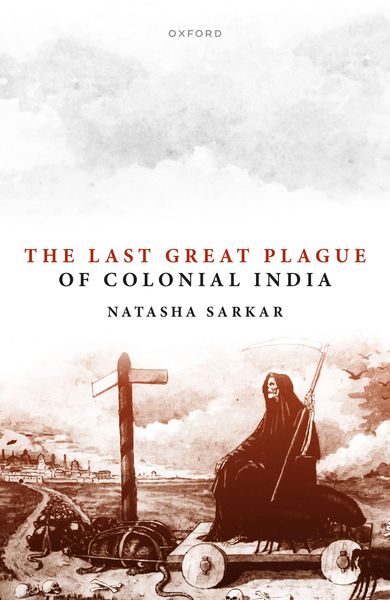
The Last Great Plague of Colonial India
-
Form:Einzelkauf Download
-
Sprache:Englisch
-
eBook Format:ePUB
- PDF Fr. 91.90
- ePUB Fr. 91.90 ausgewählt
Fr. 91.90
inkl. gesetzl. MwSt.Beschreibung
Produktdetails
Format
ePUB
Kopierschutz
Ja
Family Sharing
Nein
Text-to-Speech
Ja
Erscheinungsdatum
07.05.2024
Verlag
OUP eBookSeitenzahl
256 (Printausgabe)
Dateigröße
31130 KB
Sprache
Englisch
EAN
9780198873273
Plague has attained pandemic proportions on three occasions in recorded history. It is within the context of the third, modern pandemic that this book unfolds: an outbreak which took over twelve million lives in India alone.
Natasha Sarkar examines for the first time the full social history of this extraordinary medical crisis in India at the end of the nineteenth century, detailing the nature and progress of the disease within a complex colonial environment. Deep-seated colonial anxieties about governing India influenced and are disclosed in responses to the pandemic. Disease carriers were identified and labelled, and scapegoats stigmatized. Western Imperialism and its developments in biomedicine clashed with older indigenous medical systems.
Sarkar also considers attitudes, approaches, and mentalities in indigenous Indian society. She explores what individuals and communities made of the disease, and how social prejudices surrounding it and its sufferers became increasingly heightened in a colonial environment. The plague crisis reveals disparate, heterogeneous voices across communities--the contradictions of a multi-religious, multi-lingual, and multi-cultural society. The last great plague of Colonial India is thus portrayed in all its political, social, economic, and demographic dimensions.
Natasha Sarkar examines for the first time the full social history of this extraordinary medical crisis in India at the end of the nineteenth century, detailing the nature and progress of the disease within a complex colonial environment. Deep-seated colonial anxieties about governing India influenced and are disclosed in responses to the pandemic. Disease carriers were identified and labelled, and scapegoats stigmatized. Western Imperialism and its developments in biomedicine clashed with older indigenous medical systems.
Sarkar also considers attitudes, approaches, and mentalities in indigenous Indian society. She explores what individuals and communities made of the disease, and how social prejudices surrounding it and its sufferers became increasingly heightened in a colonial environment. The plague crisis reveals disparate, heterogeneous voices across communities--the contradictions of a multi-religious, multi-lingual, and multi-cultural society. The last great plague of Colonial India is thus portrayed in all its political, social, economic, and demographic dimensions.
Kundinnen und Kunden meinen
Verfassen Sie die erste Bewertung zu diesem Artikel
Helfen Sie anderen Kund*innen durch Ihre Meinung