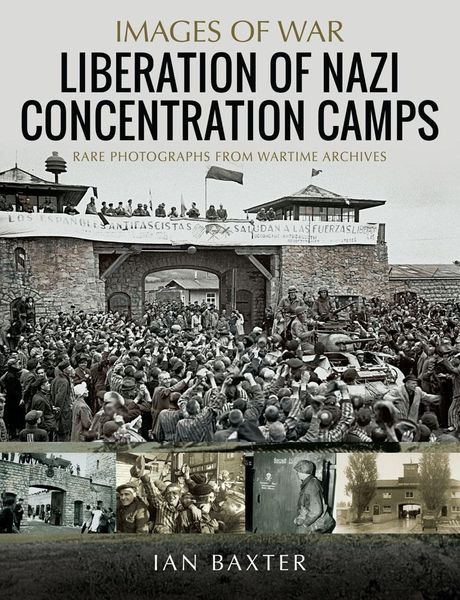
Liberation of Nazi Concentration Camps
Aus der Reihe
Images of War
-
- Taschenbuch
- eBook ausgewählt
-
Form:Einzelkauf Download
-
Sprache:Englisch
-
eBook Format:PDF
- PDF Fr. 9.90 ausgewählt
- ePUB Fr. 9.90
Fr. 9.90
inkl. gesetzl. MwSt.Beschreibung
Produktdetails
Format
Kopierschutz
Ja
Family Sharing
Ja
Text-to-Speech
Nein
Erscheinungsdatum
21.12.2023
Verlag
Pen & SwordSeitenzahl
176 (Printausgabe)
Dateigröße
205656 KB
Sprache
Englisch
EAN
9781399048804
As the Allies closed in on Hitler's Germany the horror and scale of the Final Solution and concentration camps became all too apparent. This latest Images of War book provides the reader a truly disturbing insight into the Nazi's brutal regime of wholesale murder, torture and starvation.
While the Germans attempted to hide the evidence by demolishing much of the camps' infrastructure, the pace of the Soviets' advance through Poland meant that the gas chambers at Majdenak near Lublin were captured intact.
Auschwitz had received over a million deportees yet when liberated in January 1945 only a few thousand prisoners were there as the vast majority of surviving prisoners had been sent on forced death marches to more westerly camps such as Ravensbruch and Buchenwald. Condition in these camps deteriorated further due to overcrowding and the spread of deadly diseases.
In every camp shocking scenes of death and starvation were encountered. When British troops reached Bergen-Belsen in April 1945, there were some 10,000 unburied dead in addition to the mass graves, in addition to 60,000 starving and sick inmates in utterly appalling conditions.
The words and images in this disturbing book are a timely reminder of man's inhumanity to his fellows and that such behavior should never be repeated.
While the Germans attempted to hide the evidence by demolishing much of the camps' infrastructure, the pace of the Soviets' advance through Poland meant that the gas chambers at Majdenak near Lublin were captured intact.
Auschwitz had received over a million deportees yet when liberated in January 1945 only a few thousand prisoners were there as the vast majority of surviving prisoners had been sent on forced death marches to more westerly camps such as Ravensbruch and Buchenwald. Condition in these camps deteriorated further due to overcrowding and the spread of deadly diseases.
In every camp shocking scenes of death and starvation were encountered. When British troops reached Bergen-Belsen in April 1945, there were some 10,000 unburied dead in addition to the mass graves, in addition to 60,000 starving and sick inmates in utterly appalling conditions.
The words and images in this disturbing book are a timely reminder of man's inhumanity to his fellows and that such behavior should never be repeated.
Kundinnen und Kunden meinen
Verfassen Sie die erste Bewertung zu diesem Artikel
Helfen Sie anderen Kund*innen durch Ihre Meinung