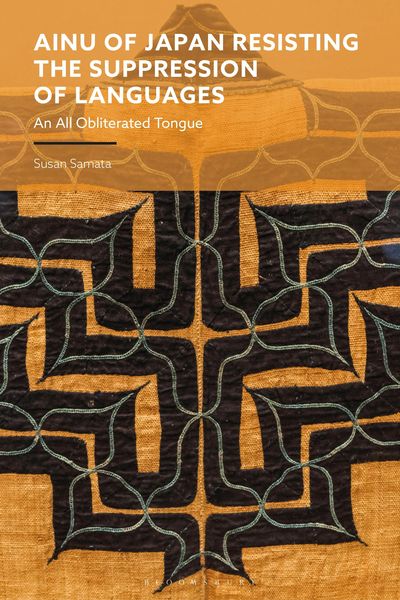
Ainu of Japan Resisting the Suppression of Languages An All Obliterated Tongue
-
Form:Einzelkauf Download
-
Sprache:Englisch
-
eBook Format:ePUB
- PDF Fr. 114.90
- ePUB Fr. 114.90 ausgewählt
Fr. 114.90
inkl. gesetzl. MwSt.Beschreibung
Produktdetails
Format
ePUB
Kopierschutz
Ja
Family Sharing
Nein
Text-to-Speech
Ja
Erscheinungsdatum
12.12.2024
Verlag
Bloomsbury eBooks UKSeitenzahl
192 (Printausgabe)
Auflage
1. Auflage
Sprache
Englisch
EAN
9781350448650
This volume shows that, by moving away from code models that foster restrictive perceptions of language as learned words and rules, and towards an ecolinguistics capable of integrating with concepts of embodied cognition, it is possible to recognise a broad range of connections with a language from which an individual or community has become estranged.
Using the Ainu of Japan as an example and comparator, this book reviews historical and contemporary suppression of languages as a means of, or as a bi-product of, the suppression of their speakers.
Preservation of the Ainu language, which had no written form, has been central to official culture promotion programs, but the language has steadily declined in use. The Ainu experience has much in common with that of communities taken over and suppressed by oppressive forces in other countries and spans rural and urban contexts. Susan Samata examines the historical, social and ecolinguistic contexts of Ainu, with particular emphasis on presentation and perception in daily life. She also considers how aspects of ecolinguistic theory may be mapped onto museum practices, television and cinema, popular literature, and the promotion of tourism. These are then compared to the sociolinguistic situations of a selection of other languages and cultures in China, North America and Scandinavia. By highlighting points of similarity and dissimilarity, Samata demonstrates the factors that operate in the suppression of people and their languages and suggests ways in which the perspective described may support resistance to suppression and assimilation, not least in language teaching areas.
Using the Ainu of Japan as an example and comparator, this book reviews historical and contemporary suppression of languages as a means of, or as a bi-product of, the suppression of their speakers.
Preservation of the Ainu language, which had no written form, has been central to official culture promotion programs, but the language has steadily declined in use. The Ainu experience has much in common with that of communities taken over and suppressed by oppressive forces in other countries and spans rural and urban contexts. Susan Samata examines the historical, social and ecolinguistic contexts of Ainu, with particular emphasis on presentation and perception in daily life. She also considers how aspects of ecolinguistic theory may be mapped onto museum practices, television and cinema, popular literature, and the promotion of tourism. These are then compared to the sociolinguistic situations of a selection of other languages and cultures in China, North America and Scandinavia. By highlighting points of similarity and dissimilarity, Samata demonstrates the factors that operate in the suppression of people and their languages and suggests ways in which the perspective described may support resistance to suppression and assimilation, not least in language teaching areas.
Kundinnen und Kunden meinen
Verfassen Sie die erste Bewertung zu diesem Artikel
Helfen Sie anderen Kund*innen durch Ihre Meinung