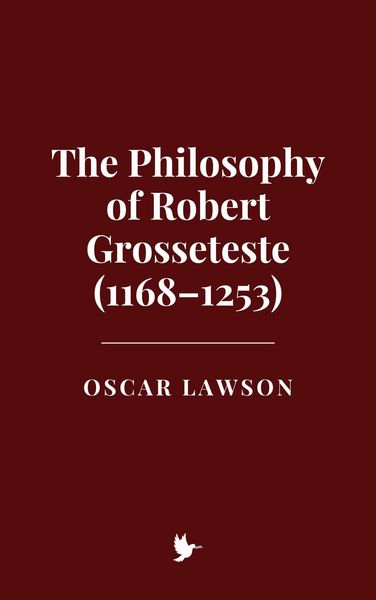
The Philosophy of Robert Grosseteste (1168-1253)
-
- Einzelkauf Download ausgewählt
-
Sprache:Englisch
Fr. 3.00
inkl. gesetzl. MwSt.Beschreibung
Produktdetails
Format
ePUB
Kopierschutz
Ja
Family Sharing
Ja
Text-to-Speech
Ja
Erscheinungsdatum
23.01.2025
Verlag
Historia MagnaSeitenzahl
(Printausgabe)
Dateigröße
127 KB
Sprache
Englisch
EAN
9798230736080
This book provides a comprehensive exploration of the life, thought, and intellectual contributions of Robert Grosseteste (1168-1253), a key figure in the development of medieval philosophy, theology, and early natural science. Through an in-depth analysis of his works and ideas, the book traces Grosseteste's unique ability to merge Aristotelian logic, Christian theology, and empirical observation, offering a systematic framework that influenced both Scholasticism and the early developments of modern science.
Grosseteste's foundational work on light, optics, and the nature of the cosmos serves as a bridge between ancient philosophy and the scientific methods of later thinkers such as Roger Bacon, Galileo, and Newton. His cosmology, metaphysical ideas of divine emanation, and emphasis on divine causality established the intellectual groundwork for subsequent natural philosophers and theologians. Grosseteste's insistence on empirical observation combined with logical reasoning marked a significant departure from medieval intellectual traditions, setting the stage for the scientific revolution and shaping future debates on the relationship between faith and reason.
The book examines Grosseteste's innovative contributions to the study of optics, his exploration of light as both a physical and theological principle, his work on the nature of substance, and his profound influence on theological method. His approach to logic, epistemology, and ethics reveals a thinker deeply committed to the integration of reason with divine revelation, a perspective that would later shape the intellectual trajectory of the Renaissance and Early Modern periods. By presenting Grosseteste not only as a theologian and philosopher but also as a pioneer of empirical scientific methods, this book highlights his lasting impact on both the medieval and early modern intellectual landscapes.
Noch keine Bewertungen vorhanden
Verfassen Sie die erste Bewertung zu diesem Artikel
Helfen Sie anderen Kundinnen und Kunden durch Ihre Meinung.