KI-Beratung Beta

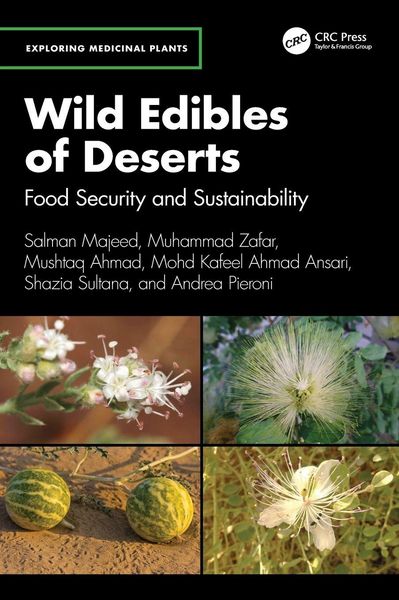
Produktbild: Wild Edibles of Deserts

Wild Edibles of Deserts Food Security and Sustainability

Fr. 332.00

inkl. gesetzl. MwSt., Versandkostenfrei


Beschreibung

Wild Edibles of Deserts: Food Security and Sustainability provides coverage of topics in food and health in desert rangelands, using an interdisciplinary approach that considers health not only in a functional and human sense but also in terms of external factors including aridity.

The plant diversity...

Beschreibung

Wild Edibles of Deserts: Food Security and Sustainability provides coverage of topics in food and health in desert rangelands, using an interdisciplinary approach that considers health not only in a functional and human sense but also in terms of external factors including aridity.

The plant diversity in desert ecosystems provides economic service benefits, such as sources of fodder, fuel wood, and traditional medicinal plants. This book documents wild edibles commonly grown in deserts that are hugely beneficial for the herbal industry for the socio-economic uplift of local communities. This text contains multiple field pictorial graphs of desert wild edible plants to help with their identification, and it gives detailed information on food security issues and sustainability measures in the world desert zones. It also focusses on the diversity of wild edibles in deserts across the globe, their nutraceutical importance, production-consumption trends, integration into food menus, and marketing and livelihood opportunities to the indigenous people.

A volume in the Exploring Medicinal Plants series, this book creates opportunity for policymakers to develop plans for the successful entry of wild edibles into herbal industries and attracts farmers owning infertile lands to cultivate wild edibles in desert rangeland. The book is a valuable resource for researchers, conservationists, and policymakers seeking solutions at the intersection of food security and environmental sustainability.

Produktdetails

Einband

Gebundene Ausgabe

Erscheinungsdatum

07.08.2025

Abbildungen

80 SW-Abb., 76 SW-Fotos, 4 SW-Zeichn., 14 Tabellen

Verlag Taylor & Francis

Produktdetails

Einband

Gebundene Ausgabe

Erscheinungsdatum

07.08.2025

Abbildungen

80 SW-Abb., 76 SW-Fotos, 4 SW-Zeichn., 14 Tabellen

Verlag Taylor & Francis
Seitenzahl

242

Maße (L/B/H)

26/18.3/1.8 cm

Gewicht

595 g

Sprache

Englisch

ISBN

978-1-03-286511-9

Herstelleradresse

Libri GmbH
Europaallee 1
36244 Bad Hersfeld
DE

Email: gpsr@libri.de

Noch keine Bewertungen vorhanden

Verfassen Sie die erste Bewertung zu diesem Artikel

Helfen Sie anderen Kundinnen und Kunden durch Ihre Meinung.

Kundinnen und Kunden meinen

Bewertungen (0)

Die Leseprobe wird geladen.
  • Produktbild: Wild Edibles of Deserts
  • Chapter 1: Introduction

    1.1 Why are deserts trendy?

    1.2 Extent of Climate Aridity in the Deserts

    1.3 Sustainable Land Use and Desertification

    1.3.1 Desertification: Causes and Impacts

    1.3.2 Importance of Sustainable Land Use

    1.3.3 Strategies for Combating Desertification

    1.3.4 Case Studies in Successful Desertification Mitigation

    a) The Loess Plateau, China

    b) Israel Negev Desert

    c) Great Green Wall, Africa

    d) Rewetting Peatlands in Indonesia

    e) Sustainable Land Management in Niger

    1.3.5 Policy Frameworks and International Cooperation

    1.4 Conclusion and Implications

    References

    Chapter 2: Brief Overview of Deserts of the World (Ecology, Climate, flora, Population)

    2.1 South Asian Deserts

    2.1.1 Thar Desert

    2.1.2 Cholistan Desert

    2.1.3 Kutch Desert

    2.1.4 Thal Desert

    2.1.5 Cold Deserts

    2.2 Central Asian Deserts

    2.3 Arabic Deserts

    2.4 African Deserts

    2.4.1 Sahara Desert

    2.4.2 Namib Desert

    2.5 European Deserts

    2.6 Latin American Deserts

    2.6.1 Atacama Desert

    2.6.2 Sonoran Desert

    2.6.3 Chihuahuan Desert

    References

    Chapter 3: Traditional Wild Edibles (WEs) of the Deserts: Reservoir of Ethnomedicine

    3.1 Desert legumes as a source of protein in human diets

    3.1.1 Acacia jacquemontii Benth.

    3.1.2 Acacia nilotica (L.) Willd. ex Delile

    3.1.3 Acacia modesta (Linn.) Wall.

    3.1.4 Albizia lebbeck (L.) Benth.

    3.1.5 Prosopis cineraria (Linn.) Druce

    3.1.6 Cyamopsis tetragonoloba (L.) Taub)

    3.1.7 Crotalaria burhia Buch.-Ham. ex Benth.

    3.1.8 Parkinsonia aculeata L.

    3.1.9 Prosopis juliflora (Swartz) DC

    3.1.10 Tephrosia purpurea (L.) Pers.

    3.2 Prickly pear: Low-cost forage crop for supplementing food security

    3.2.1 Opuntia dillenii (Ker Gawl.)

    3.3 Ethnopharmacological status of WEs of family Capparaceae

    3.3.1 Capparis decidua Edgew (Forssk.)

    3.3.2 Capparis spinosa L.

    3.3.3 Cleome brachycarpa Vahl ex DC.

    3.4 WEs Cucurbitaceous species: Therapeutic effect on human health

    3.4.1 Citrullus colocynthis (L.) Schrad

    3.4.2 Cucumis melo L.

    3.4.3 Cucurbita maxima Duchesne

    3.4.4 Luffa cylindrica (L.) M.Roem

    3.4.5 Momordica charantia L.

    3.4.6 Mukia maderaspatana (L.) M.Roem

    3.5 Nutritional aspects of Drought-Resistance Rhamnaceous Wes

    3.5.1 Ziziphus nummularia (Burm.f.) Wight & Arn.

    3.5.2 Ziziphus jujuba Mill.

    3.6 Biochemical therapeutic uses of Desert WEs of Zygophyllaceae

    3.6.1 Fagonia cretica Linn.

    3.6.2 Tribulus terrestris L.

    References

    Chapter 4: Economic Botany of the Deserts WEs: Source of Food and Nutrition

    4.1 WEs: Combating Food and Health Security

    4.1.1 Nutritional Benefits of WEs in Arid Regions

    4.1.2 Sustainable Harvesting Practices for Desert Foraging

    4.1.3 Cultural Significance and Traditional Knowledge of Wild Foods

    4.1.4 Wild Edibles as a Strategy for Food Security and Ecological