Gutscheinbedingungen

*Gültig bis 18.08.2026 auf (fast) alles. Ausgeschlossen sind Smartboxen, Zeitschriften, Tickets, Lebensmittel, Gaming-Elektroartikel, Tinte/Toner, Gutscheine, Geschenkkarten, Blumen und Abos | Einlösbar in allen Buchhandlungen von Orell Füssli, Barth Bücher, Buchladen Rapunzel, Schuler Orell Füssli, Stauffacher und ZAP unter Vorweisung des Gutscheins, auf www.orellfüssli.ch durch Eingabe des Gutscheincodes. Beim Service „eBooks verschenken“ und bei eBook-Käufen via eReader nicht einlösbar | Mindesteinkaufswert: Fr. 100.- | Nicht mit anderen Rabatten kumulierbar.

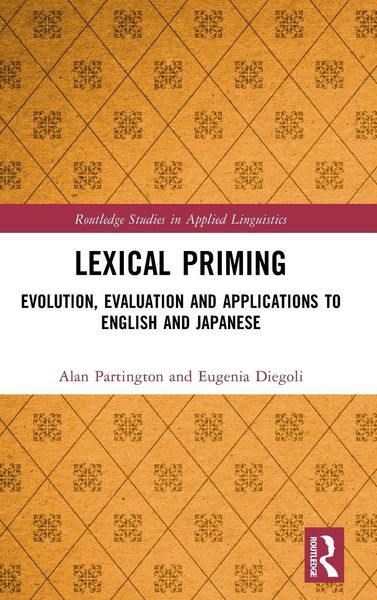
Produktbild: Lexical Priming

Lexical Priming Evolution, Evaluation and Applications to English and Japanese

Fr. 273.00

inkl. gesetzl. MwSt., Versandkostenfrei


Beschreibung

Produktdetails

Einband

Gebundene Ausgabe

Erscheinungsdatum

27.10.2025

Abbildungen

schwarz-weiss Illustrationen, Zeichnungen, schwarz-weiss, Tabellen, schwarz-weiss

Verlag

Taylor & Francis

Seitenzahl

230

Maße (L/B/H)

23.5/15.7/1.7 cm

Gewicht

490 g

Sprache

Englisch

ISBN

978-1-03-274291-5

Beschreibung

Produktdetails

Einband

Gebundene Ausgabe

Erscheinungsdatum

27.10.2025

Abbildungen

schwarz-weiss Illustrationen, Zeichnungen, schwarz-weiss, Tabellen, schwarz-weiss

Verlag

Taylor & Francis

Seitenzahl

230

Maße (L/B/H)

23.5/15.7/1.7 cm

Gewicht

490 g

Sprache

Englisch

ISBN

978-1-03-274291-5

Herstelleradresse

Libri GmbH
Europaallee 1
36244 Bad Hersfeld
DE

Email: gpsr@libri.de

Noch keine Bewertungen vorhanden

Verfassen Sie die erste Bewertung zu diesem Artikel

Helfen Sie anderen Kundinnen und Kunden durch Ihre Meinung.

Kundinnen und Kunden meinen

Bewertungen (0)

  • Produktbild: Lexical Priming
  • List of figures and tables; Acknowledgements; List of abbreviations; Typographical conventions; Introduction (0.1 A primary outline of research aims, or: What is this book about?; 0.2 Materials and methodology); Chapter 1: Hoey's original Lexical Priming theory, 2005 (1.1 The principal hypotheses; 1.2 The implications of LP theory; 1.3 Language acquisition and performance; 1.4 Lexical Priming and meaning; 1.5 Lexical Priming, grammar, syntax and phraseology; 1.6 Lexical Priming and creativity; 1.7 Conclusion); Chapter 2: The Evolution of LP theory from 2005 to today (2.1 Introduction; 2.2 Lexical Priming in a corpus of a spoken discourse-type; 2.3 Lexical Priming: Applications and advances, 2017; 2.4 Forced Lexical Priming; 2.5 Conclusion); Chapter 3: Data, methods and tools (3.1 Introduction; 3.2 Corpus-assisted discourse studies (CaDS); 3.3 The data; 3.4 Conclusion); Chapter 4: LP and grammar (4.1 Introduction; 4.2 Grammatical 'categories'; 4.3 What is a 'word'?; 4.4 Colligational primings; 4.5 Conclusion); Chapter 5: Lexical Priming and polysemy (5.1 Introduction; 5.2 Nesting, polysemy and 'drinking problems'; 5.3 Polysemy in Japanese: The case of amai 'sweet/permissive'; 5.4 Conclusion); Chapter 6: Evaluation in English at the lexical and clausal levels (6.1 Whatever happened to evaluative primings?; 6.2 What is the role of evaluation in communication?; 6.3 Evaluation in English: From simplicity to complexity; 6.4 Conclusion); Chapter 7: Evaluation in Japanese discourses at the lexical and clausal levels (7.1 Evaluation in Japanese at the collocational level; 7.2 Evaluation in Japanese at the clausal level; 7.3 Corroboration in the jaTenTen11; Conclusion); Chapter 8: Evaluative cohesion in whole texts (8.1 Introduction; 8.2 Propositional textual cohesion in Hoey 2005; 8.3 Evaluative textual cohesion; 8.4 Switching evaluations: From positive to negative and back again; 8.5 The evaluative cohesion of complete texts; 8.6 Conclusion); Chapter 9: Lexical Priming and the systems of 'modality' (9.1 Modality in modern standard English grammar; 9.2 Modality in English and LP theory; 9.3 A pause for summarising: What then is a 'clause' or 'sentence'? Proposition, evaluation and modal stance; 9.4 Modality in Japanese; 9.5 Modality in the Relationship corpus; 9.6 Conclusion); Chapter 10: Lexical Priming and im/politeness (10.1 Introduction; 10.2 From evaluation to im/politeness;10.3 Face-work: Where priming combines with inferencing; 10.4 Politeness primings in Japanese: The case of apologies; 10.5 Overriding of politeness primings in Japanese; 10.6 Conclusion); Chapter 11: Lexical Priming in interactive question-and-response discourse-types (11.1 Introduction; 11.2 A few more words on Yahoo! Chiebukuro; 11.3 Another question-and-response discourse-type: Press briefings; 11.4 Comparing and contrasting questions and responses in Japanese; 11.5 Conclusion); Chapter 12: Lexical Priming and linguistic variation (12.1 Introduction; 12.2 The challenges of comparison; 12.3 Comparing the Relationship and News corpora through keywords; 12.4 Investigating similarities; 12.5 Conclusion); Chapter 13: A round-up and a request; Appendix; Index