Bergdoll, B: Alan Dunn The Cartoonist as Architectural Critic
-
- Taschenbuch ausgewählt
- eBook
-
Sprache:Englisch
Fr. 73.90
inkl. gesetzl. MwSt.,
Beschreibung
Produktdetails
Einband
Taschenbuch
Erscheinungsdatum
19.05.2026
Abbildungen
139 color illustrations, 60 b&w illustrations
Verlag
The MIT PressSeitenzahl
424
Maße (L/B)
24.1/15.9 cm
Gewicht
369 g
Sprache
Englisch
ISBN
978-0-262-05259-7
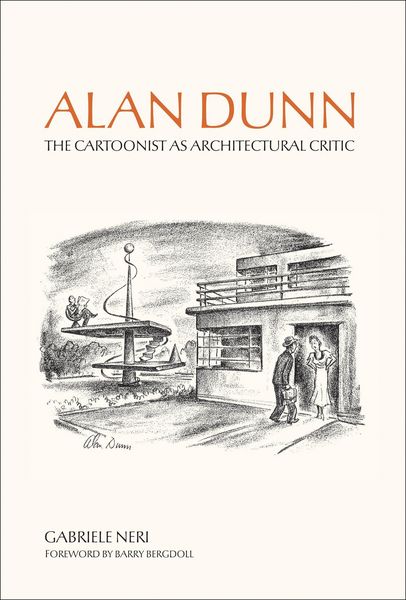
The first in-depth study of American artist Alan Dunn (1900–1974), whose incisive cartoons mocked twentieth-century architecture and urban environments, expanding the field of architectural criticism.
Drawing on his pioneering expertise in the relationship between graphic satire and architecture, Gabriele Neri retraces Alan Dunn’s path from painter to renowned cartoonist, offering an unconventional perspective on architectural and urban transformations—and on their perception within society.
Featuring 200 carefully selected images, including Dunn’s correspondence, preliminary sketches, unpublished cartoons, watercolors, and rare photographs, this book demonstrates the critical potential of caricature and cartoons for architectural history. It also reveals the complex intersections of architecture with media, publishing, commerce, society, art, and politics.
Among the thousands of cartoons and illustrations Dunn created for The New Yorker, Architectural Record, and other periodicals, many addressed key themes such as the evolving skyline of American metropolis; the appearance of controversial buildings; housing models; technological innovations; the relationship between architects, clients, and other figures in the construction industry; the protection of built heritage; and the obsessions, oddities, foibles, and even misdeeds of the architectural world.
As Lewis Mumford once wrote of Dunn: “Shall I say that he is obviously a better architect than the architects whose fashionable clichés and grim follies he exposes? Or shall I say that his urbane satiric style, deft but merciless, puts him in a class by himself; for this is what has been missing from contemporary criticism in all the arts. All this is true; but it is not enough.”
Noch keine Bewertungen vorhanden
Verfassen Sie die erste Bewertung zu diesem Artikel
Helfen Sie anderen Kundinnen und Kunden durch Ihre Meinung.