KI-Beratung Beta

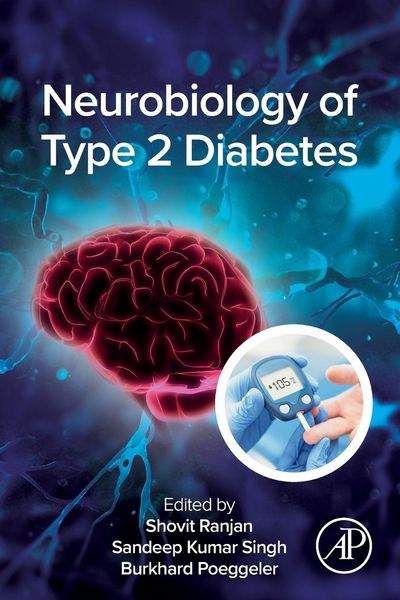
Produktbild: Neurobiology of Type 2 Diabetes

Neurobiology of Type 2 Diabetes

Fr. 172.00

inkl. gesetzl. MwSt., Versandkostenfrei


Beschreibung

The "Neurobiology of Type 2 Diabetes" delves into the intricate interplay between the nervous system and the development, progression, and management of Type 2 Diabetes. This comprehensive volume explores the often-overlooked neurological aspects of diabetes, offering a unique perspective on the disease....

Beschreibung

The "Neurobiology of Type 2 Diabetes" delves into the intricate interplay between the nervous system and the development, progression, and management of Type 2 Diabetes. This comprehensive volume explores the often-overlooked neurological aspects of diabetes, offering a unique perspective on the disease. The purpose of this book is to bridge the gap between neuroscience and diabetes research, providing a consolidated resource that elucidates the complex relationship between the brain and metabolic regulation. By synthesizing the latest scientific findings, the book aims to offer researchers, clinicians, and students a deep understanding of how neural pathways influence glucose homeostasis, insulin sensitivity, and the emergence of diabetic complications.

Portrait

Dr. Shovit Ranjan is an Assistant Professor of Zoology at Kolhan University, Chaibasa, Jharkhand, India. He earned his BSc and MSc in Zoology from the University of Delhi and a PhD in Life Sciences (Molecular Neurobiology) from the Central University of Jharkhand. His research focuses on molecular neurobiology, type 2 diabetes, bioinformatics, and meta-analysis. He has published widely in peer-reviewed journals, contributed to several books, and presented his work at international forums, such as the FENS 2017 Meeting (Hungary), supported by an ICMR International Travel Grant.

Dr. Sandeep Kumar Singh is Assistant Professor in the All India Institute of Medical Sciences (AIIMS), Nagpur, India. He obtained his PhD in Biotechnology from Banaras Hindu University and conducted postdoctoral research in the Department of Neurobiology at the University of Chicago. Dr. Singh brings 17 years of experience in neuroscience, molecular biology, neurodegenerative diseases, aging, nutraceuticals, and nanomedicines. He is a member of several scientific societies, including the American Academy of Neurology, International Society of Neurochemistry, Society of Neurochemistry, Indian Academy of Neurosciences, and Alzheimer's and related Disorders Society of India. Dr. Singh has published five books, including Elsevier's A New Era in Alzheimer's Research and Genome Editing for Neurodegenerative Diseases.

Dr. Burkhard Poeggeler (Georg-August-University of Göttingen, Germany) holds a PhD in Biochemistry and has authored over 120 PubMed-indexed publications. His research focuses on neuroprotection, redox biology, and regenerative pharmacology.

Produktdetails

Einband

Taschenbuch

Erscheinungsdatum

27.02.2026

Herausgeber Shovi Ranjan + weitere
Verlag Elsevier Science & Technology

Produktdetails

Einband

Taschenbuch

Erscheinungsdatum

27.02.2026

Herausgeber
Verlag Elsevier Science & Technology
Seitenzahl

354

Maße (L/B/H)

22.9/15.2/1.9 cm

Gewicht

475 g

Sprache

Englisch

ISBN

978-0-443-32848-0

EU-Ansprechpartner

Elsevier B.V.
Radarweg 29
1043 NX Amsterdam
NL
productsafety@elsevier.com

Herstelleradresse

Elsevier Science & Technology
London Wall 125
EC2Y 5AS London
GB
tradeorders@elsevier.com

Noch keine Bewertungen vorhanden

Verfassen Sie die erste Bewertung zu diesem Artikel

Helfen Sie anderen Kundinnen und Kunden durch Ihre Meinung.

Kundinnen und Kunden meinen

Bewertungen (0)

  • Produktbild: Neurobiology of Type 2 Diabetes
  • 1. Introduction to Neurobiology and Type 2 Diabetes
    2. Neural Regulation of Glucose Homeostasis
    3. Neuroinflammation and Insulin Resistance
    4. Neurological Complications of Type 2 Diabetes
    5. Brain-Gut Axis in Metabolic Control
    6. Neuroendocrine Regulation of Metabolism
    7. Emerging Therapeutic Approaches in Neurobiology of Type 2 Diabetes
    8. Case Studies: Applying Neurobiology in Clinical Practice
    9. Future Directions and Challenges
    10. Conclusion and Summary