Gutscheinbedingungen

*Gültig bis 21.06.2026 auf (fast) alles. Ausgeschlossen sind Smartboxen, Zeitschriften, Tickets, Lebensmittel, Gaming-Elektroartikel, Tinte/Toner, Gutscheine, Geschenkkarten, Blumen und Abos | Einlösbar in allen Buchhandlungen von Orell Füssli, Barth Bücher, Buchladen Rapunzel, Schuler Orell Füssli, Stauffacher und ZAP unter Vorweisung des Gutscheins, auf www.orellfüssli.ch durch Eingabe des Gutscheincodes. Beim Service „eBooks verschenken“ und bei eBook-Käufen via eReader nicht einlösbar | Mindesteinkaufswert: Fr. 30.- | Nicht mit anderen Rabatten kumulierbar.

Produktbild: Consultations in Neuro-Ophthalmology

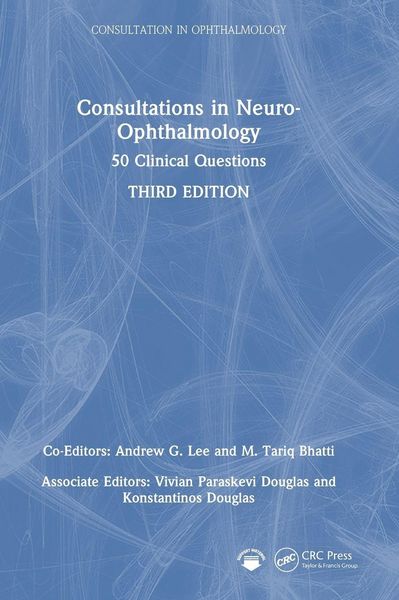
Consultations in Neuro-Ophthalmology 50 Clinical Questions

Fr. 319.00

inkl. gesetzl. MwSt., Versandkostenfrei


Beschreibung

Produktdetails

Einband

Gebundene Ausgabe

Erscheinungsdatum

13.05.2026

Abbildungen

schwarz-weiss Illustrationen, farbige Illustrationen, Raster, schwarz-weiss, Raster, farbig, Zeichnungen, schwarz-weiss, Zeichnungen, farbig, Tabellen, schwarz-weiss

Herausgeber

Lee Andrew + weitere

Verlag

Taylor and Francis

Seitenzahl

222

Maße (L/B)

25.4/17.8 cm

Gewicht

600 g

Auflage

3. Auflage

Sprache

Englisch

ISBN

978-1-04-105900-4

Beschreibung

Produktdetails

Einband

Gebundene Ausgabe

Erscheinungsdatum

13.05.2026

Abbildungen

schwarz-weiss Illustrationen, farbige Illustrationen, Raster, schwarz-weiss, Raster, farbig, Zeichnungen, schwarz-weiss, Zeichnungen, farbig, Tabellen, schwarz-weiss

Herausgeber

Verlag

Taylor and Francis

Seitenzahl

222

Maße (L/B)

25.4/17.8 cm

Gewicht

600 g

Auflage

3. Auflage

Sprache

Englisch

ISBN

978-1-04-105900-4

Kundinnen und Kunden meinen

0 Bewertungen

Informationen zu Bewertungen

Zur Abgabe einer Bewertung ist eine Anmeldung im Konto notwendig. Die Authentizität der Bewertungen wird von uns nicht überprüft. Wir behalten uns vor, Bewertungstexte, die unseren Richtlinien widersprechen, entsprechend zu kürzen oder zu löschen.

Die Bewertungen sind nach Format, Anzahl Sterne und Datum sortiert.

Verfassen Sie die erste Bewertung zu diesem Artikel

Helfen Sie anderen Kund*innen durch Ihre Meinung

Kundinnen und Kunden meinen

0 Bewertungen filtern

Die Leseprobe wird geladen.
  • Produktbild: Consultations in Neuro-Ophthalmology
  • Editor Biographies. Acknowledgements. List of Contributors. Preface. Question 1 How Should a Childhood Optic Nerve Glioma Be Worked Up? Question 2 How Should a Optic Nerve Sheath Meningioma Be Managed? Question 3 When Should You Consider the Diagnosis of Neuromyelitis Optica Spectrum Disease with Positive Aquaporin 4-IgG (AQP4+ NMOSD)? Question 4 How Should I Evaluate and Manage Suspected Optic Neuritis? Question 5 What Is the Treatment of Optic Neuritis? Question 6 What is the Workup and Treatment for Neuroretinitis? Question 7 How Do You Evaluate and Treat Nonarteritic Anterior Ischemic Optic Neuropathy? Question 8 How Do You Differentiate Arteritic from Nonarteritic Anterior Ischemic Optic Neuropathy? Question 9 How Should I Treat Giant Cell Arteritis? Question 10 What Is the Evaluation of Traumatic Optic Neuropathy? Question 11 What Is the Evaluation and Management for Papilledema? Question 12 Is There a Difference in the Management of Idiopathic Intracranial Hypertension in Pregnancy? Question 13 What Is the Acute Idiopathic Blind Spot Enlargement (AIBSE) Syndrome and How Can I Confirm the Diagnosis? Question 14 How Do I Work Up and Manage an Internuclear Ophthalmoplegia? Question 15 What Is the Workup and Treatment of Myasthenia Gravis? Question 16 How Do You Manage Visual Loss in Thyroid Eye Disease? Question 17 When Do You Use Radiation, Steroids, or Teprotumumab in Thyroid Eye Disease? Question 18 How Do You Manage Diplopia in Thyroid Eye Disease? Question 19 What Are the Evaluations and Treatments for Acquired Nystagmus? Question 20 What Is the Evaluation for Anisocoria? Question 21 How and When Should I Work Up Horner Syndrome? Question 22 What Should I Do with a Dilated Pupil? Question 23 What Is the Evaluation for Episodic Anisocoria? Question 24 How Do You Diagnose and Manage Toxic and Nutritional Optic Neuropathies? Question 25 What Are Visual Processing Defects and How Can I Recognize Them? Question 26 How Do I Manage Patients With Headache Syndromes Who Come to Me as an Ophthalmologist? Question 27 What Is the Evaluation of Optic Atrophy? Question 28 How Do I Treat a Child with Asymmetric Nystagmus? Question 29 What Is Opsoclonus and How Do I Manage It? Question 30 What Is Wernicke Syndrome and How Does It Affect the Eye? Question 31 How Do I Manage Postoperative Visual Loss After Nonocular Surgery? Question 32 How Do I Manage Transient Monocular Visual Loss in a Young, Otherwise Healthy Patient? Question 33 What Is the Evaluation for Transient Monocular Visual Loss in an Older Adult? Question 34 What Is the Evaluation for a Homonymous Hemianopia? Question 35 What Is the Evaluation for a Painful Third Nerve Palsy Without a Fixed and Dilated Pupil but With Anisocoria (Partial Pupillary Involvement)? Question 36 How Do You Manage an Isolated and Presumed Vasculopathic, Pupil-Sparing Third Nerve Palsy? Question 37 What Is the Appropriate Evaluation of a Fourth Nerve Palsy? Question 38 What Is the Appropriate Evaluation in a Patient Suspected of Having a Sixth Nerve Palsy? Question 39 How Do You Evaluate a Patient with Multiple Ocular Cranial Nerve Palsies? Question 40 What Is Blepharospasm? Question 41 What Is Hemifacial Spasm? Question 42 How Do You Deal with a Patient Who Has Functional Visual Loss? Question 43 How Do You Diagnose and Manage Migraine Visual Aura? Question 44 How Do I Recognize Leber Hereditary Optic Neuropathy? Question 45 How Do I Manage an Orbital Apex Syndrome? Question 46 How Do I Evaluate and Manage Nonspecific Orbital Inflammation? Question 47 How Should I Evaluate and Manage a Carotid-Cavernous Fistula? Question 48 How Do I Evaluate and Treat Radiation-Induced Optic Neuropathy? Question 49 What Should I Do with a Seventh Nerve Palsy? Question 50 How Do You Diagnose and Treat Myelin Oligodendrocyte Glycoprotein Antibody-Associated Disease? Index.