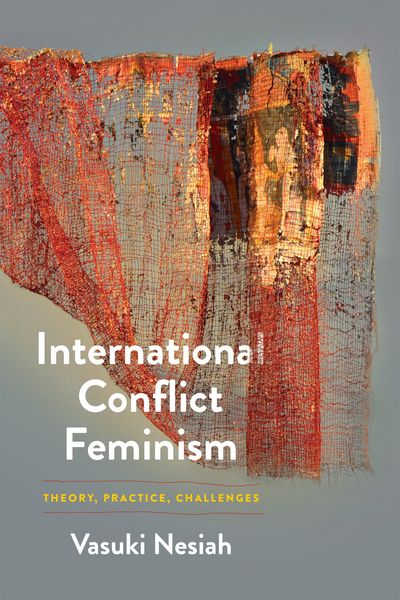
International Conflict Feminism Theory, Practice, Challenges
-
- Einzelkauf Download ausgewählt
-
Sprache:Englisch
Fr. 74.90
inkl. gesetzl. MwSt.Beschreibung
Produktdetails
Format
ePUB
Kopierschutz
Nein
Family Sharing
Nein
Text-to-Speech
Ja
Erscheinungsdatum
08.10.2024
Verlag
LAPA PublishersSeitenzahl
304 (Printausgabe)
Sprache
Englisch
EAN
9781512826333
Analyzes the impact of International Conflict Feminism's alliance with powerful global institutions
In this book, Vasuki Nesiah tells the story of the astonishing uptake of International Conflict Feminism (ICF) in the most powerful institutions of global governance. ICF refers to a repertoire of policy agendas and legal strategies allied with those institutions to focus on women's vulnerabilities, fight impunity for sexual violence, and promote women's roles in peace-building processes. ICF emerged from feminist networks anchored in the Global North that gained momentum in the aftermath of the Cold War. Although this volume offers a testament to ICF's remarkable success, it also analyzes how this success was intertwined with the defeat of alternative visions and agendas, including a range of dissident and heterodox feminisms that were eclipsed as ICF gained traction.
Emerging from Nesiah's dual occupations in academia and international law and policy practice, International Conflict Feminism shows how centrally the ICF agenda has shaped fields such as peace building, international criminal law, transitional justice, and post-conflict economic policy. Each section pauses at different sites in the international governance architecture to analyze the distributive impact of ICF and its allied global policy agendas to examine what is privileged, legitimized, and empowered, and what is subordinated, marginalized, and further excluded.
ICF is a project of ideas and passions, legal proposals, and policy orientations. Today, when the most powerful countries of the world are describing their military, economic, and political interventions as a "feminist foreign policy," the task of understanding and assessing the ICF project is especially urgent. Nesiah argues that, rather than obfuscating and denying the power of the ICF agenda, grappling with ICF's power is essential to achieving solidarity with feminisms that don't have a seat at the table, in particular those dissident feminist traditions with priorities and interests that challenge the dominant world order and its injustices and hierarchies.
Kundinnen und Kunden meinen
Verfassen Sie die erste Bewertung zu diesem Artikel
Helfen Sie anderen Kund*innen durch Ihre Meinung