KI-Beratung Beta

Gutscheinbedingungen

*Gültig bis 06.10.2026 auf alle Bücher. Ausgeschlossen sind Zeitschriften, Prozentbücher und Abos | Einlösbar in allen Buchhandlungen von Orell Füssli (ausser Transa Books), Barth Bücher, Buchladen Rapunzel, Papeterie Köhler, Schuler Orell Füssli, Stauffacher und ZAP unter Vorweisung des Gutscheins, auf www.orellfüssli.ch durch Eingabe des Gutscheincodes. Beim Service „eBooks verschenken“ und bei eBook-Käufen via eReader nicht einlösbar | Mindesteinkaufswert: Fr. 30.- | Nicht mit anderen Rabatten kumulierbar.

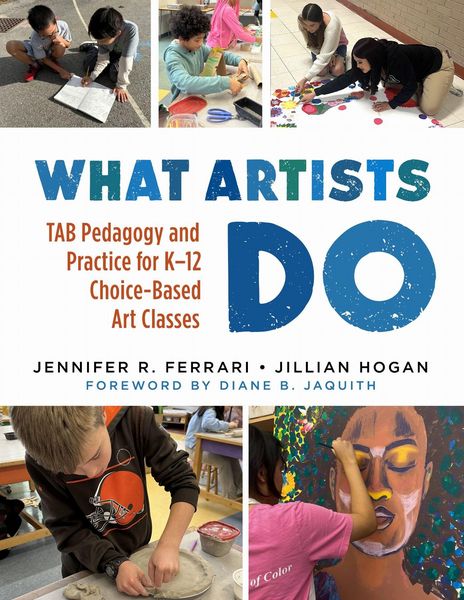
Produktbild: What Artists Do

What Artists Do Tab Pedagogy and Practice for K-12 Choice-Based Art Classes

Fr. 155.00

inkl. gesetzl. MwSt., Versandkostenfrei


Beschreibung

Produktdetails

Einband

Gebundene Ausgabe

Erscheinungsdatum

26.06.2026

Verlag

Teachers College Press

Seitenzahl

192

Maße (L/B/H)

28.3/22.3/1.7 cm

Gewicht

667 g

Sprache

Englisch

ISBN

978-0-8077-8365-8

Beschreibung

Produktdetails

Einband

Gebundene Ausgabe

Erscheinungsdatum

26.06.2026

Verlag

Teachers College Press

Seitenzahl

192

Maße (L/B/H)

28.3/22.3/1.7 cm

Gewicht

667 g

Sprache

Englisch

ISBN

978-0-8077-8365-8

Herstelleradresse

Libri GmbH
Europaallee 1
36244 Bad Hersfeld
DE

Email: gpsr@libri.de

Noch keine Bewertungen vorhanden

Verfassen Sie die erste Bewertung zu diesem Artikel

Helfen Sie anderen Kundinnen und Kunden durch Ihre Meinung.

Kundinnen und Kunden meinen

Bewertungen (0)

  • Produktbild: What Artists Do
  • Contents

    Foreword Diane B. Jaquith  ix

    Acknowledgments  xi

    Introduction  1

    How Did We Get Here?  1

    About Us  2

    How to Read This Book  4
    What This Book Is  4
    What This Book Is Not  5

    A Note on “Pedagogical Appropriation”  5

    Where to Find More  6

    1.  What Is TAB?  7

    The TAB Approach  8

    The Three TAB Principles  9

    What Do TAB Teachers Believe?  14

    Clarifying the TAB Class  15

    The Nuance of TAB  18

    Choice Is a Path, Not a Destination  20

    TAB Is Hard  20

    Educational Telephone  21

    Moving Forward  22

    Things to Think About  22

    2.  Why Does TAB Work?  23

    Thinking in a Discipline  23

    Constructivism  24

    Balancing Choices  26

    Self-Determination Theory  27

    Fitting Into History  28

    “Working”  29

    Things to Think About  29

    3.  Why Is TAB a Best Practice for Art Education?  30

    TAB as a Best Practice for Contemporary Art Education  30

    Connections to General Education Frameworks  30

    Conclusion  48

    Things to Think About  49

    4.  Where Can We Find TAB?  50

    Clyde Gaw, New Palestine High School, Indiana  50

    Kelly Beach, Rodger Quist Middle School, Thornton, Colorado  57

    Lauren Gould Donahue, C. T. Douglas Elementary School, Acton, Massachusetts  65

    Things to Think About  75

    5.  How Do We Map Curriculum for a TAB Program?  76
    Teaching for Artistic Behavior  76

    Curriculum Writing: A Recipe for Success  78

    Curriculum Close-Ups  86
    Your Recipe for a Successful Curriculum  93

    Things to Think About  95

    6.  How Do We Promote Quality Student Engagement?  96

    Defining Quality Engagement in Students  96

    Manifesting Quality Engagement Through Teaching  97

    TAB Teachers Embrace a “Yes, Please!” Mindset With Students  99

    Teachers Dig Deeper  108

    The Lighting of a Fire  109

    Things to Think About  110

    7.  How Do We Create and Implement Authentic Assessment?  112

    What Should Art Teachers Assess?  113

    Defining Quality Artistic Thinking  113

    Some Assessment Guidelines  119

    Types of Assessment  120

    What Do You Value?  134

    Things to Think About  134

    8.  Who in Our School Communities Needs to Know About TAB?  135

    The Broken Record Principle  135

    Claiming Your Expertise and Navigating Expectations  136

    Using Clear, Concise, and Relevant Language  139

    Defining Your Well-Functioning Studio  139

    Specific Advocacy Strategies  139

    How Can the School Community Support TAB Teachers  142

    Expanding TAB’s Reach  144

    Things to Think About  147

    Afterword (and Onward!)  148

    Endnotes  151

    References  153

    Appendix A: TAB Timelines  156

    Appendix B: VoTABulary: The Language of TAB  159

    Appendix C: TAB Myths, Realities, and FAQs  162

    Appendix Endnotes  169

    Appendix References  170

    Index  171

    About the Authors  177