KI-Beratung Beta

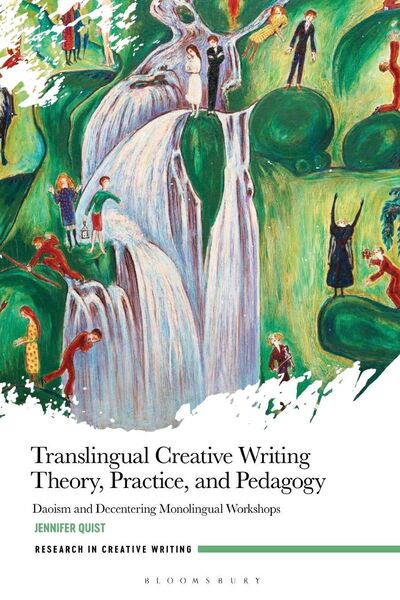
Produktbild: Quist, J: Translingual Creative Writing Theory, Practice, an
Vorbesteller Neu

Quist, J: Translingual Creative Writing Theory, Practice, an Daoism and Decentering Monolingual Workshops

Fr. 52.90

inkl. gesetzl. MwSt., Versandkostenfrei


Beschreibung

In a challenge to monolingual, Anglophone dominated creative writing workshops, this book explores why and how students' multilingual backgrounds and lack of fluency with the English language can emerge as assets rather than impediments to artistry and creativity. Grounded in the Chinese tradition of...

Beschreibung

In a challenge to monolingual, Anglophone dominated creative writing workshops, this book explores why and how students' multilingual backgrounds and lack of fluency with the English language can emerge as assets rather than impediments to artistry and creativity. Grounded in the Chinese tradition of Daoism as an ongoing discourse, this exploration uses rigorous academic readings of the philosophical text, the Zhuangzi, as an analytical framework and takes a translingual approach to writing where translation and composition intersect, inscribing one language upon another within a single text. With concepts that resist expression such as inspiration, uncertainty, non-knowing, spontaneity, unity, forgetting the self, and the perfection behind the imperfection of language, Jennifer Quist demonstrates how Daoism's theories and metalanguage can re-imagine creative writing education whilst de-naturalizing the authority of English and Euro-American literary traditions. With analytical lenses derived from East Asia given context through translations of Chinese educators' primary accounts of the history and theory of postsecondary creative writing education in 21st-century China, Quist develops a method for examining the practices of exemplary translingual writers from China, Japan, and their diasporas.
Featuring translingual writing prompts and practices for individual or classroom use by students at all levels of multilingualism, Translingual Creative Writing Theory, Practice, and Pedagogy opens up the current workshop model and discloses the possibilities of linguistic transcendence for instructors and students. With writing strategies based in cross-cultural collaboration and balanced with de-Anglicization of creative writing pedagogy, this book calls to rework the structures, methods, and metaphors of the workshop and presents ideas for more collaborative, collective, equitable, diverse, and inclusive programs.

Produktdetails

Einband

Taschenbuch

Erscheinungsdatum

26.11.2026

Herausgeber Jen Webb + weitere
Verlag Bloomsbury Academic

Produktdetails

Einband

Taschenbuch

Erscheinungsdatum

26.11.2026

Herausgeber
Verlag Bloomsbury Academic
Seitenzahl

256

Maße (L/B/H)

23.4/15.6/2.5 cm

Gewicht

454 g

Sprache

Englisch

ISBN

978-1-350-51065-4

Noch keine Bewertungen vorhanden

Verfassen Sie die erste Bewertung zu diesem Artikel

Helfen Sie anderen Kundinnen und Kunden durch Ihre Meinung.

Kundinnen und Kunden meinen

Bewertungen (0)

Die Leseprobe wird geladen.
  • Produktbild: Quist, J: Translingual Creative Writing Theory, Practice, an
  • Introduction - Global Multilingualism And Classroom Translingualism
    Into China
    Beyond Structure and Into the Way

    Chapter 1 - Creative Writing Education: History And Hegemony
    US Origins of the Workshop: Nationalism, Individualism, Humanism, Formalism
    Traditional Creative Writing Education: Forms, Rubrics, and Reading as a Writer

    Chapter 2 - The Case of Creative Writing Education in China
    Creative Writing and Nationalism Beyond the US: China and Elsewhere
    Translating Creative Writing Education

    Chapter 3 - Creativity and the Multilingual Writer
    Creative Writing Teaching: Triads, Translation, and the Translingual
    The Translingual and the Chance at Transcendence
    Literary Studies or Language Acquisition in Translingual Creative Writing
    Cosmopolitanism and Creative Writing Education in East Asia in English

    Chapter 4 - Creative Turn in Translation, Translational Turn in Creative Writing
    A Creative Turn
    The Self and Individualism in Translingual Creative Writing Education
    Foreignization in Translingual Creative Writing Education

    Chapter 5 - Theorizing Translingual Creative Writing
    Silence on Theory, Silence in Theory
    Nonsense and Non-silence
    Euro-American Romanticization of Creativity
    Classical Philosophy in Contemporary Chinese Creative Writing
    Daoism, Transcendence, and the Way
    Rejections of Alternatives: The False Dichotomy of English/Non-English Writing
    The Inspirational Shen in Translingual Creative Writing
    Graham's List - Number One: Free-roaming Focus on the Whole
    Graham's List - Number Two: Spontaneity
    Graham's List - Number Three: Forgetting the Self in Total Absorption

    Chapter 6 - Readings in Translingual Writing
    Translingual Chinese-English Texts Across an "Abyss"
    Early Chinese-English Translingual Fiction: Lu Xun's True Story of Ah Q
    Zero Translation and Brokering Culture: Lin Yutang's Moment in Peking
    Defamiliarizing Syntax and Idioms: Ha Jin's "The Bridegroom"
    Translating Signatures: Xiaolu Guo's A Concise Chinese-English Dictionary for Lovers
    Fictitious Ethnography: Yoko Tawada
    Surface Translations: Tawada's "Hamlet No See"

    Chapter 7 - Teaching Translingual Creative Writing
    Globalizing and Localizing the Creative Writing Workshop
    Shifting Creative Writing Workshop Metaphors
    Translingual Practices - Superimposed Metaphors, Fictitious Ethnography,Surface Translation
    Dynamic Multilingualism and Challenging Hegemonic Individualism
    Technology in Translingual Creative Writing: Yoko Tawada's "Changeling"
    Translingual Creative Writing Education Ethics and Collaboration
    Bibliography
    Index