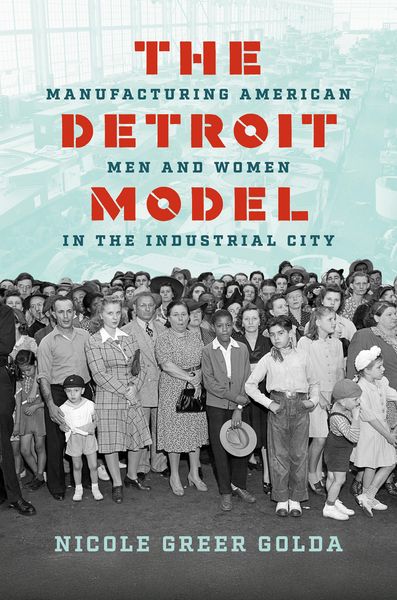
The Detroit Model Manufacturing American Men and Women in the Industrial City
-
- Hardcover
- Taschenbuch
- eBook ausgewählt
-
Form:Einzelkauf Download
-
Sprache:Englisch
Fr. 25.90
inkl. gesetzl. MwSt.Beschreibung
Produktdetails
Format
ePUB
Kopierschutz
Nein
Family Sharing
Nein
Text-to-Speech
Ja
Erscheinungsdatum
18.03.2026
Verlag
The University of North Carolina PressSeitenzahl
296 (Printausgabe)
Dateigröße
18481 KB
Sprache
Englisch
EAN
9781469692715
As Detroit reached dizzying new heights of industrial success and urban growth at the turn of the twentieth century, hundreds of thousands of migrants flocked to the Motor City. In response, organizations such as the YMCA and Ford Motor Company launched wide-reaching Americanization programs to instill patriotism, conservative gender roles, traditional family values, and industry-favorable labor relations in the city’s immigrant communities. As the “Ford Man” became a model for masculinity and the housewife for femininity, supporters of these programs believed Detroit could become a model for the nation. In this impressively researched book, Nicole Greer Golda reveals how the Detroit Model became embedded in American culture as the ideal of proper American citizenship.
Delving into Immigration Bureau files, migrant letters, and unexplored Ford Motor Company records, Greer Golda examines debates over family order, sexual relationships, race and labor relations, immigration policy, and the status of women. She illustrates how businessmen, government officials, white women, native-born workers, immigrants, and Black Detroiters challenged each other for the power to define the contours of the new American city. Ultimately, the Americanization programs prevailed, and their conservative values enabled the Cold War consensus to gain popularity. As The Detroit Model contends, the backlash to shifting demographics in Detroit shaped American life for decades to come.
Delving into Immigration Bureau files, migrant letters, and unexplored Ford Motor Company records, Greer Golda examines debates over family order, sexual relationships, race and labor relations, immigration policy, and the status of women. She illustrates how businessmen, government officials, white women, native-born workers, immigrants, and Black Detroiters challenged each other for the power to define the contours of the new American city. Ultimately, the Americanization programs prevailed, and their conservative values enabled the Cold War consensus to gain popularity. As The Detroit Model contends, the backlash to shifting demographics in Detroit shaped American life for decades to come.
Kundinnen und Kunden meinen
Verfassen Sie die erste Bewertung zu diesem Artikel
Helfen Sie anderen Kund*innen durch Ihre Meinung