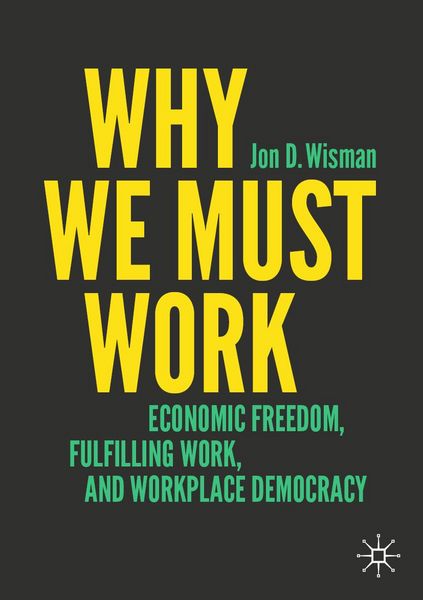
Why We Must Work Economic Freedom, Fulfilling Work, and Workplace Democracy
-
- Taschenbuch
- eBook ausgewählt
-
Form:Einzelkauf Download
-
Sprache:Englisch
Fr. 44.90
inkl. gesetzl. MwSt.Beschreibung
Produktdetails
Format
Kopierschutz
Nein
Family Sharing
Nein
Text-to-Speech
Nein
Erscheinungsdatum
27.04.2026
Verlag
Springer Nature SwitzerlandSeitenzahl
255 (Printausgabe)
Dateigröße
3964 KB
Sprache
Englisch
EAN
9783031985058
Humans evolved to experience work as pleasurable and continued to find it pleasurable for the first 98% of our history, often likening it to play. The negative associations we see now with "work" stem from the extreme inequality and exploitation accompanying the rise of the state 5,500 years ago. Consequently, today many people view work negatively, seeing it as a means to gain income to enable consumption as opposed to serving as a means for creativity, community, and self-fulfillment.
In Why We Must Work, Jon D. Wisman draws upon economics, philosophy, evolutionary psychology, social anthropology, and history to explore how work has been experienced and understood over the course of history. In addressing current conditions, he notes the absurdity that, while we live with unparalleled abundance, some workers suffer unemployment and most are not free in their workplaces, often being bossed about. Equally absurd, given our abundance, is the extreme inequality that results in pervasive insecurity, stress, and pessimism. Laissez-faire ideology legitimates the public policies that generate this inequality and these work conditions while depicting ever greater consumption as opposed to meaningful work as the means to greater happiness.
Wisman offers an attractive alternative vision of our future, grounded in two reforms to make work again fulfilling: guaranteed employment and workplace democracy. Guaranteed employment would provide security and eliminate poverty while providing everyone with the social and self-respect of being a productive member of society. Measures to bring about worker ownership and control of their firms would bring freedom and democracy to the workplace. Both reforms conform to cherished values while preserving capitalism's two principal institutions of private property and markets.
Noch keine Bewertungen vorhanden
Verfassen Sie die erste Bewertung zu diesem Artikel
Helfen Sie anderen Kundinnen und Kunden durch Ihre Meinung.