KI-Beratung Beta

Produktbild: War Ecology
Neu

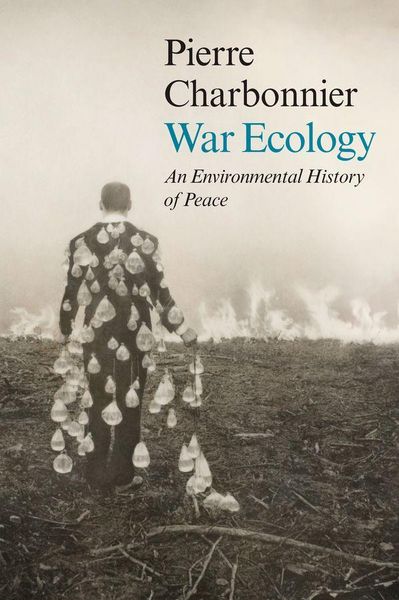
War Ecology An Environmental History of Peace

Fr. 36.90

inkl. gesetzl. MwSt., Versandkostenfrei


Beschreibung

For nature and the climate, the only thing more dangerous than war is peace - this is the startling claim made by the French philosopher Pierre Charbonnier in his new book War Ecology. Charbonnier shows that we are the heirs of an intellectual and political history which maintained that creating the...

Beschreibung

For nature and the climate, the only thing more dangerous than war is peace - this is the startling claim made by the French philosopher Pierre Charbonnier in his new book War Ecology. Charbonnier shows that we are the heirs of an intellectual and political history which maintained that creating the conditions for peace between human beings requires exploiting nature, exchanging resources and providing sufficient prosperity for all.
This idea, which can be traced back to the eighteenth century, found striking expression in the mid-twentieth century. In the aftermath of the Second World War, the development of fossil fuel infrastructures was combined with a pacifist and universalist discourse that sought to undermine the causes of war by liberating productivity. So peace, or the balance of great powers established by the United States, is largely a gift of fossil fuels, particularly oil. The fact that the climate crisis continues to gather pace today, with little effective intervention, is due not simply to a lack of political will: it also stems from the fact that the modern system of state legitimacy is rooted in the ability of each state to guarantee prosperity for its citizens, a guarantee backed up by a regime of cheap energy.
In the twenty-first century, argues Charbonnier, this paradigm has become obsolete, since we must both guarantee peace and security and respect planetary limits - in other words, learn to make peace without destroying the planet. It is in this context that the possibility of a war ecology is emerging, according to which sustainability and security no longer appear as contradictory injunctions but converge in the need to move towards a reduction in greenhouse gas emissions.
This highly original work will be of interest to a wide readership in social and political theory, philosophy, politics, environmental studies, war and peace studies and the social sciences and humanities generally, as well as anyone concerned about war, conflict and the climate crisis.
Produktdetails

Verkaufsrang

8236

Einband

Taschenbuch

Erscheinungsdatum

13.11.2026

Verlag Polity Press

Produktdetails

Verkaufsrang

8236

Einband

Taschenbuch

Erscheinungsdatum

13.11.2026

Verlag Polity Press
Seitenzahl

256

Maße (L/B/H)

22.7/15.1/2.1 cm

Gewicht

385 g

Übersetzt von

Andrew Brown

Sprache

Englisch

ISBN

978-1-5095-7218-2

Herstelleradresse

Libri GmbH
Europaallee 1
36244 Bad Hersfeld
DE

Email: gpsr@libri.de

Noch keine Bewertungen vorhanden

Verfassen Sie die erste Bewertung zu diesem Artikel

Helfen Sie anderen Kundinnen und Kunden durch Ihre Meinung.

Kundinnen und Kunden meinen

Bewertungen (0)

Weitere Artikel finden Sie in

  • Produktbild: War Ecology
  • Introduction. The world order in the carbon trap

    Chapter 1. In the name of peace
    At the roots of the climate impasse
    The energy of pacifism
    War and climate as existential threats
    Democracy, growth, and peace
    Power and the Earth
    The environmental history of international relations

    Chapter 2. Exorcising violence, governing the Earth
    War, at the heart of politics
    The civilizing force of cosmopolitanism
    The science of peace
    Industrial harmony
    The dead ends and contradictions of liberal pacifism

    Chapter 3. Planetary confinement and the horizon of war
    The collapse of the liberal promise?
    The closing of the frotneir
    The world really is a small place
    The nomos of the Earth

    Chapter 4. The infrastructures of peace
    The solidarity of production
    Planning for world peace
    Reopening the frontier
    The political epistemology of growth
    From one existential threat to another

    Chapter 5. Three worlds, one planet
    North-South, East-West
    The resources of independence
    Strangelove ecology

    Chapter 6. The ecological impotence of nations
    The dilemmas of international climate action
    The environment and international relations in the twentieth century
    The return of planetary tragedy?
    The liberal grammar of environmentalism
    Climate diplomacy: between legitimacy and effectiveness
    The end of diplomacy?

    Chapter 7. Climate and power in the twenty-first century
    The turn of the 2020s
    A war on the climate?
    For an ecological realism
    Nord Stream at the heart of European history
    War ecology
    The power of the weak: the transition seen from the South
    The new fault line

    Conclusion. Justice and realism: peace after fossils

    Acknowledgments
    Notes
    Index