Gutscheinbedingungen

*Gültig bis 18.08.2026 auf (fast) alles. Ausgeschlossen sind Smartboxen, Zeitschriften, Tickets, Lebensmittel, Gaming-Elektroartikel, Tinte/Toner, Gutscheine, Geschenkkarten, Blumen und Abos | Einlösbar in allen Buchhandlungen von Orell Füssli, Barth Bücher, Buchladen Rapunzel, Schuler Orell Füssli, Stauffacher und ZAP unter Vorweisung des Gutscheins, auf www.orellfüssli.ch durch Eingabe des Gutscheincodes. Beim Service „eBooks verschenken“ und bei eBook-Käufen via eReader nicht einlösbar | Mindesteinkaufswert: Fr. 100.- | Nicht mit anderen Rabatten kumulierbar.

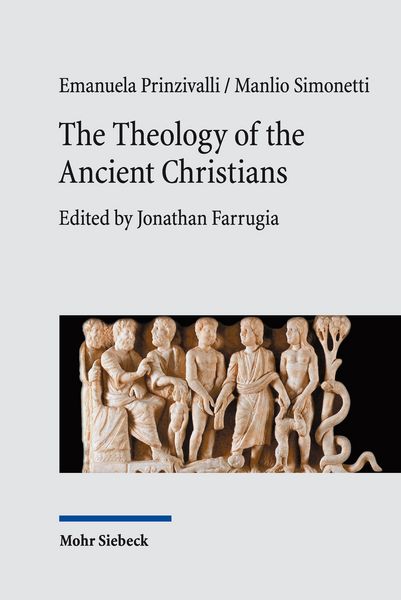
Produktbild: The Theology of the Ancient Christians
Vorbesteller Neu

The Theology of the Ancient Christians From the 1st to the 5th Century

Fr. 67.90

inkl. gesetzl. MwSt., Versandkostenfrei


Beschreibung

Produktdetails

Einband

Taschenbuch

Erscheinungsdatum

30.11.2026

Herausgeber

Jonathan Farrugia

Verlag

Mohr Siebeck

Seitenzahl

400

Maße (L/B)

23.2/15.5 cm

Auflage

1

Sprache

Englisch

ISBN

978-3-16-200467-3

Beschreibung

Produktdetails

Einband

Taschenbuch

Erscheinungsdatum

30.11.2026

Herausgeber

Jonathan Farrugia

Verlag

Mohr Siebeck

Seitenzahl

400

Maße (L/B)

23.2/15.5 cm

Auflage

1

Sprache

Englisch

ISBN

978-3-16-200467-3

Herstelleradresse

Mohr Siebeck GmbH & Co. K
Wilhelmstraße 18
72074 Tübingen
DE

Email: GPSR Kontakt

Noch keine Bewertungen vorhanden

Verfassen Sie die erste Bewertung zu diesem Artikel

Helfen Sie anderen Kundinnen und Kunden durch Ihre Meinung.

Kundinnen und Kunden meinen

Bewertungen (0)

  • Produktbild: The Theology of the Ancient Christians
  • Preface to the Italian Edition

    Preface to the English Edition

    Editior's Foreword


    Chapter 1 Introduction to the Theology of the Ancient Christians

    1. Theology According to Greek Philosophers and Ancient Christians

    2. The Christianisation of the Hebrew Scriptures

    3. The Formation of the New Testament

    4. Scripture, Tradition/s and Theology

    5. Orthodoxy and Heresy

    6. Synods / Councils, Ecumenical Councils

    7. Hellenisation of Christianity and Its Philosophical Articulation

    8. The Indissoluble Link Between Ancient Christian Theology and Biblical Exegesis

    9. Sources for Ancient Christians' Theology


    Part 1 Theological Reflection on God and Christ

    Section 1 From the Beginning to Nicaea (325)


    Chapter 2 The Dawn of Christological and Trinitarian Theological Reflection

    1. Jesus and the Disciples

    2. Jesus Messiah and Servant of God

    3. Higher Than Humanity

    4. Towards the Doctrine of the Logos

    5. Spirit of God, Holy Spirit

    6. Judeo-Christian Christology


    Chapter 3 From the Spirit Christ to the Gnostic Saviour

    1. Logos and Spirit

    2. Marcion and the Gnostics


    Chapter 4 Towards the Definition of Catholic Orthodoxy

    1. Doctrinal Reflection Under Consideration by the Community

    2. The Doctrine of the Logos According to the Apologists

    3. The Synthesis of Irenaeus


    Chapter 3 Monarchy, Economy, Trinity

    1. The Reaction to the Logos Doctrine

    2. Development of the Logos Doctrine: Hippolytus and Tertullian

    3. The Christological Controversy at Rome

    4. Some Other Names


    Chapter 6 The Logos Doctrine at Alexandria

    1. Philo Between Scripture and Philosophy

    2. Tradition and Innovation in Clement of Alexandria

    3. Origen's Trinitarian Scheme

    4. The East After Origen: Dionysius and Paul of Samosata


    Section 2 From Nicaea (325) to Chalcedon (451)


    Chapter 7 The Time of Nicaea

    1. The Constantinian Turning Point

    2. Arius and His Adversaries

    3. Contrasting Doctrines

    4. The Council of Nicaea


    Chapter 8 Agreements and Conflicts: Councils and Condemnations

    1. After Nicaea

    2. From Rome (431) to Serdica (343)

    3. Homoiousians, Anomoeans, Homoeans

    4. Conflicting Doctrines

    5. The Triumph of the Homoeans


    Chapter 9 The Affirmation of the Cappadocians' Theology in the East and the West

    1. After Constantius II

    2. Athanasius and Meletius

    3. The Last Developments in Christology: the Divine Names

    4. Contrasting Opinions on the Holy Spirit

    5. The Trinity

    6. The Situation on Inner Syria

    7. The Nicene-Constantinopolitan Definition


    Chapter 10 The Beginning of the Christological Controversy

    1. The Christology of Apollinaris

    2. The Anti-Apollinarist Reaction


    Chapter 11 From the Clash Between Cyril and Nestorius to the Council of Chalcedon

    1. The Political Context

    2. Cyril Against Nestorius

    3. Nestorius Against Cyril

    4. The Anathemas of Cyril

    5. The Truce of 433

    6. The Later Cyril

    7. The Anti-Monophysite Intervention of Theodoret

    8. Leo's Tomus

    9. Chalcedon (451)


    Part 2 Theological Reflection on the Human Being

    Section 1 From the Beginning till the Early 4th Century


    Chapter 12 The Beginnings of Christian Anthropology

    1. The Message of Jesus: the Kingdom of God and Forgiveness

    2. Paul's Rethinking Rooted in the Faith in Christ Jesus

    3. The Earliest Reflection on Love as Jesus' Testament

    4. The Hesitant First Steps in the Contrast Between Grace and Freedom

    5. The Beginning of Anthropological Reflection

    6. The Meaning of the Encratite Tendencies

    7. Living in the End Times: Waiting for the End

    8. The Difficulty in the 1st Century to Express the Connection Between Soteriology and Anthropology


    Chapter 13 Human Beings and Their Salvation for Marcionites and Gnostics


    Chapter 14 The Beginning of Anthropological Reflection by the Orthodox

    1. The Emergence of Philosophical Language: Justin

    2. Humanity's Responsibility for Evil

    3. The Soul and Its Post-Mortem State

    4. Irenaeus' Synthesis

    5. The Treatises on the Resurrection

    6. The Christians, the Empire, the End of History

    7. The Vision of Human Beings and Their Goals in the Latin Authors of the 3rd Century and the Focus on Ecclesiology


    Chapter 15 Human Beings and Their Destiny in the Alexandrine Tradition

    1. The Paradigm Short: the Soul Becomes Protagonist and Its Ascent Towards God

    2. God and the Cosmos in Origen's Thought


    Chapter 16 Between Old and New Problems from the Mid-3rd Century to the Beginning of the 4th Century

    1. The Latin Authors

    2. The Start of the Disputes Around Origen: the Resurrection in the Foreground

    3. Methodius and the Re-Conceptualisation of the Primacy of Chastity


    Section 2 Developments in the Reflection on the Human Being in the East and West up to Augustine


    Chapter 17 The Christian Vision on Humanity and History in the Turning-Point Century

    1. The Christians, History and Eusebius of Caesarea

    2. Coexistence and Diversification in Alexandria Between the Origenian Tradition and the Episcopal Doctrine on the Vision of Humanity

    3. An Anthropology to Rebuild: Apollinaris of Laodicea

    4. The Human Person in Search of God: Monasticism


    Chapter 18 The Cappadocian Fathers Reinterpret the Origenian Tradition

    1. Creation According to Basil

    2. The Double Humanity in Gregory of Nyssa

    3. Gregory of Nazianzus and the Mystery of Humanity

    4. Nemesius of Emesa and the Problem of the Union Between the Soul and the Body


    Chapter 19 The West in the 4th Century Between Eastern Influences and the Search for Its Own Theological Path

    1. Hilary: the Bard Chanting the Glorious Fulfilment of the Human Being

    2. Ambrose and the Search for an Allegory with an Ethical End


    Chapter 20 East and West Between the 4th and 5th Centuries: Agreements and Dissimilarities

    1. The Anthropology of a Roman Priest

    2. Moments in the Dispute Around Origen: Jerome and Rufinus on the Resurrected Body

    3. More on the Dispute Around Origen: the Double Standards of Theophilus of Alexandria

    4. The Conflicts on the Image of God in the Disputes Carried Out in the Desert

    5. "As If in the Hand of God": the Vision of the Human Person in Cyril of Alexandria's Thought

    6. From Diodorus of Tarsus to Theodoret of Cyrus: the Human Person According to the Antiochenes

    7. Augustine's Revolution

    8. The Emergence of the Problem of Gender Difference in Doctrinal Reflection


    Conclusion