
KI-Beratung Beta

  • Produktbild: Why Ethnic Parties Succeed
  • Produktbild: Why Ethnic Parties Succeed

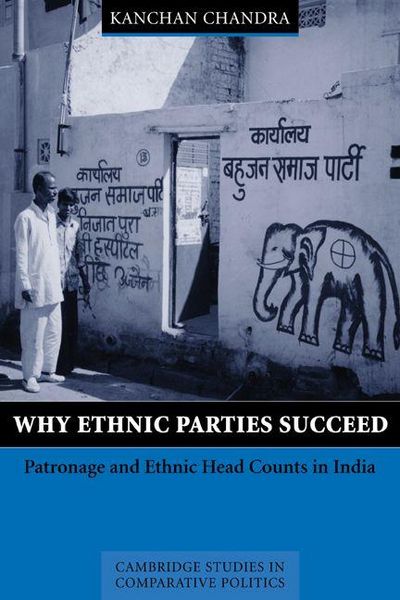
Why Ethnic Parties Succeed Patronage and Ethnic Head Counts in India

Fr. 68.90

inkl. gesetzl. MwSt., Versandkostenfrei


Beschreibung

Why do some ethnic parties succeed in attracting the support of their target ethnic group while others fail? In a world in which ethnic parties flourish in both established and emerging democracies alike, understanding the conditions under which such parties rise and fall is of critical importance to...

Beschreibung

Why do some ethnic parties succeed in attracting the support of their target ethnic group while others fail? In a world in which ethnic parties flourish in both established and emerging democracies alike, understanding the conditions under which such parties rise and fall is of critical importance to both political scientists and policy makers. Drawing on a study of variation in the performance of ethnic parties in India, this book builds a theory of ethnic party performance in 'patronage democracies'. Chandra shows why individual voters and political entrepreneurs in such democracies condition their strategies not on party ideologies or policy platforms, but on a headcount of co-ethnics and others across party personnel and among the electorate.

Produktdetails

Einband

Taschenbuch

Erscheinungsdatum

12.01.2007

Herausgeber Peter Lange + weitere
Verlag Cambridge Academic

Produktdetails

Einband

Taschenbuch

Erscheinungsdatum

12.01.2007

Herausgeber
Verlag Cambridge Academic
Seitenzahl

368

Maße (L/B/H)

22.9/15.2/2.2 cm

Gewicht

553 g

Sprache

Englisch

ISBN

978-0-521-89141-7

Noch keine Bewertungen vorhanden

Verfassen Sie die erste Bewertung zu diesem Artikel

Helfen Sie anderen Kundinnen und Kunden durch Ihre Meinung.

Kundinnen und Kunden meinen

Bewertungen (0)

  • Produktbild: Why Ethnic Parties Succeed
  • Produktbild: Why Ethnic Parties Succeed
  • List of maps; figures, and tables; List of abbreviations; A note on terminology; Acknowledgments; 1. Introduction; Part I. Theory: 2. Limited information and ethnic categorization; 3. Patronage-democracy, limited information and ethnic favouritism; 4. Counting heads: why ethnic parties succeed in patronage-democracies; 5. Why parties have different ethnic head counts: party organization and elite incorporation; Part II. Data: 6. India as a patronage-democracy; 7. The Bahujan Samaj Party (BSP) and the Scheduled Castes (SCs); 8. Why SC elites join the BSP; 9. Why SC voters prefer the BSP; 10. Why SC voter preferences translate into BSP votes; 11. Explaining different head counts in the BSP and congress; 12. Extending the argument to other ethnic parties in India: the BJP, the DMK and the JMM; 13. Ethnic head counts and democratic stability; Appendices; Bibliography; Index.