• Produktbild: From DNA Photolesions to Mutations, Skin Cancer and Cell Death
  • Produktbild: From DNA Photolesions to Mutations, Skin Cancer and Cell Death

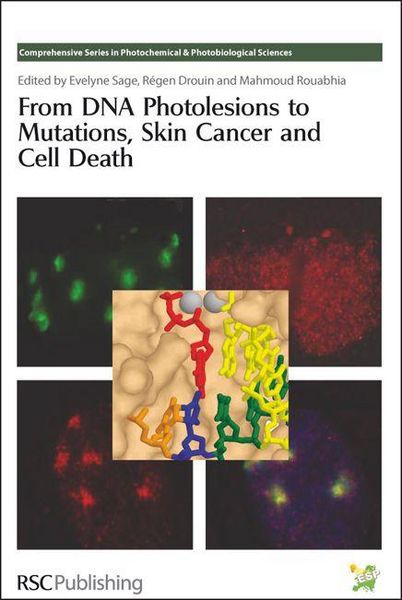
From DNA Photolesions to Mutations, Skin Cancer and Cell Death

Fr. 272.00

inkl. gesetzl. MwSt., Versandkostenfrei


Beschreibung

Produktdetails

Einband

Gebundene Ausgabe

Erscheinungsdatum

22.11.2005

Herausgeber

Evelyne Sage + weitere

Verlag

Royal Society Of Chemistry

Seitenzahl

326

Maße (L/B/H)

23.4/15.6/2.5 cm

Gewicht

814 g

Sprache

Englisch

ISBN

978-0-85404-326-2

Beschreibung

Produktdetails

Einband

Gebundene Ausgabe

Erscheinungsdatum

22.11.2005

Herausgeber

Verlag

Royal Society Of Chemistry

Seitenzahl

326

Maße (L/B/H)

23.4/15.6/2.5 cm

Gewicht

814 g

Sprache

Englisch

ISBN

978-0-85404-326-2

Herstelleradresse

Libri GmbH
Europaallee 1
36244 Bad Hersfeld
DE

Email: gpsr@libri.de

Kundinnen und Kunden meinen

0 Bewertungen

Informationen zu Bewertungen

Zur Abgabe einer Bewertung ist eine Anmeldung im Konto notwendig. Die Authentizität der Bewertungen wird von uns nicht überprüft. Wir behalten uns vor, Bewertungstexte, die unseren Richtlinien widersprechen, entsprechend zu kürzen oder zu löschen.

Die Bewertungen sind nach Format, Anzahl Sterne und Datum sortiert.

Verfassen Sie die erste Bewertung zu diesem Artikel

Helfen Sie anderen Kund*innen durch Ihre Meinung

Kundinnen und Kunden meinen

0 Bewertungen filtern

  • Produktbild: From DNA Photolesions to Mutations, Skin Cancer and Cell Death
  • Produktbild: From DNA Photolesions to Mutations, Skin Cancer and Cell Death
  • Chapter 1: UVB and UVA Induced Formation of Photoproducts within Cellular DNA; Chapter 2: Chemical Sequencing Profiles of Photosensitized DNA Damage; Chapter 3: DNA damage induced by UVA radiation: role in solar mutagenesis; Chapter 4: Mutations induced by UV and sunlight; Chapter 5: Mechanisms and Mutagenic Consequences of Photoproduct Bypass by Replicative and DNA Damage Bypass Polymerases; Chapter 6: The Ogg1 Protein of Saccharomyces cerevisiae: Properties and Biological Functions; Chapter 7: The role of a yeast homologue of the human phosphatase activator hPTPA in the cellular response to oxidative DNA damage; Chapter 8: DNA repair in RNA polymerase I transcribed genes; Chapter 9: Global Genome Nucleotide Excision Repair: Key Players and Their Functions; Chapter 10: Efficient Repair of UV-Induced DNA Damage in Terminally Differentiated Human Keratinocytes; Chapter 11: Reactivation of UV-damaged viruses and reporter genes in mammalian cells; Chapter 12: Transcription of p53-regulated genes under transcriptional stress: implications for nucleotide excision repair; Chapter 13: What a difference a wavelength makes: The role of p53 in nucleotide excision repair of UV-induced DNA damage; Chapter 14: p53 and p33ING1: Role in Nucleotide Excision Repair of UV-Damaged DNA; Chapter 15: Nuclear and Non-Nuclear Signals Leading to UV-induced Apoptosis; Chapter 16: Opposing roles of UV-induced apoptosis in early skin cancer; Chapter 17: Acquired activation of signalling pathways in skin tumours from DNA repair-deficient xeroderma pigmentosum patients; Chapter 18: Chaos Theory and Self-Organized Criticality Describe the DNA Damage Signal transduction Network;