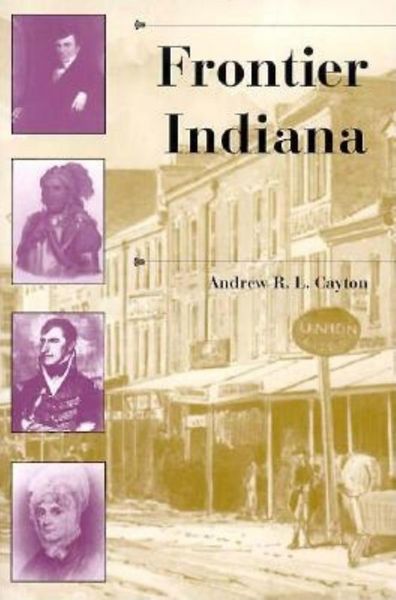
Frontier Indiana
Aus der Reihe
Indiana University Press (IPS)
-
- Englisch ausgewählt
Fr. 34.90
inkl. gesetzl. MwSt.,
Beschreibung
Produktdetails
Einband
Taschenbuch
Erscheinungsdatum
01.08.1998
Verlag
Indiana University PressSeitenzahl
358
Maße (L/B/H)
22.7/15.2/1.9 cm
Gewicht
454 g
Sprache
Englisch
ISBN
978-0-253-21217-7
Most history concentrates on the broad sweep of events, battles and political decisions, economic advance or decline, landmark issues and events, and the people who lived and made these events tend to be lost in the big picture. Cayton's lively new history of the frontier period in Indiana puts the focus on people, on how they lived, how they viewed their world, and what motivated them. Here are the stories of Jean-Baptiste Bissot, Sieur de Vincennes; George Croghan, the ultimate frontier entrepreneur; the world as seen by George Rogers Clark; Josiah Hamar and John Francis Hamtramck; Little Turtle; Anna Tuthill Symmes Harrison and William Henry Harrison; Tenskwatawa; Jonathan Jennings; Calvin Fletcher; and many others. Focusing his account on these and other representative individuals, Cayton retells the story of Indiana's settlement in a human and compelling narrative which makes the experience of exploration and settlement real and exciting. Here is a book that will appeal to the general reader and scholar alike while going a long way to reinfusing our understanding of history and the historical process with the breath of life itself.
Noch keine Bewertungen vorhanden
Verfassen Sie die erste Bewertung zu diesem Artikel
Helfen Sie anderen Kundinnen und Kunden durch Ihre Meinung.