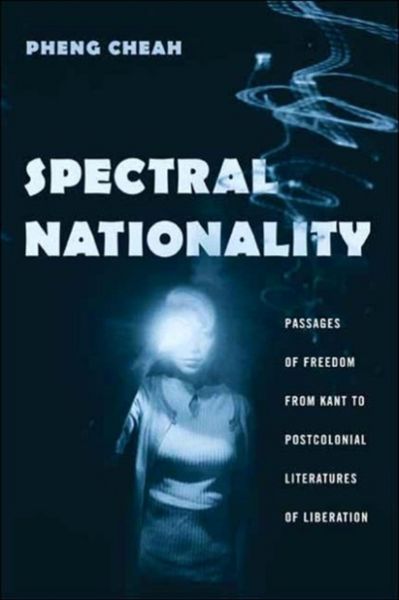
Spectral Nationality Passages of Freedom from Kant to Postcolonial Literatures of Liberation
-
- Hardcover ausgewählt
- Taschenbuch
- eBook
-
Sprache:Englisch
Fr. 218.00
inkl. gesetzl. MwSt.,
Beschreibung
Produktdetails
Einband
Gebundene Ausgabe
Altersempfehlung
ab 22 Jahr(e)
Erscheinungsdatum
01.12.2003
Verlag
University PressesSeitenzahl
432
Maße (L/B/H)
23.5/15.9/2.9 cm
Gewicht
680 g
Sprache
Englisch
ISBN
978-0-231-13018-9
This far-ranging and ambitious attempt to rethink postcolonial theory's discussion of the nation and nationalism brings the problems of the postcolonial condition to bear on the philosophy of freedom. Closely identified with totalitarianism and fundamentalism, the nation-state has a tainted history of coercion, ethnic violence, and even, as in ultranationalist Nazi Germany, genocide. Most contemporary theorists are therefore skeptical, if not altogether dismissive, of the idea of the nation and the related metaphor of the political body as an organism. Going against orthodoxy, Pheng Cheah retraces the universal-rationalist foundations and progressive origins of political organicism in the work of Kant and its development in philosophers in the German tradition such as Fichte, Hegel, and Marx. Cheah argues that the widespread association of freedom with the self-generating dynamism of life and culture's power of transcendence is the most important legacy of this tradition. Addressing this legacy's manifestations in Fanon and Cabral's theories of anticolonial struggle and contemporary anticolonial literature, including the Buru Quartet by Indonesian writer Pramoedya Ananta Toer, and the Kenyan writer Ngugi Wa Thiong'o's nationalist novels, Cheah suggests that the profound difficulties of achieving freedom in the postcolonial world indicate the need to reconceptualize freedom in terms of the figure of the specter rather than the living organism.
Noch keine Bewertungen vorhanden
Verfassen Sie die erste Bewertung zu diesem Artikel
Helfen Sie anderen Kundinnen und Kunden durch Ihre Meinung.