KI-Beratung Beta

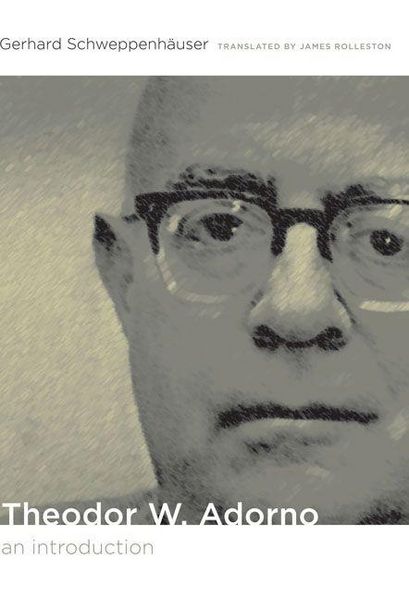
Produktbild: Theodor W. Adorno

Theodor W. Adorno An Introduction

Fr. 39.90

inkl. gesetzl. MwSt., Versandkostenfrei


Beschreibung

Theodor W. Adorno (1903–1969) was one of the twentieth century’s most important thinkers. In light of two pivotal developments-the rise of fascism, which culminated in the Holocaust, and the standardization of popular culture as a commodity indispensable to contemporary capitalism-Adorno sought to...

Beschreibung


Theodor W. Adorno (1903–1969) was one of the twentieth century’s most important thinkers. In light of two pivotal developments-the rise of fascism, which culminated in the Holocaust, and the standardization of popular culture as a commodity indispensable to contemporary capitalism-Adorno sought to evaluate and synthesize the essential insights of Western philosophy by revisiting the ethical and sociological arguments of his predecessors: Kant, Nietzsche, Hegel, and Marx. This book, first published in Germany in 1996, provides a succinct introduction to Adorno’s challenging and far-reaching thought. Gerhard SchweppenhÄuser, a leading authority on the Frankfurt School of critical theory, explains Adorno’s epistemology, social and political philosophy, aesthetics, and theory of culture.

After providing a brief overview of Adorno’s life, SchweppenhÄuser turns to the theorist’s core philosophical concepts, including post-Kantian critique, determinate negation, and the primacy of the object, as well as his view of the Enlightenment as a code for world domination, his diagnosis of modern mass culture as a program of social control, and his understanding of modernist aesthetics as a challenge to conceive an alternative politics. Along the way, SchweppenhÄuser illuminates the works widely considered Adorno’s most important achievements: Minima Moralia, Dialectic of Enlightenment (co-authored with Horkheimer), and Negative Dialectics. Adorno wrote much of the first two of these during his years in California (1938–49), where he lived near Arnold Schoenberg and Thomas Mann, whom he assisted with the musical aesthetics at the center of Mann’s novel Doctor Faustus.

Produktdetails

Einband

Taschenbuch

Erscheinungsdatum

06.04.2009

Verlag Duke University Press
Seitenzahl

200

Produktdetails

Einband

Taschenbuch

Erscheinungsdatum

06.04.2009

Verlag Duke University Press
Seitenzahl

200

Maße (L/B/H)

21.6/15.1/1.7 cm

Gewicht

319 g

Übersetzt von

James Rolleston

Sprache

Englisch

ISBN

978-0-8223-4471-1

Herstelleradresse

Libri GmbH
Europaallee 1
36244 Bad Hersfeld
DE

Email: gpsr@libri.de

Noch keine Bewertungen vorhanden

Verfassen Sie die erste Bewertung zu diesem Artikel

Helfen Sie anderen Kundinnen und Kunden durch Ihre Meinung.

Kundinnen und Kunden meinen

Bewertungen (0)

  • Produktbild: Theodor W. Adorno
  • Preface to the English Edition vii
    Translator's Preface xi
    1. The Project of Renewing Childhood by Transforming One's Life 1
    2. Critical Theory 11
    3. Reason's Self-Criticism 18
    Defined Negation 20
    The Two Faces of Enlightenment 26
    4. Rescuing What is Beyond Hope 34
    Philosophy from the Perspective of Redemption 34
    Primacy of the Object 38
    5. The Totally Socialized Society 51
    The Concept of Society 52
    Liquidation of the Individual 58
    Critical Theory on Morality 68
    6. The Goal of the Emancipated Society 77
    7. The Powerless Utopia of Beauty 91
    The Destruction and Salvation of Art 93
    The Silence of Music 102
    The Transition from Art to Knowledge 109
    Theorizing Art and Culture in the Institute for Social Research 112
    Benjamin and Kracauer: Theorizing Mass Art 120
    Anarchistic and Bourgeois Romanticism: Adorno's Critique of Benjamin 125
    The Work of Art and the Concept of Truth 128
    8. The Failure of Culture 136
    The Radically Pathetic and Guilty Culture 137
    Enlightenment as Mass Deception 144
    Biographical Timeline 159
    Notes 163
    Bibliography 171
    Index 179