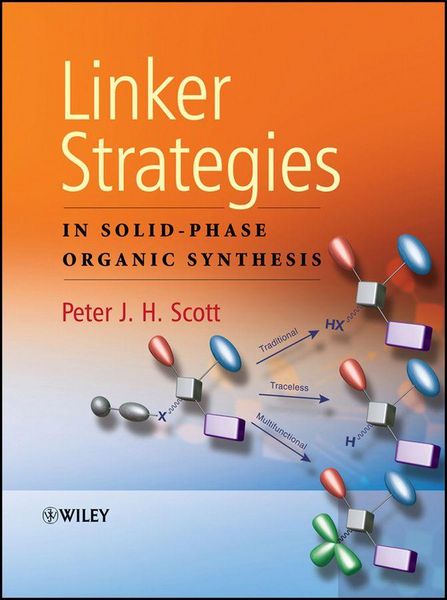
Linker Strategies in Solid-Phase Organic Synthesis
Fr. 288.00
inkl. gesetzl. MwSt.,
Beschreibung
Produktdetails
Einband
Gebundene Ausgabe
Erscheinungsdatum
01.12.2009
Herausgeber
Peter ScottVerlag
John Wiley & Sons IncSeitenzahl
706
Maße (L/B/H)
25.3/19.9/4.3 cm
Gewicht
1498 g
Auflage
1. Auflage
Sprache
Englisch
ISBN
978-0-470-51116-9
Linker design is an expanding field with an exciting future in state-of-the-art organic synthesis. Ever-increasing numbers of ambitious solution phase reactions are being adapted for solid-phase organic chemistry and to accommodate them, large numbers of sophisticated linker units have been developed and are now routinely employed in solid-phase synthesis.
Linker Strategies in Solid-Phase Organic Synthesis guides the reader through the evolution of linker units from their genesis in solid-supported peptide chemistry to the cutting edge diversity linker units that are defining a new era of solid phase synthesis. Individual linker classes are covered in easy to follow chapters written by international experts in their respective fields and offer a comprehensive guide to linker technology whilst simultaneously serving as a handbook of synthetic transformations now possible on solid supports. Topics include:
* the principles of solid phase organic synthesis
* electrophile and nucleophile cleavable linker units
* cyclative cleavage as a solid phase strategy
* photocleavable linker units
* safety-catch linker units
* enzyme cleavable linker units
* T1 and T2 -versatile triazene linker groups
* hydrazone linker units
* benzotriazole linker units
* phosphorus linker units
* sulfur linker units
* selenium and tellurium linker units
* sulfur, oxygen and selenium linker units cleaved by radical processes
* silicon and germanium linker units
* boron and stannane linker units
* bismuth linker units
* transition metal carbonyl linker units
* linkers releasing olefins or cycloolefins by ring-closing metathesis
* fluorous linker units
* solid-phase radiochemistry
The book concludes with extensive linker selection tables, cataloguing the linker units described in this book according to the substrate liberated upon cleavage and conditions used to achieve such cleavage, enabling readers to choose the right linker unit for their synthesis.
Linker Strategies in Solid-Phase Organic Synthesis is an essential guide to the diversity of linker units for organic chemists in academia and industry working in the broad areas of solid-phase organic synthesis and diversity oriented synthesis, medicinal chemists in the pharmaceutical industry who routinely employ solid-phase chemistry in the drug discovery business, and advanced undergraduates, postgraduates, and organic chemists with an interest in leading-edge developments in their field.
Linker Strategies in Solid-Phase Organic Synthesis guides the reader through the evolution of linker units from their genesis in solid-supported peptide chemistry to the cutting edge diversity linker units that are defining a new era of solid phase synthesis. Individual linker classes are covered in easy to follow chapters written by international experts in their respective fields and offer a comprehensive guide to linker technology whilst simultaneously serving as a handbook of synthetic transformations now possible on solid supports. Topics include:
* the principles of solid phase organic synthesis
* electrophile and nucleophile cleavable linker units
* cyclative cleavage as a solid phase strategy
* photocleavable linker units
* safety-catch linker units
* enzyme cleavable linker units
* T1 and T2 -versatile triazene linker groups
* hydrazone linker units
* benzotriazole linker units
* phosphorus linker units
* sulfur linker units
* selenium and tellurium linker units
* sulfur, oxygen and selenium linker units cleaved by radical processes
* silicon and germanium linker units
* boron and stannane linker units
* bismuth linker units
* transition metal carbonyl linker units
* linkers releasing olefins or cycloolefins by ring-closing metathesis
* fluorous linker units
* solid-phase radiochemistry
The book concludes with extensive linker selection tables, cataloguing the linker units described in this book according to the substrate liberated upon cleavage and conditions used to achieve such cleavage, enabling readers to choose the right linker unit for their synthesis.
Linker Strategies in Solid-Phase Organic Synthesis is an essential guide to the diversity of linker units for organic chemists in academia and industry working in the broad areas of solid-phase organic synthesis and diversity oriented synthesis, medicinal chemists in the pharmaceutical industry who routinely employ solid-phase chemistry in the drug discovery business, and advanced undergraduates, postgraduates, and organic chemists with an interest in leading-edge developments in their field.
Noch keine Bewertungen vorhanden
Verfassen Sie die erste Bewertung zu diesem Artikel
Helfen Sie anderen Kundinnen und Kunden durch Ihre Meinung.