Gutscheinbedingungen

*Gültig bis 20.07.2026 auf alle Bücher. Ausgeschlossen sind Zeitschriften, Prozentbücher und Abos | Einlösbar in allen Buchhandlungen von Orell Füssli, Barth Bücher, Buchladen Rapunzel, Papeterie Köhler, Schuler Orell Füssli, Stauffacher und ZAP unter Vorweisung des Gutscheins, auf www.orellfüssli.ch durch Eingabe des Gutscheincodes. Beim Service „eBooks verschenken“ und bei eBook-Käufen via eReader nicht einlösbar | Mindesteinkaufswert: Fr. 30.- | Nicht mit anderen Rabatten kumulierbar.

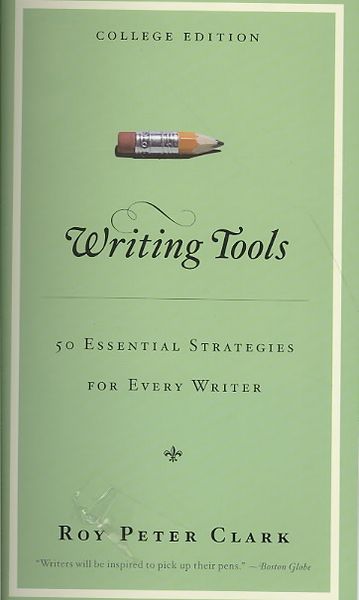
Produktbild: Clark, R: Writing Tools

Clark, R: Writing Tools 50 Essential Strategies for Every Writer

Fr. 48.90

inkl. gesetzl. MwSt., Versandkostenfrei


Beschreibung

Produktdetails

Einband

Taschenbuch

Erscheinungsdatum

01.04.2008

Verlag

O'Reilly

Seitenzahl

245

Maße (L/B/H)

21.6/15.1/2.5 cm

Gewicht

350 g

Sprache

Englisch

ISBN

978-0-87289-963-6

Beschreibung

Produktdetails

Einband

Taschenbuch

Erscheinungsdatum

01.04.2008

Verlag

O'Reilly

Seitenzahl

245

Maße (L/B/H)

21.6/15.1/2.5 cm

Gewicht

350 g

Sprache

Englisch

ISBN

978-0-87289-963-6

Noch keine Bewertungen vorhanden

Verfassen Sie die erste Bewertung zu diesem Artikel

Helfen Sie anderen Kundinnen und Kunden durch Ihre Meinung.

Kundinnen und Kunden meinen

Bewertungen (0)

Die Leseprobe wird geladen.
  • Produktbild: Clark, R: Writing Tools
  • Introduction: A Nation of Writers
    I. NUTS AND BOLTS
    1. Begin sentences with subjects and verbs.
    2. Order words for emphasis.
    3. Activate your verbs.
    4. Be passive-aggressive.
    5. Watch those adverbs.
    6. Take it easy on the -ings.
    7. Fear not the long sentence.
    8. Establish a pattern, then give it a twist.
    9. Let punctuation control pace and space.
    10. Cut big, then small.
    II. SPECIAL EFFECTS
    11. Prefer the simple over the technical.
    12. Give key words their space.
    13. Play with words, even in serious stories.
    14. Get the name of the dog.
    15. Pay attention to names.
    16. Seek original images.
    17. Riff on the creative language of others.
    18. Set the pace with sentence length.
    19. Vary the lengths of paragraphs.
    20. Choose the number of elements with a purpose in mind.
    21. Know when to back off and when to show off.
    22. Climb up and down the ladder of abstraction.
    23. Tune your voice.
    III. BLUEPRINTS
    24. Work from a plan.
    25. Learn the difference between reports and stories.
    26. Use dialogue as a form of action.
    27. Reveal traits of character.
    28. Put odd and interesting things next to each other.
    29. Foreshadow dramatic events and powerful conclusions.
    30. To generate suspense, use internal cliffhangers.
    31. Build your work around a key question.
    32. Place gold coins along the path.
    33. Repeat, repeat, and repeat.
    34. Write from different cinematic angles.
    35. Report and write for scenes.
    36. Mix narrative modes.
    37. In short works, don't waste a syllable.
    38. Prefer archetypes to stereotypes.
    39. Write toward an ending.
    IV. USEFUL HABITS
    40. Draft a mission statement for your work.
    41. Turn procrastination into rehearsal.
    42. Do your homework well in advance.
    43. Read for both form and content.
    44. Save string.
    45. Break long projects into parts.
    46. Take an interest in all crafts that support your work.
    47. Recruit your own support group.
    48. Limit self-criticism in early drafts.
    49. Learn from your critics.
    50. Own the tools of your craft.
    Afterword
    Writing Tools Quick List