Gutscheinbedingungen

*Gültig bis 20.07.2026 auf alle Bücher. Ausgeschlossen sind Zeitschriften, Prozentbücher und Abos | Einlösbar in allen Buchhandlungen von Orell Füssli, Barth Bücher, Buchladen Rapunzel, Papeterie Köhler, Schuler Orell Füssli, Stauffacher und ZAP unter Vorweisung des Gutscheins, auf www.orellfüssli.ch durch Eingabe des Gutscheincodes. Beim Service „eBooks verschenken“ und bei eBook-Käufen via eReader nicht einlösbar | Mindesteinkaufswert: Fr. 30.- | Nicht mit anderen Rabatten kumulierbar.

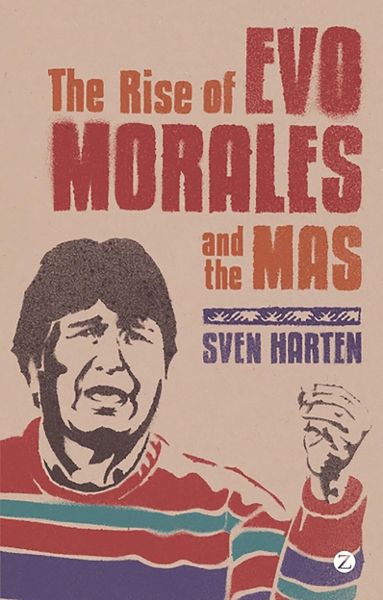
Produktbild: Harten, S: Rise Of Evo Morales & The Mas

Harten, S: Rise Of Evo Morales & The Mas

Fr. 51.90

inkl. gesetzl. MwSt., Versandkostenfrei


Beschreibung

Produktdetails

Einband

Taschenbuch

Erscheinungsdatum

01.04.2011

Verlag

Bloomsbury Academic

Seitenzahl

272

Maße (L/B/H)

21.6/13.6/2.2 cm

Gewicht

360 g

Sprache

Englisch

ISBN

978-1-84813-524-6

Beschreibung

Produktdetails

Einband

Taschenbuch

Erscheinungsdatum

01.04.2011

Verlag

Bloomsbury Academic

Seitenzahl

272

Maße (L/B/H)

21.6/13.6/2.2 cm

Gewicht

360 g

Sprache

Englisch

ISBN

978-1-84813-524-6

Noch keine Bewertungen vorhanden

Verfassen Sie die erste Bewertung zu diesem Artikel

Helfen Sie anderen Kundinnen und Kunden durch Ihre Meinung.

Kundinnen und Kunden meinen

Bewertungen (0)

Die Leseprobe wird geladen.
  • Produktbild: Harten, S: Rise Of Evo Morales & The Mas
  • Preface: A Journey
    Part I
    1. Bolivia's Political History
    Crisis of Representation in Bolivia
    From Revolution to Dictatorship to Transition: 1952 - 1978
    Bolivian Nationalism - A Brief History
    Origins of Bolivian Nationalism
    The 1952 Revolution and the Nacionalismo Revolucionario
    Assimilationist Nation
    Democratic Institutions since Democratic Politics
    Coca: A brief Sketch of a Damned Holy Plant
    War on Drugs

    2. Evo's Youth and Upbringing
    Evo
    Evo's University: Looking for Another Form of Democracy
    School of Democracy
    Relative Structurality of Signifiers: Origins of Evo Morales's Notion of the Nation

    3. Rise of Coca Growers (Mid 1980s to Early 1990s)
    History of the Coca Growers' Movement
    Structuring Force of Society
    Internal Functioning
    Formalized Organizational Structure
    The Assemblies
    Type and Sequence of Meetings
    Leadership
    Coca Discourse: Defending the Sacred Leaf
    Uniting Heterogeneity in a Chain of Equivalence
    From Stigmatized Plant to Symbol of Sovereignty

    Part II
    4. Morales's Political Instrument? The Creation of MAS (Early 1990s)
    Brief History of the 'Instrumento Político' MAS
    MAS: A Bottom-Up Perspective of the Party
    Movement-Cum-Party
    Old Wine in New Bottles or Really Something New?
    President Morales: a Product of the Reforms of his Adversaries?
    Long-term Grievances

    5. Outside Challengers Rise Amidst Waves of Protests (1995-2002)
    Second Generation Reforms
    Party Politics - Where is the 'Silent Revolution'?
    Waves of Conflicts
    War on Drugs
    The Year 2000: a Turning Point?
    Guerra del Agua in 2000
    Guerra del Gas or Octubre Negro 2003
    Conclusion

    6. MAS Rises to Political Dominance (2002-2005)
    Reaching Out to Other Social Movements
    Lack of Clear Structures: A New Form of Doing Politics?
    Institutionalizing Party Structures
    Opening the Party Lists
    Leadership
    Characteristics of Leaders
    Election of Candidates
    Organizational Problems

    7. Compañero Evo: The Symbol of the Pluricultural People
    The People
    Who are The People?
    Mobilizing People to Become 'The People'
    The People and the Exercise of Power
    Construction of Identity
    The People' in Morales's Discourse
    Somos MAS, Somos el Pueblo
    Who Constitute 'the People' in Bolivia?
    Implications of the New Articulation of 'the People'
    Conclusion

    Part III
    8. Boliviäs First Indigenous President (2005-2010)
    Bolivia Under President Morales
    Morales: Nationalist and Populist?
    The Imagining of the Nation as 'Nation of Nations'
    The 'Plurinational' Nation
    Filling the 'Plurinational' Nation with Meaning
    What Holds the Diversity Together
    Imagining the Nation: Recovering its Sovereignty
    Imagining a 'Productive' Nation: Re-Thinking Development
    Dignity
    A New Imaginary of the Nation: Challenging Existing Power Relations

    9. Refounding the State - The Foundational Promise of Populism
    Introduction
    Building a New State - What Had to Change?
    Recover and Refound the State
    The Target of Change: Defining the State
    Refounding the New State - Alternative Form of Modernity
    Principles of a New State
    Relationship Between Culture and the State
    The Path to Change: Asamblea Constituyente
    Great Expectations: Constituent Assembly as Collective Ritual
    Bolivia's New Constitution
    Analyzing the Role of the State
    Conclusion

    10. Conclusion: The Difficult Road Ahead for President Morales and the MAS