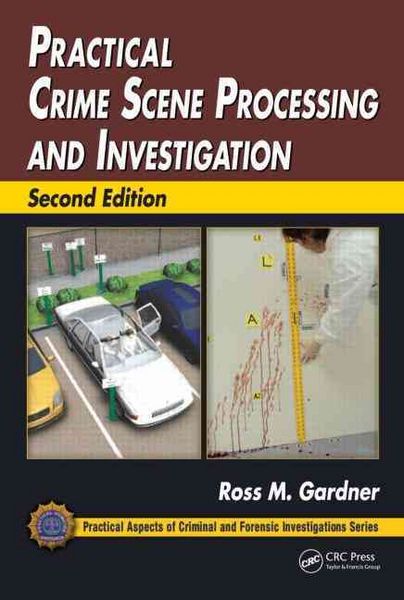
Prac Crime Scene Processing &
Aus der Reihe
Practical Aspects of Criminal
-
- Englisch ausgewählt
Fr. 128.00
inkl. gesetzl. MwSt.,
Beschreibung
Produktdetails
Einband
Gebundene Ausgabe
Erscheinungsdatum
01.12.2011
Abbildungen
farbige Abbildungen
Verlag
Taylor & FrancisSeitenzahl
498
Maße (L/B/H)
25.4/18.3/2.5 cm
Gewicht
1202 g
Auflage
2. Auflage
Sprache
Englisch
ISBN
978-1-4398-5302-3
All too often, the weakest link in the chain of criminal justice is the crime scene investigation. Improper collection of evidence blocks the finding of truth. Now in its second edition, Practical Crime Scene Processing and Investigation presents practical, proven methods to be used at any crime scene to ensure that evidence is admissible and persuasive.
Accompanied by more than 300 color photographs, topics discussed include: Understanding the nature of physical evidence, including fingerprint, biological, trace, hair and fiber, and other forms of evidence Actions of the responding officer, from documenting and securing the initial information to providing emergency care Assessing the scene, including search considerations and dealing with chemical and bioterror hazards Crime scene photography, sketching, mapping, and notes and reports Light technology and preserving fingerprint and impression evidence Shooting scene documentation and reconstruction Bloodstain pattern analysis and the body as a crime scene Special scene considerations, including fire, buried bodies, and entomological evidence The role of crime scene analysis and reconstruction, with step-by-step procedures Two appendices provide additional information on crime scene equipment and risk management, and each chapter is enhanced by a succinct summary, suggested readings, and a series of questions to test assimilation of the material. Using this book in your investigations will help you find out what happened and who is responsible.
Accompanied by more than 300 color photographs, topics discussed include: Understanding the nature of physical evidence, including fingerprint, biological, trace, hair and fiber, and other forms of evidence Actions of the responding officer, from documenting and securing the initial information to providing emergency care Assessing the scene, including search considerations and dealing with chemical and bioterror hazards Crime scene photography, sketching, mapping, and notes and reports Light technology and preserving fingerprint and impression evidence Shooting scene documentation and reconstruction Bloodstain pattern analysis and the body as a crime scene Special scene considerations, including fire, buried bodies, and entomological evidence The role of crime scene analysis and reconstruction, with step-by-step procedures Two appendices provide additional information on crime scene equipment and risk management, and each chapter is enhanced by a succinct summary, suggested readings, and a series of questions to test assimilation of the material. Using this book in your investigations will help you find out what happened and who is responsible.
Noch keine Bewertungen vorhanden
Verfassen Sie die erste Bewertung zu diesem Artikel
Helfen Sie anderen Kundinnen und Kunden durch Ihre Meinung.