Gutscheinbedingungen

*Gültig bis 20.09.2026 auf (fast) alles. Ausgeschlossen sind Smartboxen, Zeitschriften, Tickets, Lebensmittel, Gaming-Elektroartikel, Tinte/Toner, Gutscheine, Geschenkkarten, Blumen und Abos | Einlösbar in allen Buchhandlungen von Orell Füssli, Barth Bücher, Buchladen Rapunzel, Schuler Orell Füssli, Stauffacher und ZAP unter Vorweisung des Gutscheins, auf www.orellfüssli.ch durch Eingabe des Gutscheincodes. Beim Service „eBooks verschenken“ und bei eBook-Käufen via eReader nicht einlösbar | Mindesteinkaufswert: Fr. 100.- | Nicht mit anderen Rabatten kumulierbar.

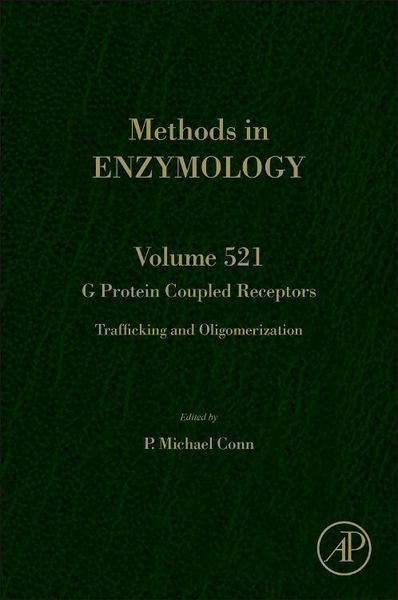
Produktbild: G Protein Coupled Receptors
Band 521

G Protein Coupled Receptors

Aus der Reihe Methods in Enzymology

Fr. 229.00

inkl. gesetzl. MwSt., Versandkostenfrei


Beschreibung

Produktdetails

Einband

Gebundene Ausgabe

Erscheinungsdatum

26.03.2013

Herausgeber

P. Michael Conn

Verlag

Elsevier Science & Technology

Maße (L/B/H)

22.9/15.2/2.6 cm

Gewicht

884 g

Sprache

Englisch

ISBN

978-0-12-391862-8

Beschreibung

Portrait

P. Michael Conn is the Senior Vice President for Research and Associate Provost, Texas Tech Health Sciences Center. He is The Robert C. Kimbrough, Professor of Internal Medicine and Cell Biology/Biochemistry. He was previously Director of Research Advocacy and Professor of Physiology and Pharmacology, Cell Biology and Development and Obstetrics and Gynecology at Oregon Health and Science University and Senior Scientist of the Oregon National Primate Research Center (ONPRC). He served for twelve years as Special Assistant to the President and Associate Director of the ONPRC. After receiving a B.S. degree and teaching certification from the University of Michigan (1971), a M.S. from North Carolina State University (1973), and a Ph.D. degree from Baylor College of Medicine (1976), Conn did a fellowship at the NIH, then joined the faculty in the Department of Pharmacology, Duke University Medical Center where he was promoted to Associate Professor in 1982. In 1984, he became Professor and Head of Pharmacology at the University of Iowa College of Medicine, a position he held for eleven years. Conn is known for his research in the area of the cellular and molecular basis of action of gonadotropin releasing hormone action in the pituitary and therapeutic approaches that restore misfolded proteins to function. His work has led to drugs that have benefitted humans and animals. Most recently, he has identified a new class of drugs, pharmacoperones, which act by regulating the intracellular trafficking of receptors, enzymes and ion channels. He has authored or co-authored over 350 publications in this area and written or edited over 200 books, including texts in neurosciences, molecular biology and endocrinology. Conn has served as the editor of many professional journals and book series (Endocrinology, Journal of Clinical Endocrinology and Metabolism, Endocrine, Methods, Progress in Molecular Biology and Translational Science and Contemporary Endocrinology). Conn served on the National Board of Medical Examiners, including two years as chairman of the reproduction and endocrinology committee. The work of his laboratory has been recognized with a MERIT award from the NIH, the J.J. Abel Award of the American Society for Pharmacology and Experimental Therapeutics, the Weitzman, Oppenheimer and Ingbar Awards of the Endocrine Society, the National Science Medal of Mexico (the Miguel Aleman Prize) and the Stevenson Award of Canada. He is the recipient of the Oregon State Award for Discovery, the Media Award of the American College of Neuropsychopharmacology and was named a distinguished Alumnus of Baylor College of Medicine in 2012. Conn is a previous member of Council for the American Society for Cell Biology and the Endocrine Society and is a prior President of the Endocrine Society, during which time he founded the Hormone Foundation and worked with political leadership to heighten the public's awareness of diabetes. Conn's students and fellows have gone on to become leaders in industry and academia. He is an elected member of the Mexican Institute of Medicine and a fellow of the American Association for the Advancement of Science. He is the co-author of The Animal Research War (2008) and many articles for the public and academic community on the value of animal research and the dangers posed by animal extremism. His op/eds have appeared in The Washington Post, The LA Times, The Wall Street Journal, the Des Moines Register, and elsewhere. Conn consults with organizations that are influenced by animal extremism and with universities and companies facing challenges from these groups.
Produktdetails

Einband

Gebundene Ausgabe

Erscheinungsdatum

26.03.2013

Herausgeber

P. Michael Conn

Verlag

Elsevier Science & Technology

Maße (L/B/H)

22.9/15.2/2.6 cm

Gewicht

884 g

Sprache

Englisch

ISBN

978-0-12-391862-8

EU-Ansprechpartner

Kolibri 360 GmbH
Ettore-Bugatti-Straße 6-14
51149 Köln
DE
produktsicherheit@kolibri360.de

Herstelleradresse

Elsevier Science & Technology
125 London Wall
EC2Y 5AS London
GB
tradeorders@elsevier.com

Noch keine Bewertungen vorhanden

Verfassen Sie die erste Bewertung zu diesem Artikel

Helfen Sie anderen Kundinnen und Kunden durch Ihre Meinung.

Kundinnen und Kunden meinen

Bewertungen (0)

Weitere Artikel finden Sie in

Die Leseprobe wird geladen.
  • Produktbild: G Protein Coupled Receptors
    1. GPCR Trafficking

      1. Therapeutic Rescue of Misfolded/Mistrafficked Mutants: Automation-Friendly High Throughput Assays for Identification of Pharmacoperone Drugs of GPCRs
      2. Trafficking of the Follitropin Receptor
      3. Single Molecule Imaging Technique to Study the Dynamic Regulation of GPCR Function at the Plasma Membrane
      4. GPCR Oligomerization and Receptor Trafficking
      5. b-Arrestins and G Protein-Coupled Receptor Trafficking
      6. Tracking Cell Surface Mobility of GPCRs Using ?-Bungarotoxin Linked Fluorophores
      7. Regulatory Mechanism of G Protein-Coupled Receptor Trafficking to the Plasma Membrane: A Role for mRNA Localization
      8. Dissecting Trafficking and Signaling of Atypical Chemokine Receptors
      9. Trafficking Motifs

      10. Systematic and Quantitative Analysis of G Protein-Coupled Receptor Trafficking Motifs
      11. Identification of Endoplasmic Reticulum Export Motifs for G Protein-Coupled Receptors
      12. Amino Acid Residues of G-Protein Coupled Receptors Critical for Endoplasmic Reticulum Export and Trafficking
      13. GPCR Oligomerization

      14. G Protein-Coupled Heteromers Regulation in Disease
      15. Hetero-Oligomerization and Specificity Changes of G Protein-Coupled Purinergic Receptors: Novel Insight into Diversification of Signal Transduction
      16. Bimolecular Fluorescence Complementation Analysis of G Protein-Coupled Receptor Dimerization in Living Cells
      17. G-Protein Coupled Receptor Heterodimerization in the Brain
      18. Experimental Strategies for Studying G Protein-Coupled Receptor Homo- and Heteromerization with Radioligand Binding and Signal Transduction Methods
      19. Analysis of GPCRs Dimerization Using Acceptor Photobleaching Resonance Energy Transfer Techniques
      20. Techniques for the Discovery of GPCR-Associated Protein Complexes
      21. Expression, Purification and Analysis of GProtein-Coupled Receptor Kinases
      22. Modern Methods to Investigate the Oligomerization of Glycoprotein Hormone Receptors (TSHR,LHR, FSHR)