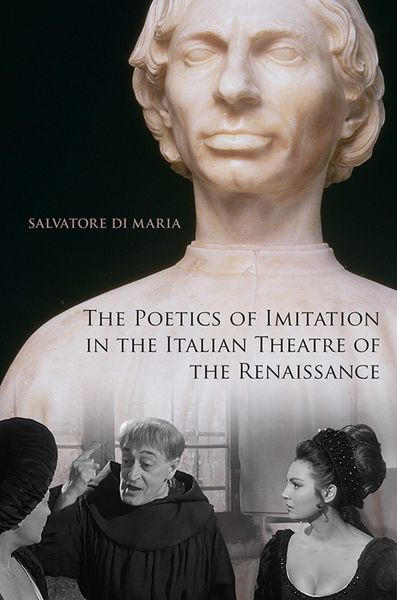
The Poetics of Imitation in the Italian Theatre of the Renaissance
Fr. 103.00
inkl. gesetzl. MwSt.,
Beschreibung
Produktdetails
Einband
Gebundene Ausgabe
Erscheinungsdatum
18.06.2013
Verlag
University of Toronto PressSeitenzahl
256
Maße (L/B/H)
22.9/15.2/1.8 cm
Gewicht
501 g
Sprache
Englisch
ISBN
978-1-4426-4712-1
The theatre of the Italian Renaissance was directly inspired by the classical stage of Greece and Rome, and many have argued that the former imitated the latter without developing a new theatre tradition. In this book, Salvatore DiMaria investigates aspects of innovation that made Italian Renaissance stage a modern, original theatre in its own right. He provides important evidence for creative imitation at work by comparing sources and imitations - incuding Machiavelli's Mandragola and Clizia, Cecchi's Assiuolo, Groto's Emilia, and Dolce's Marianna - and highlighting source elements that these playwrights chose to adopt, modify, or omit entirely.
DiMaria delves into how playwrights not only brought inventive new dramaturgical methods to the genre, but also incorporated significant aspects of the morals and aesthetic preferences familiar to contemporary spectators into their works. By proposing the theatre of the Italian Renaissance as a poetic window into the living realities of sixteenth-century Italy, he provides a fresh approach to reading the works of this period.
Noch keine Bewertungen vorhanden
Verfassen Sie die erste Bewertung zu diesem Artikel
Helfen Sie anderen Kundinnen und Kunden durch Ihre Meinung.