Produktbild: Food for Thought

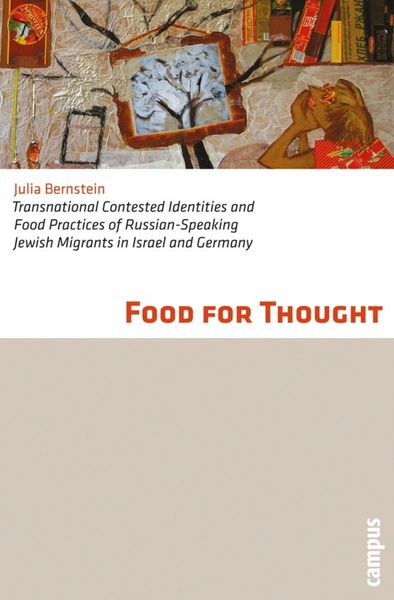
Food for Thought Transnational Contested Identities and Food Practices of Russian-Speaking Jewish Migrants in Israel and Germany

Fr. 44.90

inkl. gesetzl. MwSt.

Beschreibung

Produktdetails

Format

PDF

Kopierschutz

Nein

Family Sharing

Ja

Text-to-Speech

Nein

Erscheinungsdatum

04.10.2010

Verlag

Campus Verlag Digital

Seitenzahl

451 (Printausgabe)

Dateigröße

7519 KB

Auflage

1. Auflage

Sprache

Englisch

EAN

9783593410173

Beschreibung

Produktdetails

Format

PDF

eBooks im PDF-Format haben eine festgelegte Seitengröße und eignen sich daher nur bedingt zum Lesen auf einem tolino eReader oder Smartphone. Für den vollen Lesegenuss empfehlen wir Ihnen bei PDF-eBooks die Verwendung eines Tablets oder Computers.

Kopierschutz

Nein

Dieses eBook können Sie uneingeschränkt auf allen Geräten der tolino Familie, allen sonstigen eReadern und am PC lesen. Das eBook ist nicht kopiergeschützt und kann ein personalisiertes Wasserzeichen enthalten. Weitere Hinweise zum Lesen von eBooks mit einem personalisierten Wasserzeichen finden Sie unter Hilfe/Downloads.

Family Sharing

Ja

Mit Family Sharing können Sie eBooks innerhalb Ihrer Familie (max. sechs Mitglieder im gleichen Haushalt) teilen. Sie entscheiden selbst, welches Buch Sie mit welchem Familienmitglied teilen möchten. Auch das parallele Lesen durch verschiedene Familienmitglieder ist durch Family Sharing möglich. Um eBooks zu teilen oder geteilt zu bekommen, muss jedes Familienmitglied ein Konto bei Thalia oder einem anderen tolino-Buchhändler haben. Weitere Informationen finden Sie unter Hilfe/Family-Sharing.

Text-to-Speech

Nein

Bedeutet Ihnen Stimme mehr als Text? Mit der Funktion Text-to-Speech können Sie sich im tolino webReader und in der aktuellen Thalia – Lesen & Hören App das eBook vorlesen lassen. Weitere Informationen finden Sie unter Hilfe/Text-to-Speech.

Barrierefreiheit

  • keine Information zur Barrierefreiheit bekannt

Erscheinungsdatum

04.10.2010

Verlag

Campus Verlag Digital

Seitenzahl

451 (Printausgabe)

Dateigröße

7519 KB

Auflage

1. Auflage

Sprache

Englisch

EAN

9783593410173

Noch keine Bewertungen vorhanden

Verfassen Sie die erste Bewertung zu diesem Artikel

Helfen Sie anderen Kundinnen und Kunden durch Ihre Meinung.

Kundinnen und Kunden meinen

Bewertungen (0)

Weitere Artikel finden Sie in

Die Leseprobe wird geladen.
  • Produktbild: Food for Thought
  • Table of Contents Acknowledgments11 1 Migration collages: Studying Russian-speaking Jews in Israel and Germany15
    1.1 Migration and socio-cultural affiliations15
    1.2 The research approach17
    1.3 Research questions20
    1.4 Research methods22
    1.5 Comparative view of the two populations33
    1.6 General characteristics of the investigated groups34
    1.7 Transporting Jewish identity from the SU39
    1.8 Overview of the book41 2 Transnationalism and capitalism: Migrants from the former
    Soviet Union and their experiences in Germany and Israel45
    2.1 The Soviet kind of capitalism: Soviet spirituality vs. Western materialism50
    2.2 Post-Soviet capitalism on food commodities56 2.3 "Arrival on a new planet"67
    2.4 Reviving Soviet knowledge about the social reality of life in the capitalist system80
    2.5 "The Russia we had always dreamed of"-some conclusions89 3 "Chocolates without history are meaningless": Pre- and post-migration consumption95
    3.1 Soviet "hunting and gathering"98 3.2 The classic Soviet recipe rook: On the Tasty and Healthy Food Book107
    3.3 Social skills of post-migration consumption114
    3.4 Alternative ways of procurement and free consumption123
    3.5 Contested procurement141 4 Russian food stores in Israel and Germany: Images of imaginary home, homeland, and identity consolidation142
    4.1 Visibility of Russian food stores in Israel and Germany146
    4.2 Image of the hostess in the Russian food stores150
    4.3 Longing for the REAL home via food153
    4.4 Commercial promotion of nostalgia164
    4.5 Images of the Soviet paradise172
    4.6 Image of Soviet proletarian food or the imaginary proletarian home178
    4.7 Images of the Soviet empire and the Soviet political iconography of food post-emigration184
    4.8 Nationalized Russia in food products and gastronomic Slavophilism of ex-citizens abroad200
    4.9 Meanings of Russian food stores in Israel and Germany211 5 Russian food stores in Israel and Germany: Different national symbolic participations and virtual transnational enclave219
    5.1 Special national key symbols crossing borders and manifestations of identity: The symbolic meaning of pork and caviar in different national contexts222
    5.2 Pork226
    5.3 Caviar248 5.4 Mixed national identities in Russian food stores in Israel and Germany256
    5.5 Reconsidering the immigrant enterprise: From traditional, closed ethnic business toward a virtual transnational enclave268 6 Transjewish affiliation: The construction of ethnicity by Russian-speaking Jews in Israel and Germany273
    6.1 The "ethnicity" and ethnization processes of Russian-speaking Jews275
    6.2 Component One: Innate ethnicity and visible Otherness and its fate abroad278
    6.3 Component Two: Significant Others in the SU and abroad 293
    6.4 Component Three: Suspect loyalty: Soviet Jewish Otherness through affiliation with Israel313
    6.5 Component Four: Affiliation with Soviet Russian cultural elite315
    6.6 Conclusion319
    6.7 Triple Trans-Jewish affiliation321 7. Winners once a year? Making sense of WWII and the Holocaust as part of a transnational biographic experience328 7.1 Celebration of Den' Pobedy Victory Day329
    7.2 Conflicting meanings of May 8th and 9th332
    7.3 Soviet victors' narrative and the theme of the Holocaust in the SU335
    7.4 Transnational praxis of the everyday knowledge after migration to Germany347
    7.5 Proud of the Soviet victory, offended by the Soviet state or marginalized winners354
    7.6 Challenging the victory narrative and burdensome identities357
    7.7 The Outsider perspective362
    7.8 Principally Others: Media discourse about the topic364
    7.9 Shifting of the collective "we:" Media presentation of Germans and settled Jews as the symbolical "we" compared to "Russians"366 7.10 "Without us Israel would not have come into existence. We won the war and put an end to the Holocaust..."368 7.11 Comparative conclusions of different modifications of the original narratives in Israel and Germany369 8 "Will you prepare gefillte fish for Christmas?" Paradoxes of living in simultaneously contested social worlds373
    8.1 Reconsidering identities, reproducing stereotypes, coping with hierarchies374
    8.2 Alienation, home, and homeland: "Why not Israel?" Self-positioning of Russian-speaking Jews in Germany and Israel389
    8.3 Conclusion408
    8.4 Contributions of this research410
    8.5 Further development413 Bibliography415
    Index436