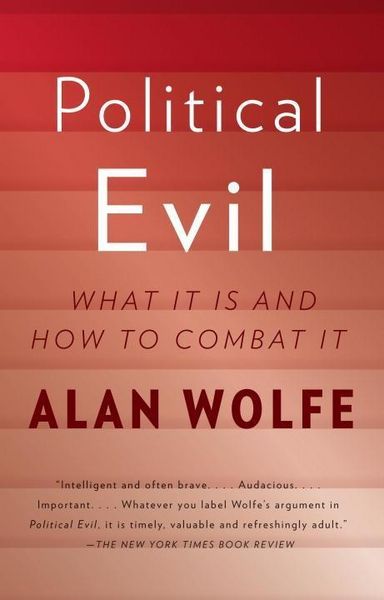
Political Evil What It Is and How to Combat It
Aus der Reihe
Knopf Doubleday Publishing Group
-
- Hardcover
- Taschenbuch
- eBook ausgewählt
-
Form:Einzelkauf Download
-
Sprache:Englisch
Fr. 9.90
inkl. gesetzl. MwSt.Beschreibung
Produktdetails
Format
ePUB
Kopierschutz
Ja
Family Sharing
Ja
Text-to-Speech
Ja
Erscheinungsdatum
27.09.2011
Verlag
Knopf Doubleday Publishing GroupSeitenzahl
352 (Printausgabe)
Dateigröße
2255 KB
Sprache
Englisch
EAN
9780307701473
A timely, eye-opening examination of political evil, a concept widely misunderstood and desperately in need of clarification in our ever more chaotic world.
In an age of genocide, terrorism, ethnic cleansing, and torture, evil threatens us in ways radically different from tsunamis and financial panics. Nature unleashes its wrath and people rush to help the victims. Evil shows its face and we are paralyzed over how to respond.
It was not always this way. During the twentieth century, thinkers as diverse as Hannah Arendt, Reinhold Niebuhr, Arthur Koestler, and George Orwell made evil central to everything they wrote. Acclaimed political scientist Alan Wolfe argues that in an age of partisan blame-assigning, therapeutic excuse-making, and theological question-dodging, we need to get serious about the problem of evil once again. While there will always be something incomprehensible about evil, we are very much capable of understanding and combating the use of evil means to obtain political ends.
Diplomats and politicians with their own agendas ignore this side of evil to grim and often tragic effect. These movers and shakers apply the concept of general evil, seemingly inconquerable, inviting only violence and despair to situations that are local in nature. Looking at examples of political evil around the globein the Middle East, Darfur, the Balkans, and at home in the WestWolfe shows us how seemingly small distinctions can make an immense difference in international response. And he makes clear that much-needed change can be initiated with a shift in how we talk and think about political evil.
International shame in the years following the Rwandan genocideafter the world failed to recognize it as suchled to a large-scale campaign against genocide in Darfur. Except, Wolfe argues, in Darfur it wasn't genocide: it was civil war. We seesurprisingly, and powerfullythat labeling the conflict incorrectly had disastrous effects, even extending the violence as soldiers waited for seemingly inevitable Western intervention. When, on the other hand, Western leaders compared Serbian president and infamous ethnic cleanser Slobodan Milosevic to Hitler, they failed to recognize that exterminating people and seeking to take over their land are both evil but they are evil in different ways; misguided Western intervention in the Balkans eventually brought ethnic cleansing to an end, but only by allowing it to run its course.
At once impassioned and pragmatic, Political Evil sheds essential light on the creation of policy and on a concrete path to a more practicable and just future.
In an age of genocide, terrorism, ethnic cleansing, and torture, evil threatens us in ways radically different from tsunamis and financial panics. Nature unleashes its wrath and people rush to help the victims. Evil shows its face and we are paralyzed over how to respond.
It was not always this way. During the twentieth century, thinkers as diverse as Hannah Arendt, Reinhold Niebuhr, Arthur Koestler, and George Orwell made evil central to everything they wrote. Acclaimed political scientist Alan Wolfe argues that in an age of partisan blame-assigning, therapeutic excuse-making, and theological question-dodging, we need to get serious about the problem of evil once again. While there will always be something incomprehensible about evil, we are very much capable of understanding and combating the use of evil means to obtain political ends.
Diplomats and politicians with their own agendas ignore this side of evil to grim and often tragic effect. These movers and shakers apply the concept of general evil, seemingly inconquerable, inviting only violence and despair to situations that are local in nature. Looking at examples of political evil around the globein the Middle East, Darfur, the Balkans, and at home in the WestWolfe shows us how seemingly small distinctions can make an immense difference in international response. And he makes clear that much-needed change can be initiated with a shift in how we talk and think about political evil.
International shame in the years following the Rwandan genocideafter the world failed to recognize it as suchled to a large-scale campaign against genocide in Darfur. Except, Wolfe argues, in Darfur it wasn't genocide: it was civil war. We seesurprisingly, and powerfullythat labeling the conflict incorrectly had disastrous effects, even extending the violence as soldiers waited for seemingly inevitable Western intervention. When, on the other hand, Western leaders compared Serbian president and infamous ethnic cleanser Slobodan Milosevic to Hitler, they failed to recognize that exterminating people and seeking to take over their land are both evil but they are evil in different ways; misguided Western intervention in the Balkans eventually brought ethnic cleansing to an end, but only by allowing it to run its course.
At once impassioned and pragmatic, Political Evil sheds essential light on the creation of policy and on a concrete path to a more practicable and just future.
Noch keine Bewertungen vorhanden
Verfassen Sie die erste Bewertung zu diesem Artikel
Helfen Sie anderen Kundinnen und Kunden durch Ihre Meinung.