KI-Beratung Beta

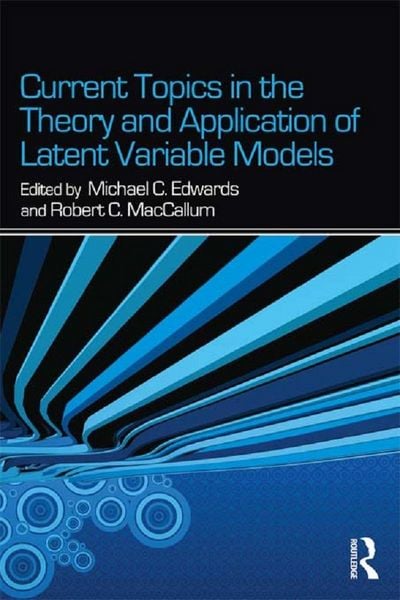
Produktbild: Current Topics in the Theory and Application of Latent Variable Models

Current Topics in the Theory and Application of Latent Variable Models

Fr. 87.90

inkl. gesetzl. MwSt.

Beschreibung

This book presents recent developments in the theory and application of latent variable models (LVMs) by some of the most prominent researchers in the field. Topics covered involve a range of LVM frameworks including item response theory, structural equation modeling, factor analysis, and latent curve...

Beschreibung

This book presents recent developments in the theory and application of latent variable models (LVMs) by some of the most prominent researchers in the field. Topics covered involve a range of LVM frameworks including item response theory, structural equation modeling, factor analysis, and latent curve modeling, as well as various non-standard data structures and innovative applications.
The book is divided into two sections, although several chapters cross these content boundaries. Part one focuses on complexities which involve the adaptation of latent variables models in research problems where real-world conditions do not match conventional assumptions. Chapters in this section cover issues such as analysis of dyadic data and complex survey data, as well as analysis of categorical variables. Part two of the book focuses on drawing real-world meaning from results obtained in LVMs. In this section there are chapters examining issues involving assessment of model fit, the nature of uncertainty in parameter estimates, inferences, and the nature of latent variables and individual differences.

This book appeals to researchers and graduate students interested in the theory and application of latent variable models. As such, it serves as a supplementary reading in graduate level courses on latent variable models. Prerequisites include basic knowledge of latent variable models.

Produktdetails

Format

PDF

Kopierschutz

Ja

Family Sharing

Nein

Text-to-Speech

Nein

Produktdetails

Format

PDF

Format

eBooks im PDF-Format haben eine festgelegte Seitengröße und eignen sich daher nur bedingt zum Lesen auf einem tolino eReader oder Smartphone. Für den vollen Lesegenuss empfehlen wir Ihnen bei PDF-eBooks die Verwendung eines Tablets oder Computers.

Kopierschutz

Ja

Kopierschutz

Zum Lesen dieses eBooks auf Geräten der tolino Familie sowie auf sonstigen eReadern und am PC benötigen Sie eine Adobe ID. Weitere Hinweise zum Lesen von kopiergeschützten eBooks finden Sie unter Hilfe/Downloads.

Family Sharing

Nein

Family Sharing

Mit Family Sharing können Sie eBooks innerhalb Ihrer Familie (max. sechs Mitglieder im gleichen Haushalt) teilen. Sie entscheiden selbst, welches Buch Sie mit welchem Familienmitglied teilen möchten. Auch das parallele Lesen durch verschiedene Familienmitglieder ist durch Family Sharing möglich. Um eBooks zu teilen oder geteilt zu bekommen, muss jedes Familienmitglied ein Konto bei Thalia oder einem anderen tolino-Buchhändler haben. Weitere Informationen finden Sie unter Hilfe/Family-Sharing.

Text-to-Speech

Nein

Text-to-Speech

Bedeutet Ihnen Stimme mehr als Text? Mit der Funktion Text-to-Speech können Sie sich im tolino webReader und in der aktuellen Thalia – Lesen & Hören App das eBook vorlesen lassen. Weitere Informationen finden Sie unter Hilfe/Text-to-Speech.

Erscheinungsdatum

12.12.2012

Herausgeber
Verlag Taylor & Francis eBooks
Seitenzahl

296 (Printausgabe)

Dateigröße

3371 KB

Sprache

Englisch

EAN

9781136699801

Barrierefreiheit
  • navigierbares Inhaltsverzeichnis
  • kurze Alternativtexte (z.B. für Abbildungen) vorhanden
  • keine Vorlesefunktionen des Lesesystems deaktiviert
  • navigierbarer Index
  • Seitennummerierung folgt dem gedruckten Werk

Noch keine Bewertungen vorhanden

Verfassen Sie die erste Bewertung zu diesem Artikel

Helfen Sie anderen Kundinnen und Kunden durch Ihre Meinung.

Kundinnen und Kunden meinen

Bewertungen (0)

Weitere Artikel finden Sie in

Die Leseprobe wird geladen.
  • Produktbild: Current Topics in the Theory and Application of Latent Variable Models