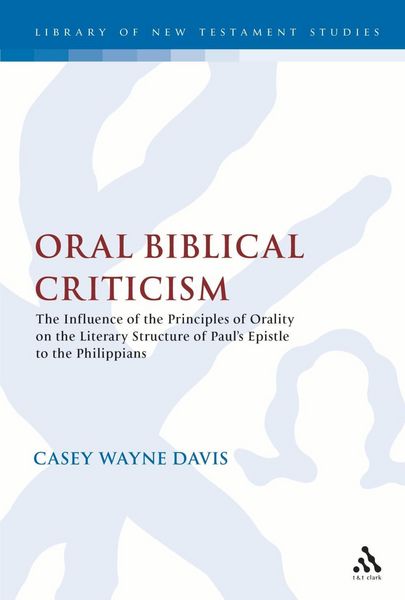
Oral Biblical Criticism The Influence of the Principles of Orality on the Literary Structure of Paul's Epistle to the Philip
Fr. 213.90
inkl. gesetzl. MwSt.Beschreibung
Produktdetails
Format
Kopierschutz
Ja
Family Sharing
Nein
Text-to-Speech
Nein
Erscheinungsdatum
01.06.1999
Verlag
Bloomsbury eBooks UKSeitenzahl
196 (Printausgabe)
Dateigröße
9524 KB
Auflage
1. Auflage
Sprache
Englisch
EAN
9780567629067
The Apostle Paul expected the vast majority of the recipients of his letters to hear, not read, them. He structured his compositions for the ear rather than the eye. Pauline audiences would hear clues to meaning and structure because they had learned to communicate in a world where those clues were essential to understanding. Recognizable structures and patterns were essential for listeners to organize what they heard, to follow, to predict and to remember the flow of communication. Oral Biblical Criticism examines Paul's Epistle to the Philippians in light of recent study of oral principles of composition and interpretation.
Noch keine Bewertungen vorhanden
Verfassen Sie die erste Bewertung zu diesem Artikel
Helfen Sie anderen Kundinnen und Kunden durch Ihre Meinung.