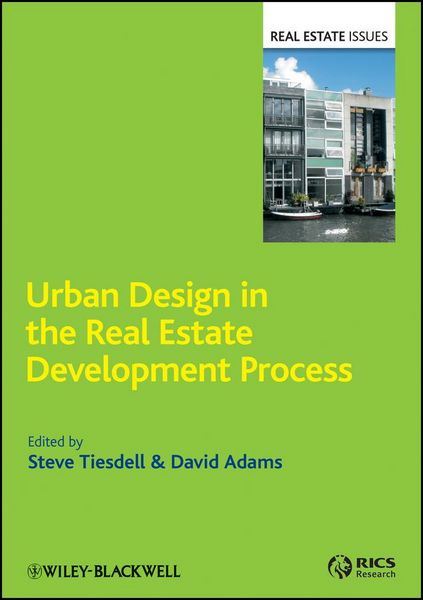
Urban Design in the Real Estate Development Process
Aus der Reihe
Real Estate Issues
-
Form:Einzelkauf Download
-
Sprache:Englisch
-
eBook Format:PDF
- PDF Fr. 86.00 ausgewählt
- ePUB Fr. 86.00
Fr. 86.00
inkl. gesetzl. MwSt.Beschreibung
Produktdetails
Format
Kopierschutz
Ja
Family Sharing
Nein
Text-to-Speech
Nein
Erscheinungsdatum
31.03.2011
Verlag
John Wiley & SonsSeitenzahl
344 (Printausgabe)
Dateigröße
20317 KB
Auflage
1. Auflage
Sprache
Englisch
EAN
9781444341157
Urban design enables better places to be created for people and is
thus seen in Urban Design in the Real Estate Development
Process as a place-making activity, rather than the application
of architectural aesthetics. Urban design policy can change the
'decision environment' of developers, financiers, designers and
other actors in the real estate development process to make them
take place-making more seriously.
This book reports diverse international experience from Europe
and North America on the role and significance of urban design in
the real estate development process and explores how higher quality
development and better places can be achieved through public
policy.
The book is focused on four types of policy tool or instrument
that have been deployed to promote better urban design: those that
seek to shape, regulate or provide stimulus to real estate markets
along with those aim to build capacity to achieve these. Urban
design is therefore seen as a form of public policy that seeks to
steer real estate development towards policy-shaped rather than
market-led outcomes. The editors set the examples, case studies and
evidence from international contributors within a substantive
discussion of the impact of urban design policy tools and actions
in specific development contexts.
Contributions from leading urban design theorists and
practitioners explore how:
* Masterplanning and infrastructure provision encourage high
quality design
* Design codes reconcile developers' needs for certainty and
flexibility
* Clear policy combined with firm regulation can transform
developer behaviour
* Intelligent parcelisation can craft the character of successful
new urban districts
* Powerful real estates interests can capture regulatory
initiatives
* Stimulus instruments can encourage good design
* Development competitions need careful management
* Design review can foster developer commitment to design
excellence
* Speculative housebuilders respond in varied ways to the
brownfield design challenge
* Physical-financial models could help in assessing the benefits
of design investment
* Urban design can add value to the benefit of developers and
cities as a whole.
thus seen in Urban Design in the Real Estate Development
Process as a place-making activity, rather than the application
of architectural aesthetics. Urban design policy can change the
'decision environment' of developers, financiers, designers and
other actors in the real estate development process to make them
take place-making more seriously.
This book reports diverse international experience from Europe
and North America on the role and significance of urban design in
the real estate development process and explores how higher quality
development and better places can be achieved through public
policy.
The book is focused on four types of policy tool or instrument
that have been deployed to promote better urban design: those that
seek to shape, regulate or provide stimulus to real estate markets
along with those aim to build capacity to achieve these. Urban
design is therefore seen as a form of public policy that seeks to
steer real estate development towards policy-shaped rather than
market-led outcomes. The editors set the examples, case studies and
evidence from international contributors within a substantive
discussion of the impact of urban design policy tools and actions
in specific development contexts.
Contributions from leading urban design theorists and
practitioners explore how:
* Masterplanning and infrastructure provision encourage high
quality design
* Design codes reconcile developers' needs for certainty and
flexibility
* Clear policy combined with firm regulation can transform
developer behaviour
* Intelligent parcelisation can craft the character of successful
new urban districts
* Powerful real estates interests can capture regulatory
initiatives
* Stimulus instruments can encourage good design
* Development competitions need careful management
* Design review can foster developer commitment to design
excellence
* Speculative housebuilders respond in varied ways to the
brownfield design challenge
* Physical-financial models could help in assessing the benefits
of design investment
* Urban design can add value to the benefit of developers and
cities as a whole.
Noch keine Bewertungen vorhanden
Verfassen Sie die erste Bewertung zu diesem Artikel
Helfen Sie anderen Kundinnen und Kunden durch Ihre Meinung.