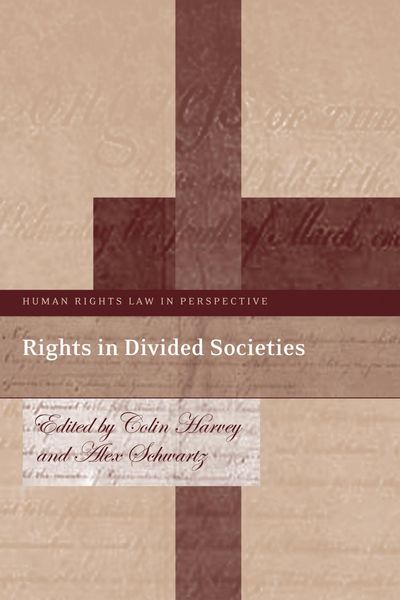
Rights in Divided Societies
-
Form:Einzelkauf Download
-
Sprache:Englisch
-
eBook Format:PDF
- PDF Fr. 111.90 ausgewählt
- ePUB Fr. 111.90
Fr. 111.90
inkl. gesetzl. MwSt.Beschreibung
Produktdetails
Format
Kopierschutz
Ja
Family Sharing
Nein
Text-to-Speech
Nein
Erscheinungsdatum
20.07.2012
Herausgeber
Colin Harvey + weitereVerlag
Bloomsbury eBooks UKSeitenzahl
284 (Printausgabe)
Auflage
1. Auflage
Sprache
Englisch
EAN
9781847319791
This collection examines the role and value of rights in divided and post-conflict societies, approaching the subject from a comparative and theoretical perspective.
Societies emerging from violent conflict often opt for a bill of rights as part of a wider package of constitutional reform. Where conflict is fuelled by longstanding ethno-national divisions, these divisions are often addressed through group-differentiated rights. Recent constitutional settlements have highlighted the difficulties in drafting a bill of rights in divided/post-conflict societies, where the aim of promoting unity is frequently in tension with the need to accommodate difference. In such cases, a bill of rights might be a rallying point around which both minorities and the majority can articulate a common vision for a shared society. Conversely, a bill of rights might provide merely another venue in which to play out familiar conflicts, further dividing an already divided society.
The central questions that animate the collection are: (1) Can constitutional rights provide a basis for unity and a common 'human rights culture' in divided societies? If so, how? (2) To what extent should divided societies opt for a universalistic package of rights protections, or should the rights be tailored to the specific circumstances of a divided society, providing for special group-sensitive protections for minorities? (3) Is a divided society more or less likely to adopt a bill of rights? (4) How does the judiciary figure in the management or resolution of ethno-national conflict? (5) What are the general theoretical and philosophical issues at stake in a rights-based approach to the management or resolution of ethno-national divisions or other conflicts?
Societies emerging from violent conflict often opt for a bill of rights as part of a wider package of constitutional reform. Where conflict is fuelled by longstanding ethno-national divisions, these divisions are often addressed through group-differentiated rights. Recent constitutional settlements have highlighted the difficulties in drafting a bill of rights in divided/post-conflict societies, where the aim of promoting unity is frequently in tension with the need to accommodate difference. In such cases, a bill of rights might be a rallying point around which both minorities and the majority can articulate a common vision for a shared society. Conversely, a bill of rights might provide merely another venue in which to play out familiar conflicts, further dividing an already divided society.
The central questions that animate the collection are: (1) Can constitutional rights provide a basis for unity and a common 'human rights culture' in divided societies? If so, how? (2) To what extent should divided societies opt for a universalistic package of rights protections, or should the rights be tailored to the specific circumstances of a divided society, providing for special group-sensitive protections for minorities? (3) Is a divided society more or less likely to adopt a bill of rights? (4) How does the judiciary figure in the management or resolution of ethno-national conflict? (5) What are the general theoretical and philosophical issues at stake in a rights-based approach to the management or resolution of ethno-national divisions or other conflicts?
Kundinnen und Kunden meinen
Verfassen Sie die erste Bewertung zu diesem Artikel
Helfen Sie anderen Kund*innen durch Ihre Meinung