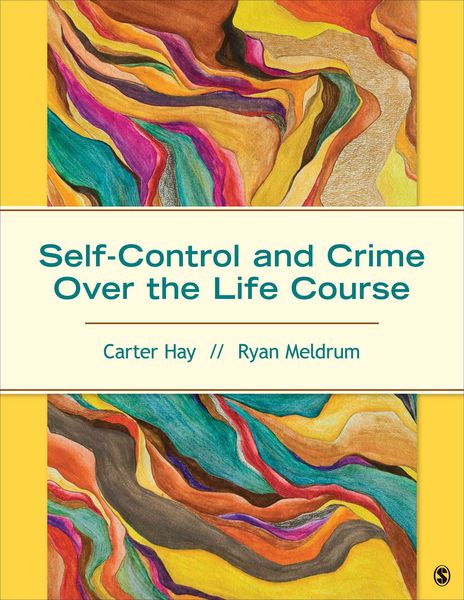
Produktbild: Hay, C: Self-Control and Crime Over the Life Course

Hay, C: Self-Control and Crime Over the Life Course

Fr. 159.00

inkl. gesetzl. MwSt., Versandkostenfrei


Beschreibung

Produktdetails

Einband

Taschenbuch

Erscheinungsdatum

26.03.2015

Verlag

Sage Publications

Seitenzahl

312

Maße (L/B/H)

22.6/15.2/2 cm

Gewicht

470 g

Sprache

Englisch

ISBN

978-1-4833-5899-4

Beschreibung

Produktdetails

Einband

Taschenbuch

Erscheinungsdatum

26.03.2015

Verlag

Sage Publications

Seitenzahl

312

Maße (L/B/H)

22.6/15.2/2 cm

Gewicht

470 g

Sprache

Englisch

ISBN

978-1-4833-5899-4

Noch keine Bewertungen vorhanden

Verfassen Sie die erste Bewertung zu diesem Artikel

Helfen Sie anderen Kundinnen und Kunden durch Ihre Meinung.

Kundinnen und Kunden meinen

Bewertungen (0)

  • Produktbild: Hay, C: Self-Control and Crime Over the Life Course
  • Chapter 1: Introduction
    A Definition of Self-Control
    An Integrative Approach
    A Life Course Approach
    Connecting Self-Control to Other Causes of Behavior
    Attention to Public Policy
    Connecting the Science of Self-Control to the Stories We Read About Everyday
    Chapter 2: Theories of Self-Control and Behavior
    The Inextricable Connection Between Theory and Fact
    Explaining Crime: Gottfredson and Hirschi¿s Self-Control Theory
    Evaluating Gottfredson and Hirschi¿s Self-Control Theory
    A Psychological, Trait-Based Theory of Self-Control
    Biosocial Approaches to Behavior
    The Strength Model: Self-control as a Depletable Resource
    Chapter 3: What Are the Consequences of Low Self-Control?
    The Marshmallow Experiments
    A Quick Note on the Measurement of Self-Control
    Research on Low Self-Control and Crime
    The Everyday Consequences of Low Self-Control
    Policy Implications and Possibilities
    Chapter 4: Infancy and Childhood: What Are the Causes of Self-Control Early in Life?
    The Role of Parents in Shaping Self-Control
    The Genetic Underpinnings of Self-Control
    Neurobiological Influences on Self-Control
    Policy Implications and Possibilities
    Chapter 5: Adolescence and Adulthood: Is Self-Control Stable Over Time?
    Stability and Change in Self-Control
    Why Does Self-Control Often Remain Stable?
    Persistent Individual Traits as Contributors to Self-Control Stability
    Persistent Environmental Characteristics: Parenting and Peers
    Persistent Environmental Characteristics: The Stability of Poverty
    State Dependence as a Contributor to Self-Control Stability
    An Implicit Idea: Human Agency
    Empirical Evidence on Explanations for Stability
    Policy Implications and Possibilities
    Chapter 6: What Leads to Self-Control Change?
    The Pervasiveness of Change
    The Transformations of Adolescence
    Unexpected Shifts in Social Environments and Relationships
    Sleeping, Eating, and Substance Use: Short-Term Fluctuations in Self-Control
    Policy Implications and Possibilities
    Chapter 7: Do the Harmful Effects of Low Self-Control Vary Across Different Circumstances?
    Conditional Causation and Low Self-Control: Conceptual Issues
    Criminal Opportunity
    Association With Delinquent Peers
    Weak Social Bonds
    Neighborhood Disadvantage
    Weak Moral Values
    Considering Self-Control as a Moderator Variable
    Can Self-Control Moderate the Effects of Self-Control?
    Policy Implications and Possibilities
    Chapter 8: Self-Control and Crime Over the Life Course: Bringing It All Together
    The Causes of Initial Self-Control Differences in the First Decade of Life
    The Child Grows into an Adolescent
    The Adolescent Grows Into an Adult
    Moderated Effects Across the Entire Life Course
    Chapter 9: Self-Control and Crime: Influencing Policy and Looking to the Future
    Self-Control as a Driver of Societal Advance
    Using Policy to Promote Self-Control Over the Life Course
    Community-Based Programs Relevant to All Stages of the Life Course
    Evidence of Program Success