KI-Beratung Beta

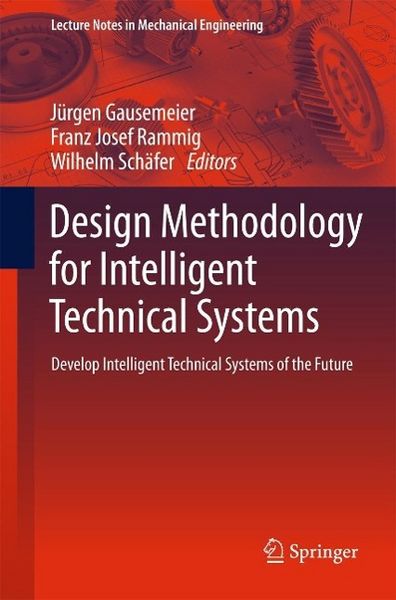
Produktbild: Design Methodology for Intelligent Technical Systems

Design Methodology for Intelligent Technical Systems Develop Intelligent Technical Systems of the Future

Fr. 125.90

inkl. gesetzl. MwSt.

Beschreibung

Intelligent technical systems, which combine mechanical, electrical and software engineering with control engineering and advanced mathematics, go far beyond the state of the art in mechatronics and open up fascinating perspectives. Among these systems are so-called self-optimizing systems, which are...

Beschreibung

Intelligent technical systems, which combine mechanical, electrical and software engineering with control engineering and advanced mathematics, go far beyond the state of the art in mechatronics and open up fascinating perspectives. Among these systems are so-called self-optimizing systems, which are able to adapt their behavior autonomously and flexibly to changing operating conditions. Self-optimizing systems create high value for example in terms of energy and resource efficiency as well as reliability.


The Collaborative Research Center 614 "Self-optimizing Concepts and Structures in Mechanical Engineering" pursued the long-term aim to open up the active paradigm of self-optimization for mechanical engineering and to enable others to develop self-optimizing systems.


This book is directed to researchers and practitioners alike. It provides a design methodology for the development of self-optimizing systems consisting of a reference process, methods, and tools. The reference process is divided into two phases the domain-spanning conceptual design and the domain-specific design and development. For the conceptual design a holistic approach is provided. Domain-specific methods and tools developed especially for the design and development of self-optimizing systems are described and illustrated by application examples. This book will enable the reader to identify the potential for self-optimization and to develop self-optimizing systems independently.

Produktdetails

Format

PDF

Kopierschutz

Nein

Family Sharing

Nein

Text-to-Speech

Nein

Produktdetails

Format

PDF

Format

eBooks im PDF-Format haben eine festgelegte Seitengröße und eignen sich daher nur bedingt zum Lesen auf einem tolino eReader oder Smartphone. Für den vollen Lesegenuss empfehlen wir Ihnen bei PDF-eBooks die Verwendung eines Tablets oder Computers.

Kopierschutz

Nein

Kopierschutz

Dieses eBook können Sie uneingeschränkt auf allen Geräten der tolino Familie, allen sonstigen eReadern und am PC lesen. Das eBook ist nicht kopiergeschützt und kann ein personalisiertes Wasserzeichen enthalten. Weitere Hinweise zum Lesen von eBooks mit einem personalisierten Wasserzeichen finden Sie unter Hilfe/Downloads.

Family Sharing

Nein

Family Sharing

Mit Family Sharing können Sie eBooks innerhalb Ihrer Familie (max. sechs Mitglieder im gleichen Haushalt) teilen. Sie entscheiden selbst, welches Buch Sie mit welchem Familienmitglied teilen möchten. Auch das parallele Lesen durch verschiedene Familienmitglieder ist durch Family Sharing möglich. Um eBooks zu teilen oder geteilt zu bekommen, muss jedes Familienmitglied ein Konto bei Thalia oder einem anderen tolino-Buchhändler haben. Weitere Informationen finden Sie unter Hilfe/Family-Sharing.

Text-to-Speech

Nein

Text-to-Speech

Bedeutet Ihnen Stimme mehr als Text? Mit der Funktion Text-to-Speech können Sie sich im tolino webReader und in der aktuellen Thalia – Lesen & Hören App das eBook vorlesen lassen. Weitere Informationen finden Sie unter Hilfe/Text-to-Speech.

Erscheinungsdatum

28.01.2014

Herausgeber
Verlag Springer
Seitenzahl

358 (Printausgabe)

Dateigröße

28351 KB

Sprache

Englisch

EAN

9783642454356

Barrierefreiheit
  • keine Information zur Barrierefreiheit bekannt

Noch keine Bewertungen vorhanden

Verfassen Sie die erste Bewertung zu diesem Artikel

Helfen Sie anderen Kundinnen und Kunden durch Ihre Meinung.

Kundinnen und Kunden meinen

Bewertungen (0)

Weitere Artikel finden Sie in

  • Produktbild: Design Methodology for Intelligent Technical Systems
  • The Paradigm of Self-Optimization.- Examples of Self-Optimizing Systems.- Development of Self-Optimizing Systems.- Methods for the Domain-Spanning Conceptual Design.- Methods for the Design and Development.- Summary and Outlook.