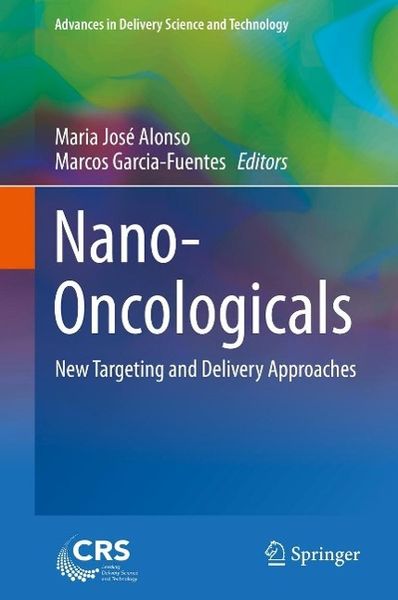
Nano-Oncologicals New Targeting and Delivery Approaches
-
- Hardcover
- Taschenbuch
- eBook ausgewählt
-
Form:Einzelkauf Download
-
Sprache:Englisch
Fr. 187.90
inkl. gesetzl. MwSt.Beschreibung
Produktdetails
Format
Kopierschutz
Nein
Family Sharing
Nein
Text-to-Speech
Nein
Erscheinungsdatum
15.10.2014
Herausgeber
Maria José Alonso + weitereVerlag
SpringerSeitenzahl
473 (Printausgabe)
Dateigröße
10021 KB
Sprache
Englisch
EAN
9783319080840
This authoritative volume focuses on emerging technologies in cancer nano medicine, characterized by their multi-functionality and potential to address simultaneously diverse issues of clinical relevance in the treatment of cancer. The book consists of sixteen chapters divided into six sections: 1) Biological Barriers in Cancer; 2) Tumor Targeting; 3) Targeting the Immune System; 4) Gene Therapy; 5) Nano theranostics and 6) Translational Aspects of Nano-Oncologicals. The volume starts with an introduction describing the biological barriers associated with cancer therapy and highlighting ways to overcome such barriers through the use of nanotechnology. This is followed by an analysis of the two major targeting strategies currently under investigation in cancer therapy: namely, the targeting of cancer cells and the targeting of the immune system. In the first case, the book presents liposomal and polymer-based therapies, including photodynamic approaches. In the second case, it analyzes in detail the possibility of either improving the efficiency of the immune system toward preventing cancer progression (cancer immunomodulation) or generating responses against specific cancer antigens (cancer vaccines).
Beyond these targeting options, Nano-Oncologicals: New Targeting and Delivery Approaches presents the most recent technological advances in the area of nucleic acid-based therapies, along with those in the area of theranostics, where the design of multifunctional nano carriers becomes vital. Following the study of the most promising nanotechnologies around the development of nano-oncologicals, the book ends with an overview of regulatory and toxicological issues, which are critical in their translational pathway, and the presentation of a nucleic acid-based therapy case-study. This book is an important resource for scientists interested in the design and development of anticancer nanotechnologies and also to those aiming to push their technology through clinical development.
Noch keine Bewertungen vorhanden
Verfassen Sie die erste Bewertung zu diesem Artikel
Helfen Sie anderen Kundinnen und Kunden durch Ihre Meinung.