KI-Beratung Beta

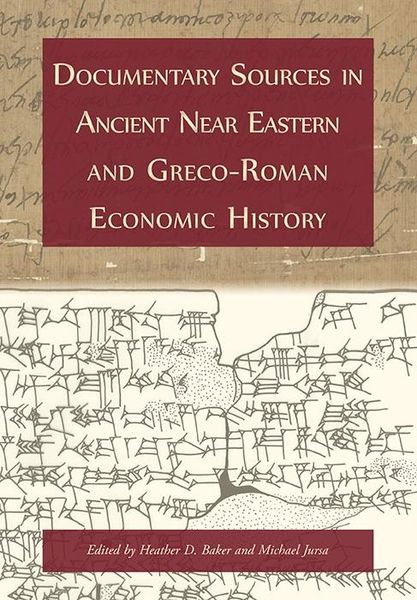
Produktbild: Documentary Sources in Ancient Near Eastern and Greco-Roman Economic History

Documentary Sources in Ancient Near Eastern and Greco-Roman Economic History Methodology and Practice

Fr. 32.90

inkl. gesetzl. MwSt.

Beschreibung

This volume breaks new ground in approaching the Ancient Economy by bringing together documentary sources from Mesopotamia and the Greco-Roman world. Addressing textual corpora that have traditionally been studied separately, the collected papers overturn the conventional view of a fundamental divide...

Beschreibung

This volume breaks new ground in approaching the Ancient Economy by bringing together documentary sources from Mesopotamia and the Greco-Roman world. Addressing textual corpora that have traditionally been studied separately, the collected papers overturn the conventional view of a fundamental divide between the economic institutions of these two regions. The premise is that, while controlling for differences, texts from either cultural setting can be brought to bear on the other and can shed light, through their use as proxy data, on such questions as economic mentalities and market development. The book also presents innovative approaches to the quantitative study of large corpora of ancient documents. The resulting view of the Ancient Economy is much more variegated and dynamic than traditional 'primitivist' views would allow.
The volume covers the following topics: Babylonian house size data as an index of urban living standards; the Old Babylonian archives as a source for economic history; Middle Bronze Age long distance trade in Anatolia; long-term economic development in Babylonia from the 7th to the 4th century BC; legal institutions and agrarian change in the Roman Empire; papyrological evidence for water-lifting technology; money circulation and monetization in Late Antique Egypt; the application of Social Network Analysis to Babylonian cuneiform archives; price trends in the ancient Near East and Mediterranean in the Hellenistic and Roman periods, as well as the effects of locust plagues on prices.

Produktdetails

Format

ePUB

Kopierschutz

Ja

Family Sharing

Ja

Text-to-Speech

Ja

Produktdetails

Format

ePUB

Format

eBooks im ePUB-Format erlauben eine dynamische Anpassung des Inhalts an die jeweilige Display-Größe des Lesegeräts. Das Format eignet sich daher besonders für das Lesen auf mobilen Geräten, wie z.B. Ihrem tolino, Tablets oder Smartphones.

Kopierschutz

Ja

Kopierschutz

Zum Lesen dieses eBooks auf Geräten der tolino Familie sowie auf sonstigen eReadern und am PC benötigen Sie eine Adobe ID. Weitere Hinweise zum Lesen von kopiergeschützten eBooks finden Sie unter Hilfe/Downloads.

Family Sharing

Ja

Family Sharing

Mit Family Sharing können Sie eBooks innerhalb Ihrer Familie (max. sechs Mitglieder im gleichen Haushalt) teilen. Sie entscheiden selbst, welches Buch Sie mit welchem Familienmitglied teilen möchten. Auch das parallele Lesen durch verschiedene Familienmitglieder ist durch Family Sharing möglich. Um eBooks zu teilen oder geteilt zu bekommen, muss jedes Familienmitglied ein Konto bei Thalia oder einem anderen tolino-Buchhändler haben. Weitere Informationen finden Sie unter Hilfe/Family-Sharing.

Text-to-Speech

Ja

Text-to-Speech

Bedeutet Ihnen Stimme mehr als Text? Mit der Funktion Text-to-Speech können Sie sich im tolino webReader und in der aktuellen Thalia – Lesen & Hören App das eBook vorlesen lassen. Weitere Informationen finden Sie unter Hilfe/Text-to-Speech.

Erscheinungsdatum

31.08.2014

Herausgeber
Verlag Oxbow Books
Seitenzahl

336 (Printausgabe)

Dateigröße

14269 KB

Sprache

Englisch

EAN

9781782977599

Barrierefreiheit
  • keine Information zur Barrierefreiheit bekannt

Noch keine Bewertungen vorhanden

Verfassen Sie die erste Bewertung zu diesem Artikel

Helfen Sie anderen Kundinnen und Kunden durch Ihre Meinung.

Kundinnen und Kunden meinen

Bewertungen (0)

Weitere Artikel finden Sie in

Die Leseprobe wird geladen.
  • Produktbild: Documentary Sources in Ancient Near Eastern and Greco-Roman Economic History