Band 233
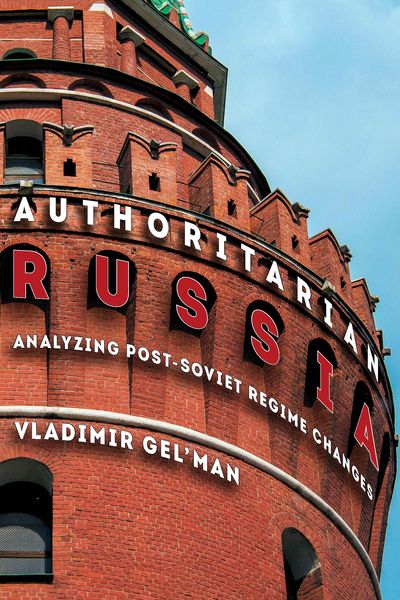
Authoritarian Russia Analyzing Post-Soviet Regime Changes
Aus der Reihe
Russian and East European Studies
-
- Taschenbuch
- eBook ausgewählt
-
Form:Einzelkauf Download
-
Sprache:Englisch
Fr. 50.90
inkl. gesetzl. MwSt.Beschreibung
Produktdetails
Format
ePUB
Kopierschutz
Nein
Family Sharing
Nein
Text-to-Speech
Ja
Erscheinungsdatum
01.07.2015
Verlag
Princeton University PressSeitenzahl
(Printausgabe)
Dateigröße
1364 KB
Sprache
Englisch
EAN
9780822980933
Russia today represents one of the major examples of the phenomenon of "electoral authoritarianism" which is characterized by adopting the trappings of democratic institutions (such as elections, political parties, and a legislature) and enlisting the service of the country's essentially authoritarian rulers. Why and how has the electoral authoritarian regime been consolidated in Russia? What are the mechanisms of its maintenance, and what is its likely future course? This book attempts to answer these basic questions.
Vladimir Gel'man examines regime change in Russia from the collapse of the Soviet Union in 1991 to the present day, systematically presenting theoretical and comparative perspectives of the factors that affected regime changes and the authoritarian drift of the country. After the fall of the Soviet Union, Russia's national political elites aimed to achieve their goals by creating and enforcing of favorable "rules of the game" for themselves and maintaining informal winning coalitions of cliques around individual rulers. In the 1990s, these moves were only partially successful given the weakness of the Russian state and troubled post-socialist economy. In the 2000s, however, Vladimir Putin rescued the system thanks to the combination of economic growth and the revival of the state capacity he was able to implement by imposing a series of non-democratic reforms. In the 2010s, changing conditions in the country have presented new risks and challenges for the Putin regime that will play themselves out in the years to come.
Vladimir Gel'man examines regime change in Russia from the collapse of the Soviet Union in 1991 to the present day, systematically presenting theoretical and comparative perspectives of the factors that affected regime changes and the authoritarian drift of the country. After the fall of the Soviet Union, Russia's national political elites aimed to achieve their goals by creating and enforcing of favorable "rules of the game" for themselves and maintaining informal winning coalitions of cliques around individual rulers. In the 1990s, these moves were only partially successful given the weakness of the Russian state and troubled post-socialist economy. In the 2000s, however, Vladimir Putin rescued the system thanks to the combination of economic growth and the revival of the state capacity he was able to implement by imposing a series of non-democratic reforms. In the 2010s, changing conditions in the country have presented new risks and challenges for the Putin regime that will play themselves out in the years to come.
Noch keine Bewertungen vorhanden
Verfassen Sie die erste Bewertung zu diesem Artikel
Helfen Sie anderen Kundinnen und Kunden durch Ihre Meinung.