Beschreibung
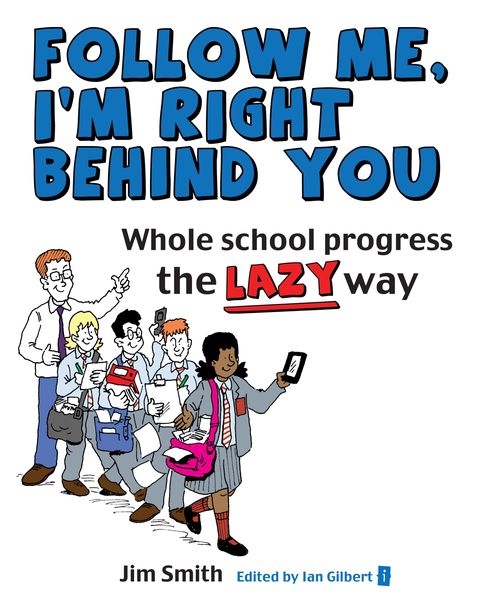
Following on from the acclaimed The Lazy Teacher's Handbook, Jim Smith applies his lazy philosophy to flip the task of 'leading learning' to 'letting learning lead'. Covering all aspects of learning, including the planning of outstanding lessons, lesson observation, passing performance management targets and creating inspiring learning environments the book poses the question 'what would happen if you let learning lead?'. You might just find you enjoy your job more than ever as well as see a big improvement in the quality of learning and progress for your pupils.Based on Jim Smith's leadership work to improve learning (in a lazy way of course) this book is packed with highly practical solutions and suggestions that are proven to help you improve the quality of learning and progress but in a lazy way both in your classroom and across the school.
Zitat
Reviewed by Barry J Hymer, Professor of psychology in education, Education Faculty, University of Cumbria.
A welcome sequel to Jim Smith's first book, and again jam-packed with ideas for invisibly transferring the learning load onto students - this time with an emphasis on whole-school processes. Readable, amusing and quirky, I expect this to do as well as its predecessor. Reviewed by Geoff Cherrill, Vice Principal, Nova Hreod, Swindon.
Being a self confessed fan of the Lazy Way and having read The Lazy Teacher's Handbook, seen Jim Smith deliver INSET and been fortunate to visit the home of Lazy Teaching in Clevedon, I greeted this book with a measure of excitement and a dose of Ofsted weary cynicism. Excitement at the idea of more off beat, yet enormously effective, strategies for delivering effective progress in my classroom; and cynicism at the potential for the approach to have taken on the age old appearance of simply being last year's educational fad.
Fortunately, I am writing this with yet more excitement and not a trace of cynicism. The book and its author maintain a sense of infectious enthusiasm, wonderful humour and genuinely intelligent comment on the educational landscape in 2012, allied to a rock solid approach to dealing with the challenging concept of ensuring every child makes progress in every lesson they encounter.
It is written in an easy, flowing style which allows you to take ideas on board and see how they relate to both current Ofsted requirements and contemporary educational thinking in general. It contains a constant stream of useful tips and strategies which can be adopted wholesale or picked carefully and adapted to your, and your class's, own style.
The lesson model provides real scope for development in your own school, whilst maintaining its theme of children developing the capacity to understand the concept of checking their own progress. Whilst the book attempts to be light hearted and humorous, it addresses