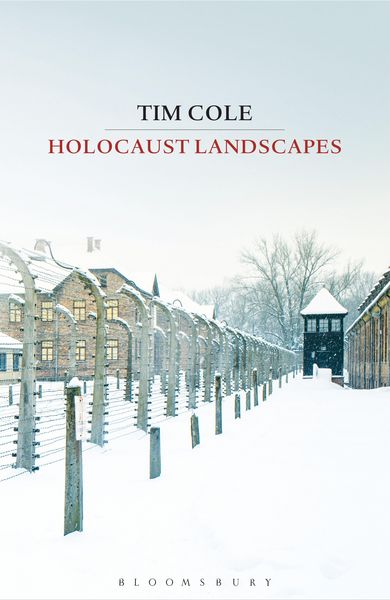
Holocaust Landscapes
-
- Einzelkauf Download ausgewählt
-
Sprache:Englisch
-
eBook Format:ePUB
- PDF Fr. 19.90
- ePUB Fr. 19.90 ausgewählt
Fr. 19.90
inkl. gesetzl. MwSt.Beschreibung
Produktdetails
Format
ePUB
Kopierschutz
Ja
Family Sharing
Nein
Text-to-Speech
Ja
Erscheinungsdatum
05.05.2016
Verlag
Bloomsbury eBooks UKSeitenzahl
272 (Printausgabe)
Auflage
1. Auflage
Sprache
Englisch
EAN
9781472906892
The theme of Tim Cole's Holocaust Landscapes concerns the geography of the Holocaust; the Holocaust as a place-making event for both perpetrators and victims.
Through concepts such as distance and proximity, Professor Cole tells the story of the Holocaust through a number of landscapes where genocide was implemented, experienced and evaded and which have subsequently been forgotten in the post-war world.
Drawing on particular survivors' narratives, Holocaust Landscapes moves between a series of ordinary and extraordinary places and the people who inhabited them throughout the years of the Second World War.
Starting in Germany in the late 1930s, the book shifts chronologically and geographically westwards but ends up in Germany in the final chaotic months of the war. These landscapes range from the most iconic (synagogue, ghetto, railroad, camp, attic) to less well known sites (forest, sea and mountain, river, road, displaced persons camp).
Holocaust Landscapes provides a new perspective surrounding the shifting geographies and histories of this continent-wide event.
Through concepts such as distance and proximity, Professor Cole tells the story of the Holocaust through a number of landscapes where genocide was implemented, experienced and evaded and which have subsequently been forgotten in the post-war world.
Drawing on particular survivors' narratives, Holocaust Landscapes moves between a series of ordinary and extraordinary places and the people who inhabited them throughout the years of the Second World War.
Starting in Germany in the late 1930s, the book shifts chronologically and geographically westwards but ends up in Germany in the final chaotic months of the war. These landscapes range from the most iconic (synagogue, ghetto, railroad, camp, attic) to less well known sites (forest, sea and mountain, river, road, displaced persons camp).
Holocaust Landscapes provides a new perspective surrounding the shifting geographies and histories of this continent-wide event.
Noch keine Bewertungen vorhanden
Verfassen Sie die erste Bewertung zu diesem Artikel
Helfen Sie anderen Kundinnen und Kunden durch Ihre Meinung.