Band 8
Republican Beijing The City and Its Histories
Aus der Reihe
Asia: Local Studies / Global Themes
Fr. 95.90
inkl. gesetzl. MwSt.Beschreibung
Produktdetails
Format
Kopierschutz
Nein
Family Sharing
Nein
Text-to-Speech
Nein
Erscheinungsdatum
04.08.2003
Verlag
Kensington BooksSeitenzahl
403 (Printausgabe)
Dateigröße
3389 KB
Auflage
1. Auflage
Sprache
Englisch
EAN
9780520927636
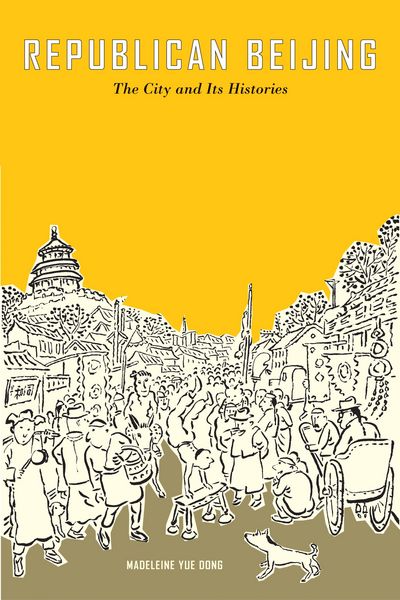
Old Beijing has become a subject of growing fascination in contemporary China since the 1980s. While physical remnants from the past are being bulldozed every day to make space for glass-walled skyscrapers and towering apartment buildings, nostalgia for the old city is booming. Madeleine Yue Dong offers the first comprehensive history of Republican Beijing, examining how the capital acquired its identity as a consummately "traditional" Chinese city.
For residents of Beijing, the heart of the city lay in the labor-intensive activities of "recycling," a primary mode of material and cultural production and circulation that came to characterize Republican Beijing. An omnipresent process of recycling and re-use unified Beijing's fragmented and stratified markets into one circulation system. These material practices evoked an air of nostalgia that permeated daily life. Paradoxically, the "old Beijing" toward which this nostalgia was directed was not the imperial capital of the past, but the living Republican city. Such nostalgia toward the present, the author argues, was not an empty sentiment, but an essential characteristic of Chinese modernity.
For residents of Beijing, the heart of the city lay in the labor-intensive activities of "recycling," a primary mode of material and cultural production and circulation that came to characterize Republican Beijing. An omnipresent process of recycling and re-use unified Beijing's fragmented and stratified markets into one circulation system. These material practices evoked an air of nostalgia that permeated daily life. Paradoxically, the "old Beijing" toward which this nostalgia was directed was not the imperial capital of the past, but the living Republican city. Such nostalgia toward the present, the author argues, was not an empty sentiment, but an essential characteristic of Chinese modernity.
Noch keine Bewertungen vorhanden
Verfassen Sie die erste Bewertung zu diesem Artikel
Helfen Sie anderen Kundinnen und Kunden durch Ihre Meinung.