KI-Beratung Beta

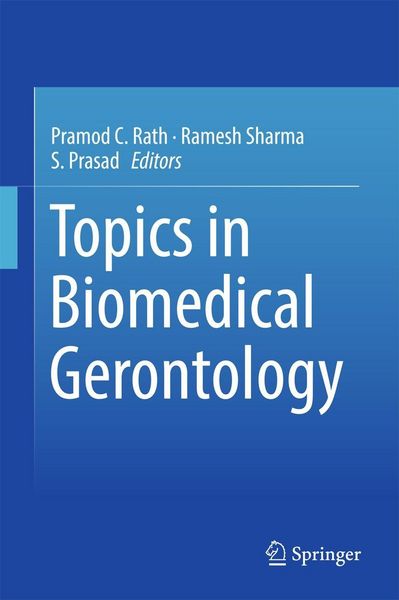
Produktbild: Topics in Biomedical Gerontology

Topics in Biomedical Gerontology

Fr. 187.90

inkl. gesetzl. MwSt.

Beschreibung

This book presents a collection of articles on various aspects of current research on aging. These include model systems, cellular, biochemical and molecular aspects of experimental aging research, as well as selected intervention studies on age-related diseases.

Aging is a global challenge to human society....

Beschreibung

This book presents a collection of articles on various aspects of current research on aging. These include model systems, cellular, biochemical and molecular aspects of experimental aging research, as well as selected intervention studies on age-related diseases.

Aging is a global challenge to human society. Children are always in a hurry to become adults, while adults produce offspring and add to the gene pool. However, after adulthood or the attainment of reproductive maturity, all physiological parameters of the living organism start to undergo the aging process. Old age sets in slowly but surely, and usually continues for a prolonged period. If vigor and vitality are the main advantages of adulthood, old age offers the rewards of experience and maturity.

Biologists ask questions such as: Why do we age? How do we become old? Is it possible to slow down, postpone or even prevent aging? In turn, medical experts ask: What are the diseases associated with old age? Arethere medicines that can help affected elderly patients? In fact both groups are asking themselves how can we add more health to old age.

Healthy aging is the dream of every individual. But to achieve this, it is fundamental that we first understand the cellular, biochemical and molecular basis of the aging process in mammalian cells, tissues and intact living organisms, which can serve as experimental model systems in Biomedical Gerontology. Once the biology of aging is understood at the genetic and molecular levels, interventional approaches to aging and its associated diseases may be easier to plan and implement at the preclinical level.

Produktdetails

Format

PDF

Kopierschutz

Nein

Family Sharing

Nein

Text-to-Speech

Nein

Produktdetails

Format

PDF

Format

eBooks im PDF-Format haben eine festgelegte Seitengröße und eignen sich daher nur bedingt zum Lesen auf einem tolino eReader oder Smartphone. Für den vollen Lesegenuss empfehlen wir Ihnen bei PDF-eBooks die Verwendung eines Tablets oder Computers.

Kopierschutz

Nein

Kopierschutz

Dieses eBook können Sie uneingeschränkt auf allen Geräten der tolino Familie, allen sonstigen eReadern und am PC lesen. Das eBook ist nicht kopiergeschützt und kann ein personalisiertes Wasserzeichen enthalten. Weitere Hinweise zum Lesen von eBooks mit einem personalisierten Wasserzeichen finden Sie unter Hilfe/Downloads.

Family Sharing

Nein

Family Sharing

Mit Family Sharing können Sie eBooks innerhalb Ihrer Familie (max. sechs Mitglieder im gleichen Haushalt) teilen. Sie entscheiden selbst, welches Buch Sie mit welchem Familienmitglied teilen möchten. Auch das parallele Lesen durch verschiedene Familienmitglieder ist durch Family Sharing möglich. Um eBooks zu teilen oder geteilt zu bekommen, muss jedes Familienmitglied ein Konto bei Thalia oder einem anderen tolino-Buchhändler haben. Weitere Informationen finden Sie unter Hilfe/Family-Sharing.

Text-to-Speech

Nein

Text-to-Speech

Bedeutet Ihnen Stimme mehr als Text? Mit der Funktion Text-to-Speech können Sie sich im tolino webReader und in der aktuellen Thalia – Lesen & Hören App das eBook vorlesen lassen. Weitere Informationen finden Sie unter Hilfe/Text-to-Speech.

Erscheinungsdatum

20.10.2016

Herausgeber
Verlag Springer Nature Singapore
Seitenzahl

355 (Printausgabe)

Dateigröße

7838 KB

Sprache

Englisch

EAN

9789811021558

Barrierefreiheit
  • keine Information zur Barrierefreiheit bekannt

Noch keine Bewertungen vorhanden

Verfassen Sie die erste Bewertung zu diesem Artikel

Helfen Sie anderen Kundinnen und Kunden durch Ihre Meinung.

Kundinnen und Kunden meinen

Bewertungen (0)

Weitere Artikel finden Sie in

  • Produktbild: Topics in Biomedical Gerontology