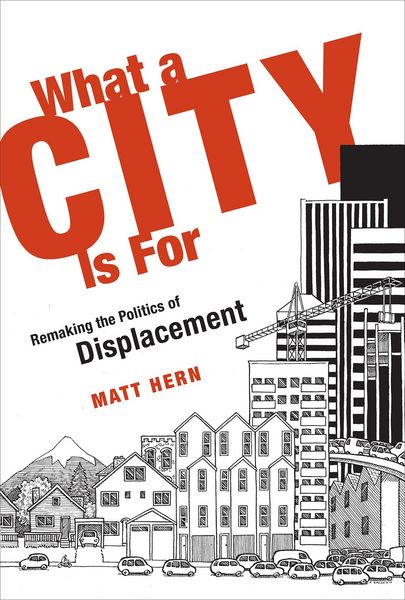
What a City Is For Remaking the Politics of Displacement
-
- Taschenbuch
- eBook ausgewählt
-
Form:Einzelkauf Download
-
Sprache:Englisch
Fr. 21.90
inkl. gesetzl. MwSt.Beschreibung
Produktdetails
Format
ePUB 3
Kopierschutz
Ja
Family Sharing
Ja
Text-to-Speech
Ja
Erscheinungsdatum
23.09.2016
Verlag
Mit PressSeitenzahl
272 (Printausgabe)
Dateigröße
2757 KB
Sprache
Englisch
EAN
9780262334075
Portland, Oregon, is one of the most beautiful, livable cities in the United States. It has walkable neighborhoods, bike lanes, low-density housing, public transportation, and significant green spacenot to mention craft-beer bars and locavore food trucks. But liberal Portland is also the whitest city in the country. This is not circumstance; the city has a long history of officially sanctioned racialized displacement that continues today. Over the last two and half decades, Albinathe one major Black neighborhood in Portlandhas been systematically uprooted by market-driven gentrification and city-renewal policies. African Americans in Portland were first pushed into Albina and then contained there through exclusionary zoning, predatory lending, and racist real estate practices. Since the 1990s, they've been aggressively displacedby rising housing costs, developers eager to get rid of low-income residents, and overt city policies of gentrification.
Displacement and dispossessions are convulsing cities across the globe, becoming the dominant urban narratives of our time. In What a City Is For, Matt Hern uses the case of Albina, as well as similar instances in New Orleans and Vancouver, to investigate gentrification in the twenty-first century. In an engaging narrative, effortlessly mixing anecdote and theory, Hern questions the notions of development, private property, and ownership. Arguing that home ownership drives inequality, he wants us to disown ownership. How can we reimagine the city as a post-ownership, post-sovereign space? Drawing on solidarity economics, cooperative movements, community land trusts, indigenous conceptions of alternative sovereignty, the global commons movement, and much else, Hern suggests repudiating development in favor of an incrementalist, non-market-driven unfolding of the city.
Noch keine Bewertungen vorhanden
Verfassen Sie die erste Bewertung zu diesem Artikel
Helfen Sie anderen Kundinnen und Kunden durch Ihre Meinung.