KI-Beratung Beta

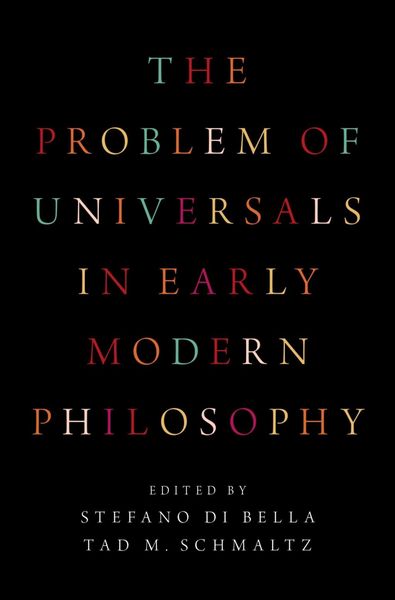
Produktbild: The Problem of Universals in Early Modern Philosophy

The Problem of Universals in Early Modern Philosophy

Fr. 120.90

inkl. gesetzl. MwSt.

Beschreibung

The ancient topic of universals was central to scholastic philosophy, which raised the question of whether universals exist as Platonic forms, as instantiated Aristotelian forms, as concepts abstracted from singular things, or as words that have universal signification. It might be thought that this...

Beschreibung

The ancient topic of universals was central to scholastic philosophy, which raised the question of whether universals exist as Platonic forms, as instantiated Aristotelian forms, as concepts abstracted from singular things, or as words that have universal signification. It might be thought that this question lost its importance after the decline of scholasticism in the modern period. However, the fourteen contributions contained in The Problem of Univerals in Early Modern Philosophy indicate that the issue of universals retained its vitality in modern philosophy. Modern philosophers in fact were interested in 3 sets of issues concerning universals: (i) issues concerning the ontological status of universals, (ii) issues concerning the psychology of the formation of universal concepts or terms, and (iii) issues concerning the value and use of universal concepts or terms in the acquisition of knowledge. Chapters in this volume consider the various forms of "Platonism," "conceptualism" and "nominalism" (and distinctive combinations thereof) that emerged from the consideration of such issues in the work of modern philosophers. Furthermore, this volume covers not only the canonical modern figures, namely, Descartes, Spinoza, Leibniz, Locke, Berkeley, Hume and Kant, but also more neglected figures such as Pierre Gassendi, Pierre-Sylvain Regis, Nicolas Malebranche, Henry More, Ralph Cudworth and John Norris.

Produktdetails

Format

ePUB

Kopierschutz

Ja

Family Sharing

Nein

Text-to-Speech

Ja

Produktdetails

Format

ePUB

Format

eBooks im ePUB-Format erlauben eine dynamische Anpassung des Inhalts an die jeweilige Display-Größe des Lesegeräts. Das Format eignet sich daher besonders für das Lesen auf mobilen Geräten, wie z.B. Ihrem tolino, Tablets oder Smartphones.

Kopierschutz

Ja

Kopierschutz

Zum Lesen dieses eBooks auf eReadern außerhalb der tolino Familie sowie am PC benötigen Sie eine Adobe ID. Weitere Hinweise zum Lesen von kopiergeschützten eBooks finden Sie unter Hilfe/Downloads.

Family Sharing

Nein

Family Sharing

Mit Family Sharing können Sie eBooks innerhalb Ihrer Familie (max. sechs Mitglieder im gleichen Haushalt) teilen. Sie entscheiden selbst, welches Buch Sie mit welchem Familienmitglied teilen möchten. Auch das parallele Lesen durch verschiedene Familienmitglieder ist durch Family Sharing möglich. Um eBooks zu teilen oder geteilt zu bekommen, muss jedes Familienmitglied ein Konto bei Thalia oder einem anderen tolino-Buchhändler haben. Weitere Informationen finden Sie unter Hilfe/Family-Sharing.

Text-to-Speech

Ja

Text-to-Speech

Bedeutet Ihnen Stimme mehr als Text? Mit der Funktion Text-to-Speech können Sie sich im tolino webReader und in der aktuellen Thalia – Lesen & Hören App das eBook vorlesen lassen. Weitere Informationen finden Sie unter Hilfe/Text-to-Speech.

Erscheinungsdatum

29.06.2017

Herausgeber
Verlag Oxford University Press
Seitenzahl

320 (Printausgabe)

Dateigröße

810 KB

Sprache

Englisch

EAN

9780190672720

Barrierefreiheit
  • keine Information zur Barrierefreiheit bekannt

Noch keine Bewertungen vorhanden

Verfassen Sie die erste Bewertung zu diesem Artikel

Helfen Sie anderen Kundinnen und Kunden durch Ihre Meinung.

Kundinnen und Kunden meinen

Bewertungen (0)

Weitere Artikel finden Sie in

Die Leseprobe wird geladen.
  • Produktbild: The Problem of Universals in Early Modern Philosophy