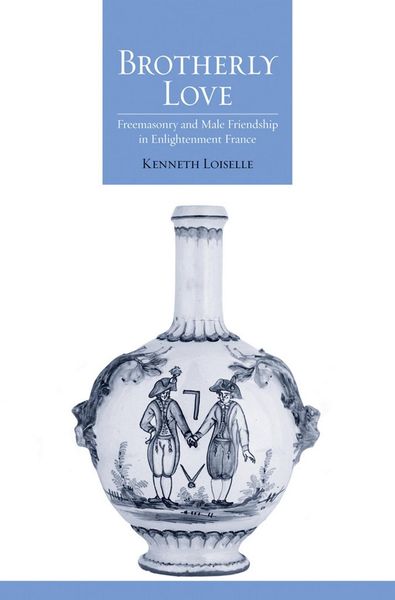
Brotherly Love Freemasonry and Male Friendship in Enlightenment France
Fr. 45.90
inkl. gesetzl. MwSt.Beschreibung
Produktdetails
Format
ePUB
Kopierschutz
Nein
Family Sharing
Nein
Text-to-Speech
Ja
Erscheinungsdatum
21.08.2014
Verlag
Cornell University PressSeitenzahl
280 (Printausgabe)
Dateigröße
1921 KB
Sprache
Englisch
EAN
9780801454868
Friendship, an acquired relationship primarily based on choice rather than birth, lay at the heart of Enlightenment preoccupations with sociability and the formation of the private sphere. In Brotherly Love, Kenneth Loiselle argues that Freemasonry is an ideal arena in which to explore the changing nature of male friendship in Enlightenment France. Freemasonry was the largest and most diverse voluntary organization in the decades before the French Revolution. At least fifty thousand Frenchmen joined lodges, the memberships of which ranged across the social spectrum from skilled artisans to the highest ranks of the nobility. Loiselle argues that men were attracted to Freemasonry because it enabled them to cultivate enduring friendships that were egalitarian and grounded in emotion.Drawing on scores of archives, including private letters, rituals, the minutes of lodge meetings, and the speeches of many Freemasons, Loiselle reveals the thought processes of the visionaries who founded this movement, the ways in which its members maintained friendships both within and beyond the lodge, and the seemingly paradoxical place women occupied within this friendship community. Masonic friendship endured into the tumultuous revolutionary era, although the revolutionary leadership suppressed most of the lodges by 1794. Loiselle not only examines the place of friendship in eighteenth-century society and culture but also contributes to the history of emotions and masculinity, and the essential debate over the relationship between the Enlightenment and the French Revolution.
Noch keine Bewertungen vorhanden
Verfassen Sie die erste Bewertung zu diesem Artikel
Helfen Sie anderen Kundinnen und Kunden durch Ihre Meinung.