KI-Beratung Beta

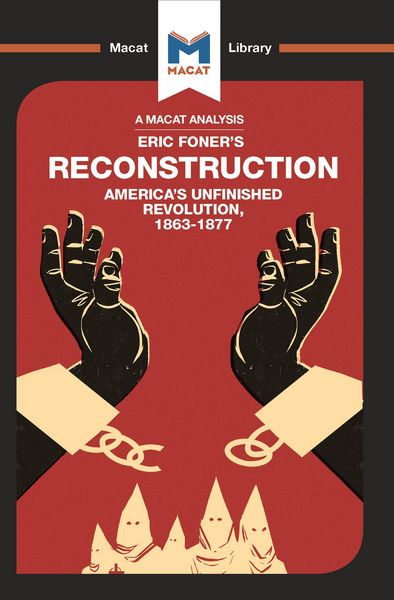
Produktbild: An Analysis of Eric Foner's Reconstruction

An Analysis of Eric Foner's Reconstruction America's Unfinished Revolution 1863-1877

Fr. 10.90

inkl. gesetzl. MwSt.

Beschreibung

'Reconstruction' is the name given to the period that, beginning shortly before the end of the American Civil War and running until 1877, saw the frustration of federal government's attempts to integrate the newly freed slaves into the American political and economic system. It ended in frustration,...

Beschreibung

'Reconstruction' is the name given to the period that, beginning shortly before the end of the American Civil War and running until 1877, saw the frustration of federal government's attempts to integrate the newly freed slaves into the American political and economic system. It ended in frustration, disillusionment and also violence, with individual southern states denying rights to freed slaves, preventing them from voting, and largely forcing them back into roles that exploited their labor and prevented them from gaining access to education.

For much of the 20th century, the predominant view of the Reconstruction period was that of the Dunning School, which argued that former slaves were unprepared for the responsibilities of voting and holding office, and that it was their incapability of handling such responsibilities - and not the racist actions of whites - that was largely responsible for the failures of the Reconstruction period. Eric Foner's great work reverses those judgements. Foner adopts a problem-solving approach, asking productive questions of state archives and generating and assessing alternative possibilities to assess the views of the Dunning School in a much wider context. His verdict - that slaves and freedmen were often key figures who shaped the eventual emergence of a more progressive American democracy - is backed up by persuasive reasoning which explains how these results came about and shows how the white establishment, led by President Andrew Johnson, was primarily responsible for the disasters of the Reconstruction era.

Produktdetails

Format

PDF

Kopierschutz

Ja

Family Sharing

Nein

Text-to-Speech

Nein

Produktdetails

Format

PDF

Format

eBooks im PDF-Format haben eine festgelegte Seitengröße und eignen sich daher nur bedingt zum Lesen auf einem tolino eReader oder Smartphone. Für den vollen Lesegenuss empfehlen wir Ihnen bei PDF-eBooks die Verwendung eines Tablets oder Computers.

Kopierschutz

Ja

Kopierschutz

Zum Lesen dieses eBooks auf Geräten der tolino Familie sowie auf sonstigen eReadern und am PC benötigen Sie eine ByteBook-ID. Weitere Hinweise zum Lesen von kopiergeschützten eBooks finden Sie unter Hilfe/Downloads.

Family Sharing

Nein

Family Sharing

Mit Family Sharing können Sie eBooks innerhalb Ihrer Familie (max. sechs Mitglieder im gleichen Haushalt) teilen. Sie entscheiden selbst, welches Buch Sie mit welchem Familienmitglied teilen möchten. Auch das parallele Lesen durch verschiedene Familienmitglieder ist durch Family Sharing möglich. Um eBooks zu teilen oder geteilt zu bekommen, muss jedes Familienmitglied ein Konto bei Thalia oder einem anderen tolino-Buchhändler haben. Weitere Informationen finden Sie unter Hilfe/Family-Sharing.

Text-to-Speech

Nein

Text-to-Speech

Bedeutet Ihnen Stimme mehr als Text? Mit der Funktion Text-to-Speech können Sie sich im tolino webReader und in der aktuellen Thalia – Lesen & Hören App das eBook vorlesen lassen. Weitere Informationen finden Sie unter Hilfe/Text-to-Speech.

Erscheinungsdatum

05.07.2017

Verlag Taylor & Francis eBooks
Seitenzahl

112 (Printausgabe)

Dateigröße

993 KB

Sprache

Englisch

EAN

9781351350952

Barrierefreiheit
  • keine Vorlesefunktionen des Lesesystems deaktiviert
  • Seitennummerierung folgt dem gedruckten Werk

Noch keine Bewertungen vorhanden

Verfassen Sie die erste Bewertung zu diesem Artikel

Helfen Sie anderen Kundinnen und Kunden durch Ihre Meinung.

Kundinnen und Kunden meinen

Bewertungen (0)

Weitere Artikel finden Sie in

Die Leseprobe wird geladen.
  • Produktbild: An Analysis of Eric Foner's Reconstruction