KI-Beratung Beta

Produktbild: Through Times of Trouble

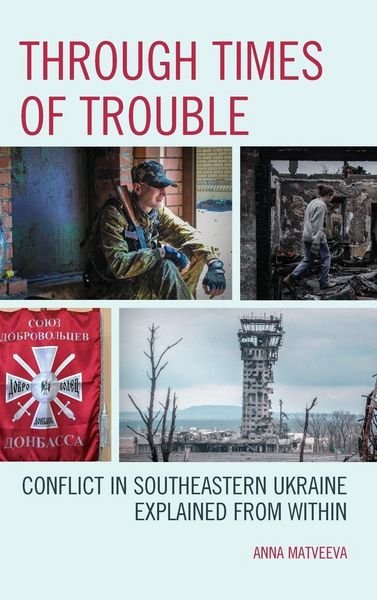
Through Times of Trouble Conflict in Southeastern Ukraine Explained from Within

Fr. 183.00

inkl. gesetzl. MwSt., Versandkostenfrei


Beschreibung

This book tells the story of insurgency in Ukraine’s Donbas region from the perspective of the rebels, who sought and continue to seek either independence from Ukraine or unification with Russia. As such, it provides a unique insight into their thinking and motivations, which need to be understood if...

Beschreibung

This book tells the story of insurgency in Ukraine’s Donbas region from the perspective of the rebels, who sought and continue to seek either independence from Ukraine or unification with Russia. As such, it provides a unique insight into their thinking and motivations, which need to be understood if the conflict is to be resolved. Those making and remaking the conflict are placed in the centre of the story which uses the words of the combatants themselves. It shows how volunteer fighters, driven by a wide and diffuse set of motivations, emerged from Ukraine, Russia, and different parts of the world, stood at the rebellion's heart. The book focuses on the participants’ own voices and personalities, drawing extensively on first-hand research and interviews. Rather than rendering Ukraine a chess piece on the geopolitical board, the rebellion shows that ordinary people, rather than elites, can act as a decisive force. Donbas says something about why large numbers of people make the decision to take part in a collective violent action, when material rewards are low or non-existent, and mortal risks high. It stands as an important text on the study of modern insurgencies, revealing how violent conflicts happen via issues of politicized identity and involvement of non-state actors. This book places this conflict into the context of other conflicts worldwide and demonstrates how ideas and narratives are constructed to provide meaning to a struggle. The insurgency has produced a conflict sub-culture, rich with symbolism, narrative, and communications, made possible by the digital age and a social media-savvy population. These beliefs and ideas have had the power to pull people from different parts of the world. This book follows the stages of assembling different conflict ingredients together, and the rebellion’s zigzagging fortunes after it became apparent that Moscow was not going to repeat the Crimea scenario in Donbas. It analyses the logic of armed struggle and the tactics deployed by warring parties. It also sheds light on the developments in Moscow, discusses the phenomenon of the Russian Spring movement and concludes with the prospects for a peaceful solution.

Produktdetails

Einband

Gebundene Ausgabe

Erscheinungsdatum

20.12.2017

Abbildungen

1 tables;

Verlag Ingram Publishers Services

Produktdetails

Einband

Gebundene Ausgabe

Erscheinungsdatum

20.12.2017

Abbildungen

1 tables;

Verlag Ingram Publishers Services
Seitenzahl

358

Maße (L/B/H)

23.5/15.7/2.6 cm

Gewicht

732 g

Sprache

Englisch

ISBN

978-1-4985-4323-1

Herstelleradresse

Libri GmbH
Europaallee 1
36244 Bad Hersfeld
DE

Email: gpsr@libri.de

Noch keine Bewertungen vorhanden

Verfassen Sie die erste Bewertung zu diesem Artikel

Helfen Sie anderen Kundinnen und Kunden durch Ihre Meinung.

Kundinnen und Kunden meinen

Bewertungen (0)

Die Leseprobe wird geladen.
  • Produktbild: Through Times of Trouble
  • Foreword, by Michael Slobodchikoff
    Acknowledgments
    Introduction: Talking Donbass, Not Putin
    Abbreviations
    Chapter 1: Framing the Issues: a Conflict among Other Conflicts
    Chapter 2: Laying Grounds for Confrontation
    Chapter 3: Faultlines in Crimea
    Chapter 4: Donbas: a Much-Unloved Powerhouse
    Chapter 5: Russian Spring: Bolsheviks and Monarchists, all welcome!
    Chapter 6: Free Guerrillas: 'Novorossiya be!'Ghosts and Somalis Take the Stage
    Chapter 7: 'Hot Summer': Military Campaign
    Chapter 8: Consolidation amidst the new (dis)order
    Chapter 9: New Symbolism in Digital Era
    Chapter 10: Power of the State, Power of Ideas
    Chapter 11: Rebellion in Ukrainian Context
    Chapter 12: What is Donbas for Russia
    Final Thoughts: Imperfect Peace is Better than Good War
    Appendix A: Interviewees
    Appendix B: Note on Methodology
    Bibliography
    About the Author